
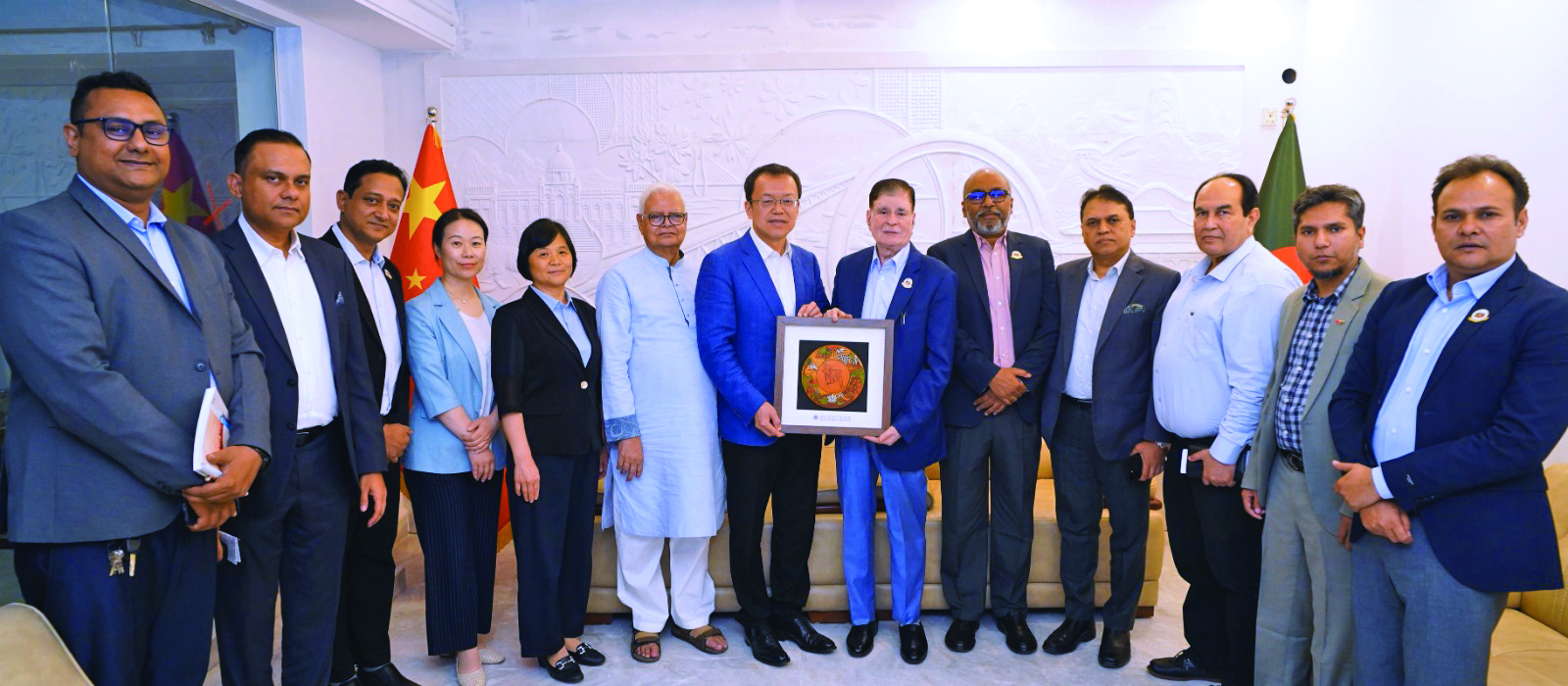
The Bangladesh China Chamber of Commerce & Industry (BCCCI) has urged increased Chinese investment and technology transfer in Bangladesh’s textile sector to boost competitiveness in high-value garment production.
The call came at a high-level meeting at the BCCCI office in Dhaka on Monday with a 20-member delegation from the China National Textile and Apparel Council (CNTAC), China Dyeing and Printing Association (CDPA), and leading dyeing, printing and chemical firms.
Both sides reaffirmed their commitment to expanding cooperation across garments, textiles, dyeing and printing, stressing the need to enhance trade, investment and industrial collaboration between Bangladesh and China.
Key issues discussed included joint ventures and strategic partnerships, establishing Export Processing Zones (EPZs), addressing energy challenges affecting industrial growth, strengthening supply chain integration, and promoting technology transfer. The meeting ended with a shared commitment to deeper economic ties and sustainable industrial development.
BCCCI President Mohd Khorshed Alam led the Bangladesh side and thanked the visiting delegation, saying the chamber was honoured to host representatives from sectors vital to both countries’ industrial growth.
He said the meeting provided a valuable platform for dialogue and knowledge exchange, particularly in textile, dyeing and printing, noting that over 40 industrial units in Bangladesh face financial and technical challenges. He stressed that upgrading existing facilities through foreign collaboration would be more practical and cost-effective than setting up new factories, and encouraged Chinese investors to pursue joint ventures, partnerships and technology transfer to improve efficiency and competitiveness.
Delegation leader Li Lingshen thanked BCCCI for its hospitality, noting that China exports around US$9 billion worth of fabrics to Bangladesh annually, reflecting strong bilateral trade.
He said Chinese state-owned and private firms are actively considering investment opportunities in Bangladesh and Southeast Asia, identifying Bangladesh as a promising destination due to its strong manufacturing base and skilled workforce. He also expressed hope that BCCCI would continue to play a key role in facilitating coordination and strengthening bilateral industrial cooperation.
BCCCI was also represented by Secretary General Jamilur Rahman; Advisers to the President Harun Ar Rashid and Shahid Alam; Vice Presidents Khandaker Atiqur Rahman and Masud Ali Khan; Director (Public Relations) Md Zinnatul Islam; Director Mohammad Amanur Rahman; Executive Director Md Abu Taher; and other members, along with media representatives.