The apparel apex body BGMEA on Wednesday proposed a gradual and performance-based roadmap for implementing zero liquid discharge (ZLD) in the ready-made garment sector instead of the existing mandatory commitment.
The ZLD is an advanced water treatment process designed to eliminate liquid waste from industrial operations.
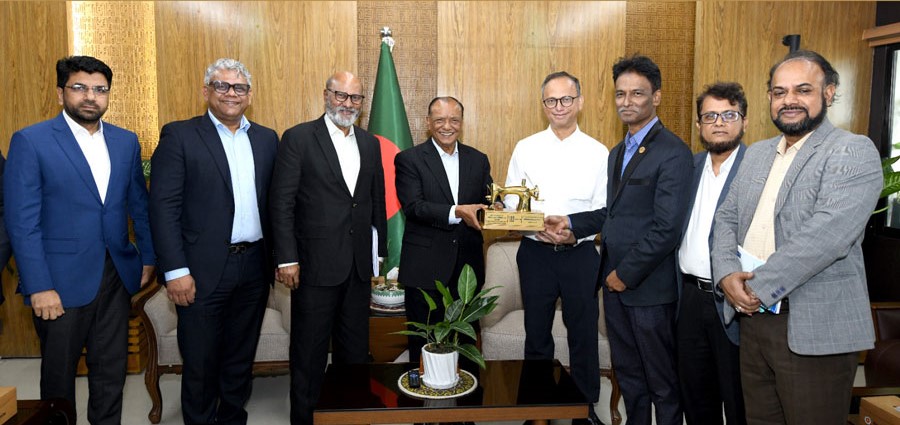
The BGMEA (Bangladesh Garment Manufacturers and Exporters Association) made the proposal when a delegation led by its President Mahmud Hasan Khan met Environment, Forest and Climate Change Minister Abdul Awal Mintoo at the latter’s secretariat office in Dhaka city.
Former Bangladesh Textile Mills Association President A Matin Chowdhury, BGMEA Director Nafis-ud-Doula and Kingsley CEO Md Ashiqur Rahman, among others, were present at the meeting.
The association also demanded the formulation of specific sustainability guidelines for water conservation and reuse, financial incentives such as VAT and duty exemptions on ZLD equipment and the launch of a specialised ‘ZLD-window’ under the Green Transformation Fund of Bangladesh Bank.
The meeting also discussed the need to align environmental compliance with the realities of the ready-made garments and sustainable textile sector.
Reiterating their commitment to ensuring a sustainable environment, the sector leaders highlighted several regulatory complexities and obstacles, including technical challenges related to the ‘Environmental Protection Rules, 2023’.
The delegation noted that the current ETP colour parameters are technically very difficult to achieve with the existing infrastructure and requested that a realistic and science-based standard be set.
To enhance administrative transparency, the delegation suggested introducing a mirror testing mechanism for environmental sampling and systematically adopting a risk-based, long-term environmental clearance renewal system for compliant factories.
The BGMEA also urged the government to formulate rules under the Forest Ordinance (2026) quickly to remove uncertainty over land use in industrial areas.
The meeting also highlighted the need to set tolerance limits for fluctuations in environmental parameters due to extreme weather conditions and to ensure a balanced air quality assessment, taking external sources of pollution into account.
Acknowledging the important contribution of the readymade garment sector to the national economy, the minister assured the delegation of addressing the issues while balancing the needs of the industry with the goal of environmental conservation.