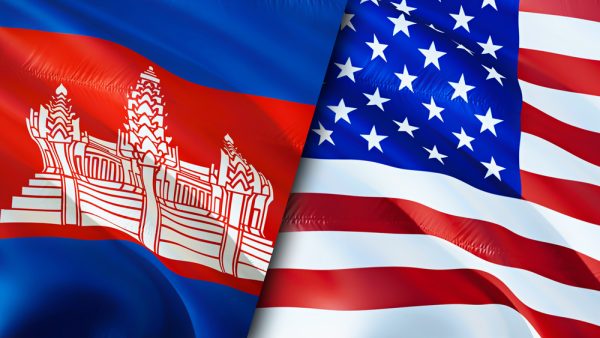
Chanthol says the Kingdom is among four countries in the world that can export certain quantities of textile products into the United States under the Tariff Rate Quota arrangement for the next three years.
Cambodia has been selected as one of four countries eligible for a new US Tariff Rate Quota (TRQ) arrangement that will allow specified quantities of textile and apparel exports to enter the US duty-free for three years, Deputy Prime Minister and First Vice-Chairman of the Council for Development of Cambodia Sun Chanthol said.
Speaking at the press conference on Monday, Chanthol noted that Cambodia is among only four countries selected under the US TRQ arrangement, alongside Indonesia, Malaysia and Bangladesh.
Secretary of State of the Ministry of Commerce Sim Sokkheng and Deputy Director General of the General Department of Customs and Excise Chan Sopheap were present during the presser.
“Cambodia is among four countries in the world that can export certain quantities of textile and apparel products into the United States under Tariff Rate Quota (TRQ) for the next three years,” he said.
Chanthol explained that under the TRQ arrangement, eligible textile and apparel products exported from the four countries will be exempt from US import duties, provided manufacturers comply with the programme’s sourcing requirements.
“If we buy raw materials, including fabric, cotton or yarn from the US for use in garment and manufacturing, we can get this tariff exemption from the US,” he said.
He emphasised that the US has yet to issue the final regulations governing the programme, including the formula for determining quota allocations and the implementation procedures.
The Deputy Prime Minister said that the Royal Government will strive to attract investors to the textile sector that purchase fabric, cotton and yarn from the US, produce garments locally and export the finished products back to the US market.
Speaking to Khmer Times, President of the Logistics Supply Chain and Brokers Business Association in Cambodia (LOSCBA) Chea Chandara said that the proposed arrangement is likely to pose a challenge for many garment manufacturers.
“Most garment factories operating in Cambodia are Chinese-owned and primarily focus on manufacturing finished products rather than producing raw materials,” he said, adding, “The key question is whether these factories are willing to source more raw materials from the United States to qualify for duty-free treatment.”
He noted that some manufacturers may consider purchasing US cotton, yarn or fabric if it enables them to benefit from the preferential arrangement. “However, shifting away from long-established suppliers in China and other countries would not be easy because it involves existing commercial relationships, production planning and supply chain adjustments.”
The LOSBCA president emphasised that US raw materials are not necessarily more expensive than alternatives and that shipping costs remain manageable despite the long distance between the two countries.
“Even if some factories decide not to change their sourcing, Cambodia’s recently announced 10 percent forced labour tariff remains relatively competitive compared with many regional rivals,” he said.
Chandara stressed that Cambodia still relies heavily on imported raw materials and lacks a sufficiently developed domestic textile industry. “Building a local supply chain capable of supporting garment manufacturers will require significant investment and time,” he added.