
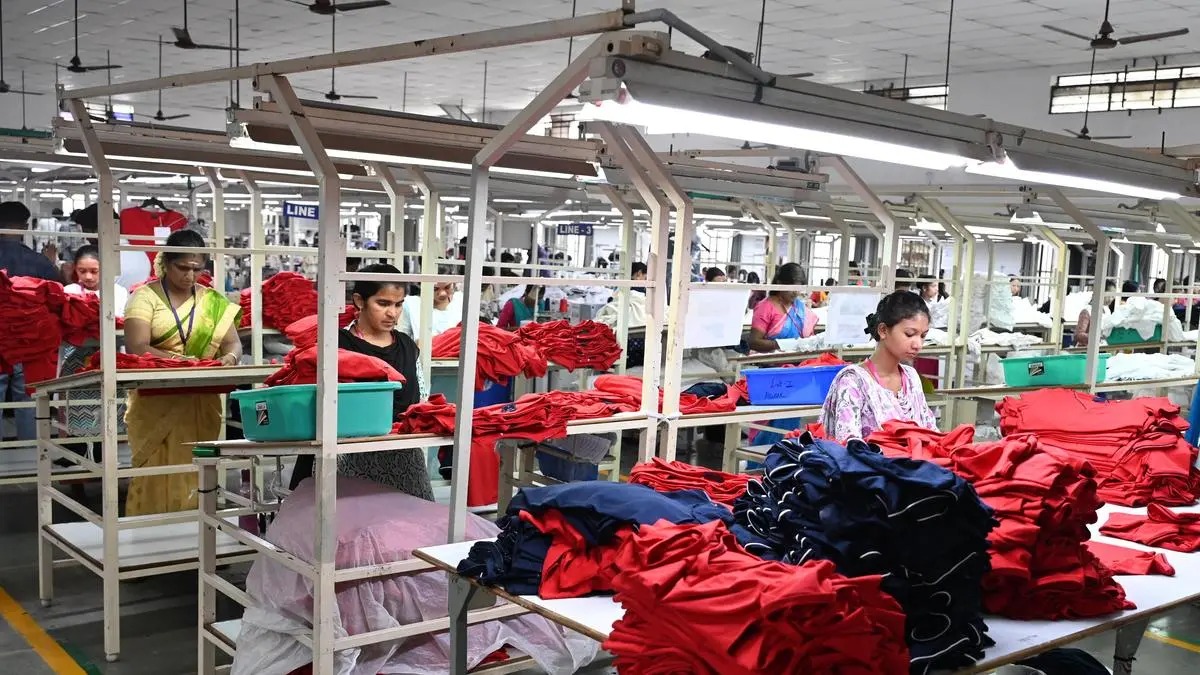
For decades the relationship between apparel retailers and manufacturers in India has run on trust built through familiarity rather than on shared data. A retailer places an order, a manufacturer plans capacity and both sides adjust as production unfolds. This worked reasonably well when volumes were predictable and fashion cycles were slow. It works far less well today when consumer demand shifts within weeks and sourcing decisions must be made almost as quickly.
The apparel value chain is structurally fragmented, spanning fibre and fabric suppliers, garment manufacturers, sourcing teams and retailers that often operate across separate organisations and systems. According to IBEF, the textiles and apparel industry contributes close to two percent of India’s GDP and roughly eleven percent of manufacturing gross value added, underlining how much rides on a sector still dependent on phone calls, spreadsheets and physical sampling to coordinate itself. When coordination breaks down, the result is familiar to everyone in the trade: late deliveries, mismatched inventory, cancelled orders and margin pressure on both sides.
Technology-enabled supply chains can change this pattern, not by replacing relationships, but by giving them a shared and verifiable information layer.
From Guesswork to Shared Visibility
The core inefficiency in retailer-manufacturer coordination is not a lack of goodwill. It is a lack of shared visibility. Retailers may not have timely information on production status, while manufacturers may have limited visibility into changing demand or the confidence behind a forecast. Digital platforms that connect order management, production tracking and inventory data can create a more consistent view for both sides. When a retailer can see that a fabric consignment has been delayed, buying decisions can be adjusted before the delay cascades into a missed launch date. When a manufacturer can see actual sell-through data rather than a static order sheet, production planning becomes far more responsive to what is happening in stores.
This does not always require a large enterprise transformation. Cloud-based tools, APIs and modular integrations can allow companies to digitise specific workflows first such as order tracking, approvals or inventory visibility and expand as the business case becomes clearer. The objective should be interoperability across existing workflows, not simply adding another standalone dashboard.
Reducing the Pre-Production Gap
One of the more persistent problems in the Indian apparel ecosystem is the gap between when a retailer commits to an order and when actual production begins. This gap is often filled with informal back and forth over samples, specifications and pricing, much of it conducted outside any system of record. Technology can compress this cycle meaningfully by digitising catalogues, sampling and order confirmation so that decisions move faster and with fewer errors. A digital catalogue that reflects live fabric availability, for instance, prevents a retailer from committing to a style the manufacturer cannot actually deliver on time.
Equally important is the ability to standardise how orders are communicated. Ambiguity in specifications is one of the quiet but persistent causes of rework and wastage across the industry. When order details, measurements and delivery timelines live in a shared digital format rather than in scattered emails and messages, both sides reduce the room for costly misinterpretation.
Building Trust Through Data, Not Just Relationships
There is a tendency to assume that closer coordination threatens the personal relationships that have long defined this trade. The opposite is closer to the truth. Shared data tends to strengthen relationships because it removes ambiguity from difficult conversations. A manufacturer who can show, with evidence, why a delay occurred is in a stronger position than one relying on explanation alone. A retailer who can demonstrate demand patterns with data builds more credibility for future negotiations than one working on intuition.
This matters as Indian manufacturers deepen their participation in global supply chains. India’s textile and apparel exports, including handicrafts, reached US$35.52 billion in FY26, according to IBEF. Traceability is also becoming more important in major markets: the European Union, for example, is developing Digital Product Passport requirements for textile apparel under its Ecodesign for Sustainable Products Regulation. Better internal data discipline can therefore support both operational efficiency and readiness for emerging customer and compliance expectations.
Where Artificial Intelligence Fits In
Artificial intelligence is beginning to play a meaningful role in narrowing the gap between what buyers expect and what manufacturers can realistically deliver. In retail, AI and machine-learning models can improve demand forecasting, inventory planning and allocation. On the factory floor, computer vision based quality checks are catching defects earlier in the production cycle, reducing the rework and rejection that has traditionally strained buyer confidence and manufacturer margins alike. AI driven tools are also being used to match buyer specifications against a manufacturer’s actual capabilities, fabric availability and historical performance before an order is confirmed, rather than discovering a mismatch midway through production. None of this removes the need for human judgment on the floor or in the boardroom. What it does is give both sides an earlier, clearer signal when something is likely to go wrong, which is often the difference between a manageable adjustment and a missed delivery.
Looking Ahead
The path forward does not require every apparel manufacturer to automate everything at once. It requires treating information as shared infrastructure rather than something exchanged only when a problem arises. The practical starting point is often simpler: common data definitions, digitised approvals, milestone visibility and disciplined information-sharing between trading partners.
India is well positioned to lead this shift given its scale of manufacturing, its growing pool of technology talent and its deepening integration with global fashion supply chains. The retailers and manufacturers who begin building this shared digital foundation now, rather than waiting for disruption to force their hand, will be best equipped to handle the volatility that has become a permanent feature of the fashion business. Coordination, not scale alone, will define competitiveness in the years ahead.
 AKSHAT DUA is the Chief Technology Officer at Showroom B2B, driving digital transformation in apparel manufacturing through AI, automation and smart technology solutions. With nearly a decade of experience, including over four years at Amazon, he focuses on building scalable platforms that improve efficiency, supply chain visibility and data-driven decision-making.