India is taking significant steps to diversify its textile manufacturing landscape by expanding production beyond its long-established industrial hubs and encouraging investment in emerging states with untapped potential. The Ministry of Textiles is intensifying its engagement with state governments to create new manufacturing clusters, attract private investment, and strengthen the country’s position as one of the world’s leading textile producers.
The initiative reflects the government’s broader strategy of promoting balanced industrial development, generating employment opportunities across regions, and enhancing India’s competitiveness in the global textile industry.
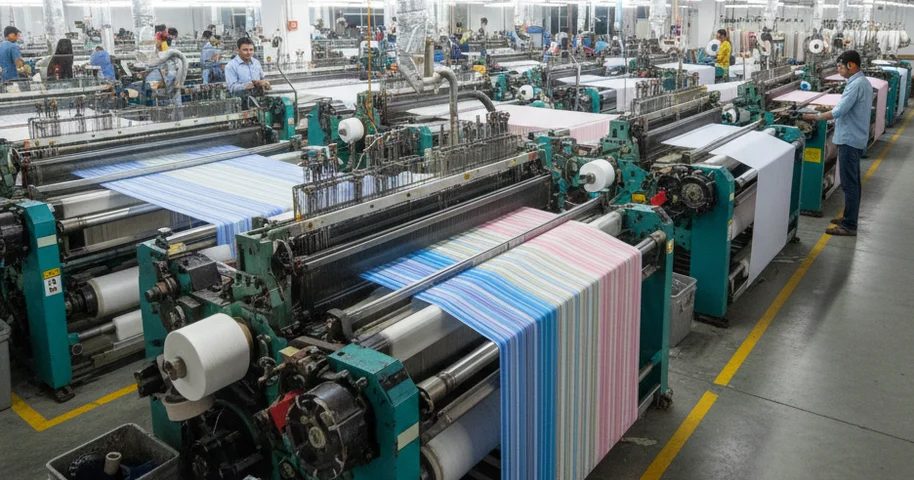
For decades, India’s textile manufacturing sector has been concentrated in a handful of industrial centers such as Tirupur, Surat, Panipat, and Ludhiana. These cities have developed robust ecosystems comprising manufacturers, suppliers, exporters, skilled labor, and logistics infrastructure, making them the backbone of the country’s textile and apparel industry. However, policymakers now believe that expanding manufacturing into new regions will help reduce regional disparities, improve supply chain resilience, and unlock fresh growth opportunities for businesses and workers alike.
As part of this effort, the textiles ministry is holding discussions with the governments of Chhattisgarh, Kerala, and Jharkhand to facilitate the development of new textile manufacturing facilities. These states have historically had a relatively limited presence in the textile sector compared to traditional manufacturing hubs, but they offer significant potential due to their available workforce, growing infrastructure, and opportunities for industrial expansion. By encouraging investments in these regions, the government aims to create new production centers capable of supporting both domestic demand and export growth.
According to a government official, the ministry’s objective is not only to attract fresh investments but also to ensure the smooth implementation of projects approved under the Production-Linked Incentive (PLI) Scheme for Textiles. The official says, “There are discussions with Chhattisgarh, Kerala and Jharkhand to facilitate development of textiles manufacturing in these states”, highlighting the ministry’s proactive approach toward expanding the industry’s geographic footprint.
The PLI Scheme for Textiles has become one of the government’s flagship initiatives for promoting advanced manufacturing and encouraging companies to invest in large-scale production. The incentive program rewards eligible manufacturers for increasing production and making investments in high-value textile products, thereby strengthening India’s manufacturing capabilities while improving its competitiveness in international markets. Through multiple rounds of the scheme, the government hopes to attract both domestic and foreign investments into the sector, boost exports, and generate substantial employment opportunities.
To support the third round of the PLI scheme, the Ministry of Textiles has established a dedicated unit that will work directly with participating companies and state governments. The specialized team will serve as a single point of contact to address implementation challenges, monitor project progress, and resolve operational issues that may arise during the establishment of new manufacturing facilities. This hands-on approach is expected to accelerate project execution while ensuring that investors receive timely support throughout the development process.
Explaining the government’s strategy, an official stated, “The idea is to remain engaged (and) address any issues on the ground. We have contacted states where companies are setting up production facilities to ensure their smooth implementation”. The ministry believes that continuous coordination with state administrations and private companies will improve execution efficiency and encourage greater participation in the incentive program.
The Indian textile industry remains one of the country’s largest employment generators, directly providing jobs to more than 45 million people across various segments, including spinning, weaving, garment manufacturing, technical textiles, processing, and exports. In addition to direct employment, the sector supports millions of livelihoods through ancillary industries such as logistics, cotton farming, machinery manufacturing, packaging, and retail. As one of India’s most labor-intensive industries, expanding textile manufacturing into new states could significantly contribute to regional economic development while creating sustainable employment opportunities.
The government’s latest initiative also aligns with India’s broader ambition to strengthen its position as a global manufacturing destination under initiatives such as Make in India and increased export competitiveness. By developing new textile manufacturing hubs, enhancing industrial infrastructure, and supporting investors through the PLI Scheme, policymakers aim to build a more diversified, resilient, and globally competitive textile sector.
As international demand for high-quality textiles and apparel continues to grow, India’s strategy of expanding manufacturing beyond traditional clusters could help the country capture a larger share of global markets while fostering inclusive industrial growth across multiple states.