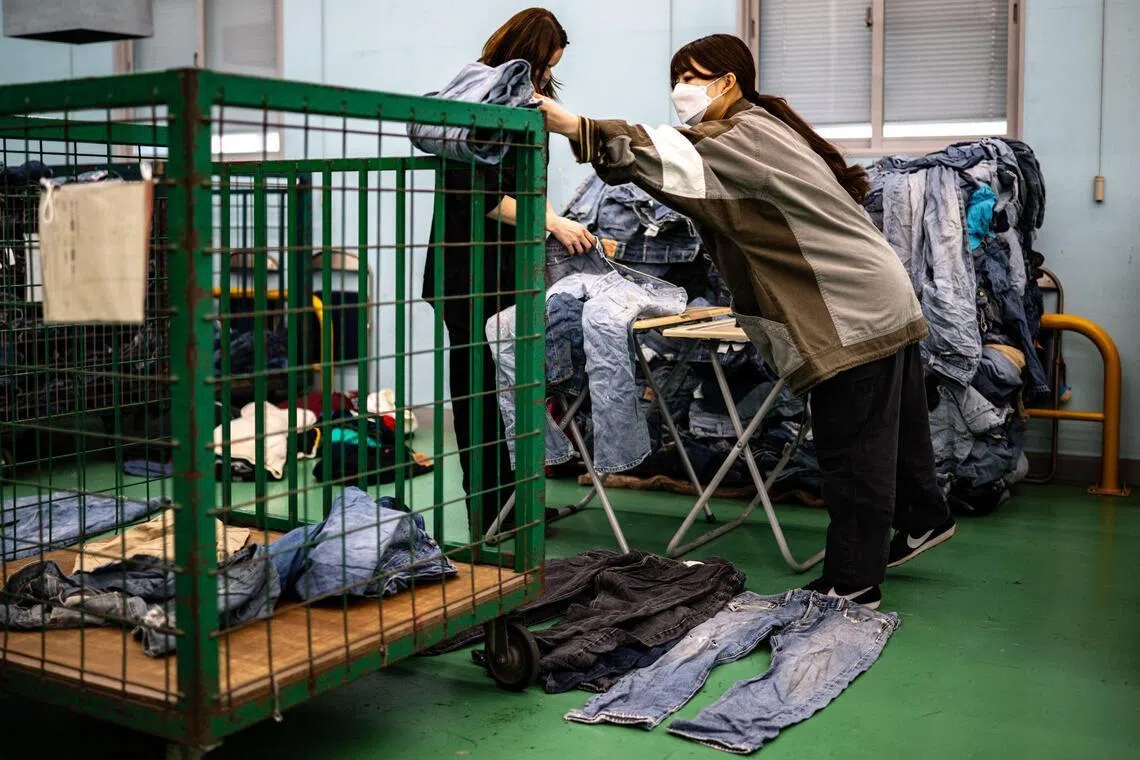
 Japan aims to reduce clothes waste by 25 per cent by fiscal 2030 compared with 10 years before to address the environmental impact of carbon dioxide (CO2) emissions-heavy garment production.
The move to promote the re-use and recycling of clothing comes as textile product waste has become a major issue worldwide, with the fashion sector generating an estimated 93 million tonnes annually, according to the United Nations Development Programme.
This has contributed significantly to environmental pollution and accounted for about 10 per cent of global carbon emissions, the New York-based world body said in March.
Based on a new action plan to be compiled by March, the Japanese government will promote wider re-use and recycling of clothes, calling on local governments, businesses and households to work together to reduce textile waste.
A total of 830,000 tonnes of new clothing was estimated to be supplied in Japan in 2024, most of which was imported, according to an Environment Ministry report.
The report showed 8.38 billion cubic m of water were estimated to be consumed annually through dyeing and transportation processes of clothing supplied to Japan, while 96 million tonnes of CO2 were estimated to be emitted.
With sales to secondhand stores and recycling into repurposed textiles limited, an estimated 570,000 tonnes of clothing were incinerated or sent to landfills in 2024, about 90 per cent of which came from households.
To promote environmentally friendly “circular fashion”, the upcoming plan will set five key initiatives, including strengthening systems to collect used clothing, expanding re-use and extending product lifespans.
Specific measures will be outlined for central and local governments, companies and households under the plan.
Municipalities will be encouraged to improve collection rates and make second hand clothing more accessible to citizens in need, while apparel companies will be asked to design products that are easier to repair or re-use.