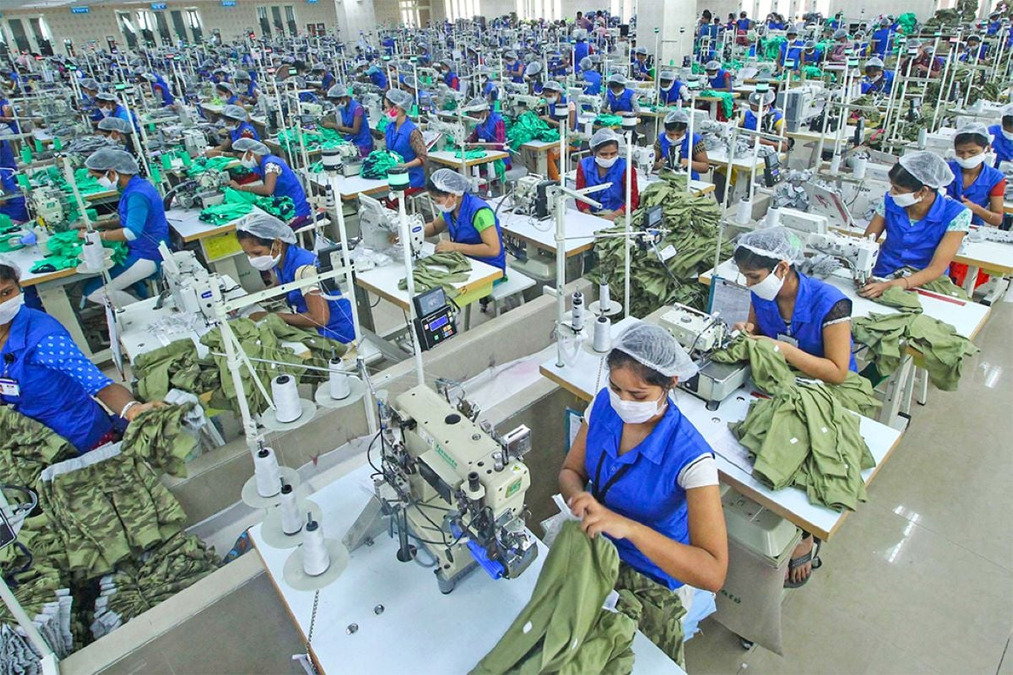
 The Karnataka government has notified its Textile and Apparel Policy (4.0) 2026-31, allocating Rs 4,000 crore for its implementation with an aim to attract Rs 20,000 crore in investments and create five lakh new jobs over the next five years.
In line with Chief Minister D K Shivakumar’s priority to promote textile and apparel industries beyond Bengaluru and ensure balanced regional industrial growth, the state government has identified 34 focused taluks for special attention, they said.
In a statement, the Department of Handlooms and Textiles claimed that for the first time in the history of the department that a financial support of Rs 4,000 crore has been approved for the implementation of the policy, which aims to attract Rs 20,000 crore in investments and generate five lakh new employment opportunities over the next five years.
According to an official statement, eligible new textile and apparel units established in these taluks will be entitled to additional incentives and concessions over and above the general benefits available under the policy.
A significant feature of the new policy is the inclusion of silk yarn production activities, including silk reeling and silk spinning, within the policy framework for the first time in the department’s history, it said.
This initiative is expected to strengthen Karnataka’s silk production value chain and create new opportunities for enterprises engaged in silk-related manufacturing activities, the department said.
To promote industrial investment and employment generation in the Kalyana Karnataka region, the new policy provides special incentives and concessions for eligible textile and apparel units established at the Pradhan Mantri Mega Integrated Textile Region and Apparel (PM-MITRA) Park in Kalaburagi, it said.
Officials noted that the policy seeks to develop Karnataka into a globally competitive textile and apparel manufacturing hub by prioritising textile production, technical textiles, handlooms, silk, skill development, exports and sustainable manufacturing practices.
The new policy, along with its package of incentives and concessions, comes into effect from September 30, 2026, and will remain valid for five years or until the announcement of the next textile policy, whichever is earlier, they added.