It is reported that the management of MAS Holdings, owned by the Amalean family, has decided to shut down two more factories and reduce staff at another factory.
According to reports, the planned workforce reductions are to be implemented in several phases. It is further reported that the MAS Holdings group currently employs nearly 96,000 workers, and that in order to return the company to profitability, the workforce would need to be reduced to around 70,000, meaning that nearly 26,000 employees may have to be laid off.
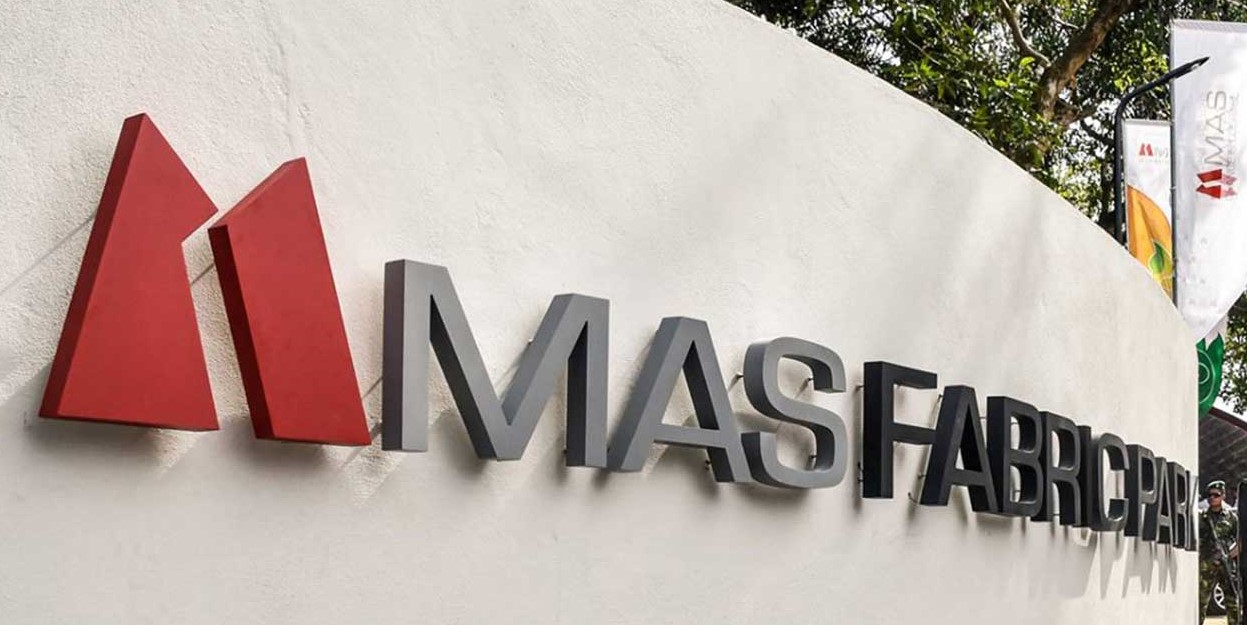
Accordingly, under the initial plan to close standalone factories belonging to MAS Holdings, the MAS Kreeda Methliya factory located at the MAS Fabric Park in Thulhiriya was recently shut down, and the MAS KREEDA Vaanavil factory in Vaanavil is also expected to be closed in due course. Subsequently, there are plans to close factories established in export processing zones under the MAS Active division, according to internal sources within MAS Holdings. Meanwhile, sources also report that a workforce reduction is being planned at MAS Bodyline in Horana on Ratnapura Road.
However, it is said that when closing these factories, the MAS Holdings group intends to offer employees options such as three months’ salary, opportunities for employment at other factories, and compensation payments.
The final products manufactured at MAS factories are for world-renowned apparel brands such as Victoria’s Secret, Nike, Adidas, Lululemon, Calvin Klein and Tommy Hilfiger.
Industry experts say that while these global brands place a high priority on workers’ rights, it is problematic that companies like MAS, which produce their final goods, lack a clear vision regarding job security for their own employees.
MAS factories have been established under approvals granted by the Board of Investment of Sri Lanka (BOI), and it is said that due to the extensive tax concessions granted, the company has already earned substantial profits, even if factories are now being closed.
It is also reported that many of the factories being closed in Sri Lanka are expected to be set up in India in the future. This is said to be in line with the company’s forward plans to secure profits in accordance with geopolitical considerations. India, now the world’s fourth-largest economy, has significantly lower labour costs, and the costs of technology, water and electricity are also far lower compared with Sri Lanka.
They also point out that the Government bears responsibility in this regard, alleging that it failed to intervene adequately when US President Donald Trump increased import tariffs.
In their view, this was why Sri Lanka was unable to match the reduced tariffs granted to India. They further emphasise that immediate attention must be given to bilateral and multilateral trade agreements, warning that if these are not expedited, the future situation could become even more severe.