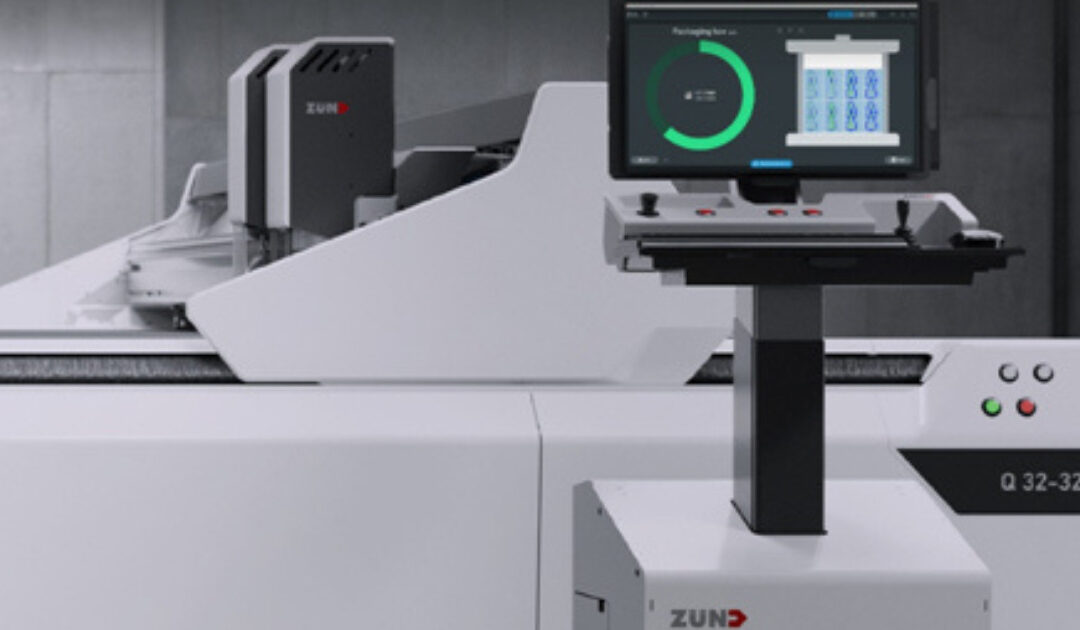
ZCC Zünd Cut Center ushers in a new era in digital cutting automation
 Zünd has revamped the ZCC Zünd Cut Center software and user interface from the ground up. In Version 4, ZCC offers even more capabilities for flexible, automated file preparation and efficient digital cutting. Controlling the cutter via touchscreen makes for extremely intuitive and simple operation.
The new ZCC Zünd Cut Center is the answer to a growing need for flexibility, scalability, and user-friendliness. ZCC V.4 supports operators with countless smart, intuitive digtal-cutting functions throughout the production workflow. This makes Zünd Cut Center ideal for novices as a fast and easy introduction to digital cutting, while also offering experienced users significant upgrades in file-preparation and production automation. As such, ZCC ensures top-quality cutting results in every situation, regardless of the experience level of the operator or the degree of automation in prepress.
The perfect configuration for every need
With its client-server architecture, Zünd Cut Center is easily scalable. The software’s modular design enables configurations tailored to specific production requirements. The user purchases only the software components they need – no more, no less. And more options can be added anytime.
ZCC Zünd Cut Center
Zünd offers ZCC in two different editions. ZCC Zünd Cut Center Basic is ideal for users in production environments that don’t require functions such as automatic data import, job queues, or data exchange with other systems. With ZCC Zünd Cut Center Basic, the operator can manually convert source files into .zcc files using Cut Editor and open them as production files in Cut Center.
ZCC Zünd Cut Center Advanced is suitable for all users with high order volumes and a desire to increase their productivity through workflow automation. They may have multiple Zünd Cutters in operation at the same time and need to be able to exchange data with other systems integrated in their production workflow. In the Advanced edition, users have access to functions such as the job queue, information on the estimated production time, import via hot folders, and email notifications.
For both editions, options such as the Camera Option, Pick & Place Option, Visualizing Option, and Routing Option can be purchased individually.
Cut Editor
Cut Editor is the central software component of every ZCC software suite. Cut Editor is used to import source files and prepare them for subsequent cutting. Cut Editor can be run directly from the workstation at the cutter. It can also be installed at other workstations in prepress and used for file preparation. If needed, the capabilities of the Cut Editor can be expanded with the Nesting Option.
Cut Server
Cut Server povides automated data import via hot folders, data exchange with other systems such as the ERP and RIP, and an estimated production-time calculator. Zünd Cut Server also handles the communication between Cut Editor and Cut Center. Other systems can connect to the Cut Server using the .zcc file format. This makes it possible to query the system for information such as materials, methods, or estimated production times. Numerous software manufacturers already offer standard integration with ZCC.This enables transferring prepared files in .zcc format.
ZCC is open to almost any import format. This exceptional connectivity offers users unparalleled flexibility and interoperability – a key advantage in view of the many different file formats users may receive from customers on a daily basis.
Easier than ever
The new Zünd Cut Center impresses with its highly intuitive user interface and easy touchscreen operation. There is a logical progression of user inputs through the setup process. A cleanly designed user interface guides the operator through job preparation and cutter control. Automatic import can significantly reduce the number of manual entries required.
Cutting made even more efficient
Processing parameters stored in the material database for countless materials and predefined import settings ensure the highest degree of standardization. Standardized processes, in turn, ensure repeatability. The user benefits from economies of scale in terms of cost and productivity.
ZCC works magic in automation. It can sort jobs by material, processing method, or delivery date. Jobs involving printed materials are retrieved automatically via printed QR codes. Alternatively, for unprinted materials, the job sequence can be defined using batch processing.
Another boost in productivity results from the newly implemented capability to simultaneously process different jobs on the same Zünd cutting system.
Zünd has also upgraded data import into ZCC and has largely automated the handling of data. Assigning processing methods, cut-contour optimization, metadata, materials, etc., is done though hot folders, which ensures consistently high output quality. Achieving the same quality level every time for recurring jobs becomes a matter of course. And consistently high quality means satisfied, repeat customers.
On the safe side with Software Maintenance
ZCC is offered as a perpetual license that includes Software Maintenance. Software Maintenance ensures not only welll-maintained, well-functioning software, it also offers customers all the new options and functions Zünd may release for ZCC. This includes everything from small bug fixes to extensive software updates. New options can be added without first having to purchase the latest version of ZCC. Customers no longer have to worry about purchasing software upgrades in order to keep their Zünd Cut Center up to date.
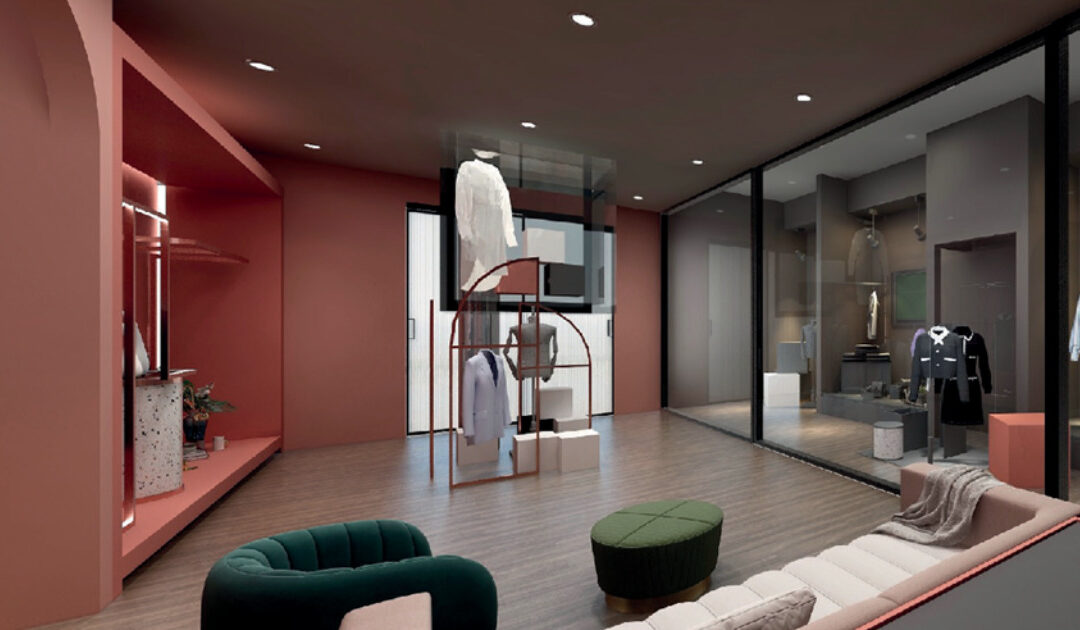
3D Fashion Design end to end – Connecting every step in the process
END TO END
Tools and services for fashion design that will forever change and improve the way you work.
In creation, production or selling, digital and real processes need to merge naturally. For a seamless transition mastering fabric, aesthetics, the human body, and patterns is key. And to empower you, we do our best and provide exactly what you need at every step. With our tools, you take the use of fabric to a new level. You are free to begin any model with a 3D design or a 2D pattern. They’ll update each other. Nesting and order optimization is done automatically from the initial idea to the final product. AI helps you to boost creativity and our 3D platform connects all your team’s assets
Key Benefits of a Digital Fashion Ecosystem
In an era of escalating costs, emerging regulations, and intense competition, fashion companies must embrace technology to stay ahead. The key to staying competitive lies in seamlessly integrating and leveraging all 2D/3D data throughout the entire process. Simply relying on isolated 3D or 2D fashion tools is no longer sufficient.
 Reach your goals more easily.
More flexibility, efficiency and performance are the key benefits you gain with a seamless process. Every person benefit, every process step improves. Fabric costing becomes possible from the first design, securing margins, pricing, and sustainability. Designers can create their styles and see them produced exactly as they want them to be. Pattern developers achieve the desired fit, resulting in reduced waste, and ensure sell-through. This way, every designer, product manager, and pattern developer can achieve their goals. And in the end, everyone wins.
PRODUCT
THE DIGITAL ECOSYSTEM FOR YOUR PRODUCTS
 Style3D Fabric
One-stop solution from fabric scanning and physical property measurement to digital fabric processing & cloud-based collaboration
Style3D Studio
Digital design software with proprietary soft-tissue engine, leading graphic processing capability, and lifelike rendering results for fabric, garments, avatars and more
Assyst.Connect2D/3D
Integrate 3D & 2D in real-time. Combine perfect designs with product ready patterns
Assyst.CAD
Create product-ready collections with premium pattern making incl. size tables, grading, fit
Assyst.Avatars
Realistic avatars from design to sales
Assyst.Automarker
Manage nesting and orders auto-matically with smart placement rules
Assyst.Autocost
Cut production costs and ensure sustainable fabric consumption with all information on style, orders, production, cost
Style3D DAM/Cloud
Digital collaboration tools incl. asset library, light design, pattern review, 3D alteration, workflows, product display, virtual merchandising
Style3D Market
3D digital asset bank with tens of thousands of assets for design, pattern making, NFT, marketing or metaverse.
Services
Content creation, project management, trainings, consulting by designers, artists pattern experts
CUSTOMER
READY TO SELL ANYTIME

Use your 3D samples instantly in your selling process. Digital Asset Management and the Style3D environment connect you with customers in virtual showrooms.
With Style3D and Assyst, you can present digital garments in showrooms, online, or in the metaverse. Co-edit and adopt client wishes instantly and manage your entire collections in one place. All products ready to produce at any time.
DIGITAL
Digital fashion starts with fabric.
We excel in understanding digital fabrics like no other. Whether utilizing our vast database of digital fabrics or scan your own by using normal flat bed scanner or Style3D high Defination scanner, you can play, cut, knit, and edit them seamlessly. We automate the digitization of a fabric’s physic and optic and so our software handles everything, including stretch, drape, and wrinkles, just like in reality.
With our tools, you can collaborate seamlessly and quickly with suppliers. Using digital fabric to visualize garments and making swift decisions for your collections. And in addition, you can forecast the amount of fabric needed from the initial design stage.

More details@
rahul.prabhakar@samrtechnology.com
sajith.kumar@samrtechnology.com
https://www.samrtechnology.com/Style_3D_Cloud.html
ColorJet showcases Cutting-Edge Textile Printing Technology at Gartex 2023
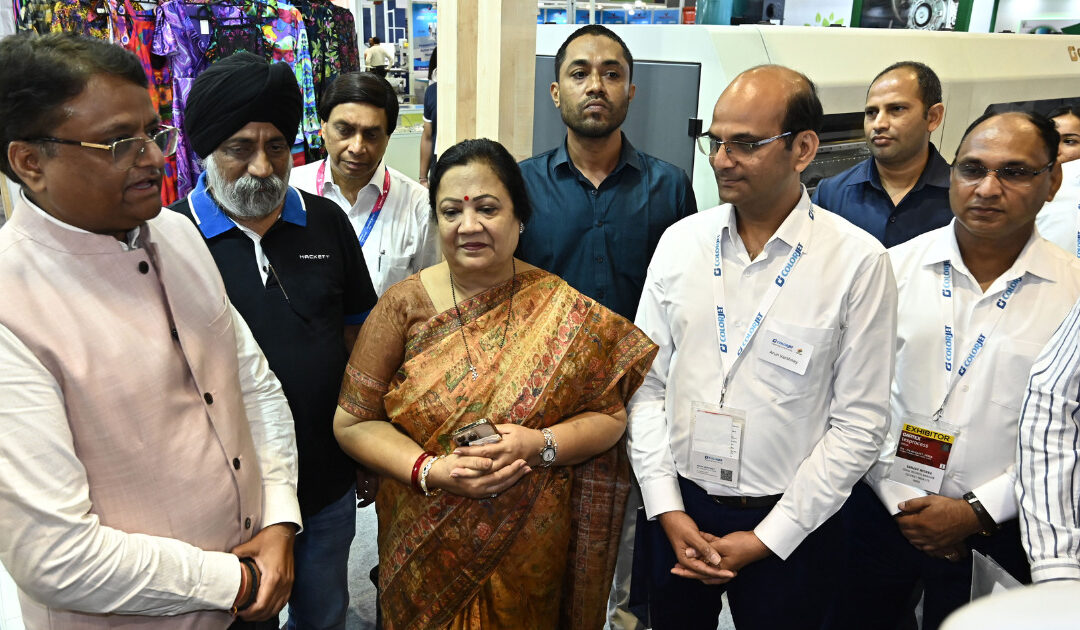
 ColorJet, a leader in digital printing solutions, has once again demonstrated its commitment to innovation and excellence by showcasing advanced digital textile printing machines at recently concluded Gartex Texprocess India 2023. The event held at Pragati Maidan from August 3-5, 2023, garnered significant attention from industry, and even received an esteemed visit from the Union Minister of Textiles, Smt. Darshana Jardosh. The ColorJet team was privileged to host the Union State Minister of Textile and Railways, at the ColorJet Booth during her engaging visit to the Gartex exhibition.
ColorJet’s participation in the Gartex exhibition provided a platform for the company to showcase its latest advancements in digital printing technology. The live demonstrations of High Speed, High-Quality VASTRAJET K2 and high-speed SUBLIXPRESS Plus captivated the audience with its precision, speed, and exceptional print quality.
The highlight of the event was the distinguished presence of the Union State Minister, Darshana Jardosh, who graced the ColorJet booth with her visit. The Minister not only expressed keen interest in the showcased machines but also personally observed the live demonstrations. This unique opportunity allowed the Minister to witness firsthand the transformative potential of ColorJet’s printing solutions in the textile industry.
At the Gartex inauguration event, Darshana Jardosh emphasized the significance of India’s textile sector, highlighting that it is one of the oldest and largest sectors in the Indian economy. Contributing to approximately one-fifth of the country’s industrial production. This indicates the industry’s substantial role in the nation’s economic growth and employment generation.
Speaking on the occasion, Chairman, M. S Dadu of ColorJet Group extended his sincere appreciation to Darshana Jardosh for taking the time to visit the booth and witness the company’s efforts in textile printing technology.
As a leading player in the digital textile-printing sector, ColorJet remains dedicated to revolutionizing the industry in alignment with the needs of the customers, Dadu further added. The company’s commitment to providing innovative and customer-centric solutions has been at the forefront of its success.
As ColorJet continues to push the envelope in digital printing, the company remains committed to providing cutting-edge solutions that empower textile businesses and industries to achieve new levels of creativity, efficiency, and success.
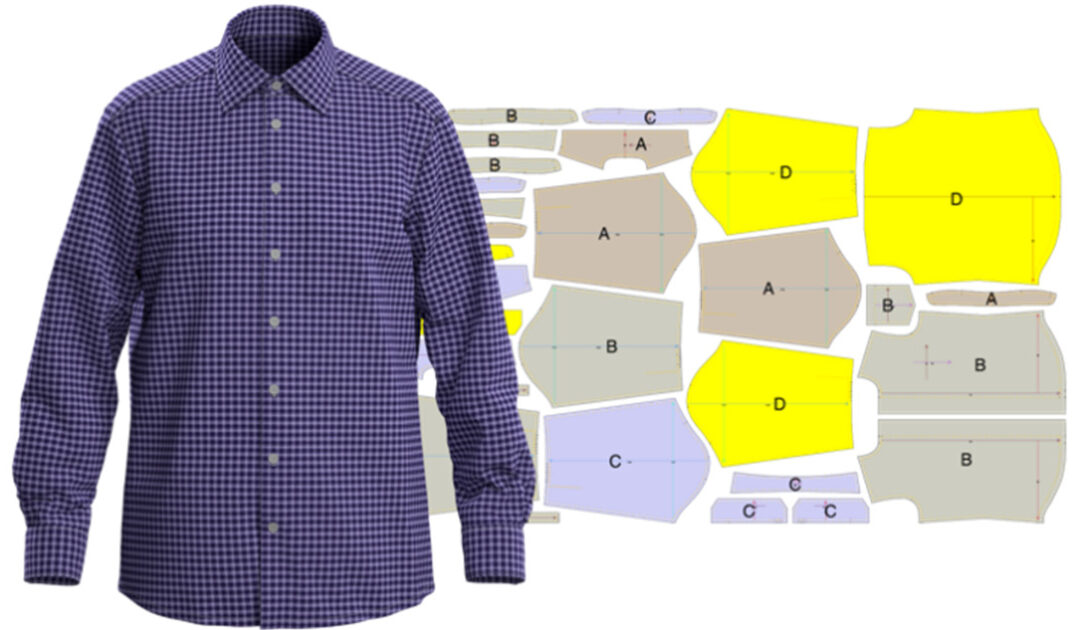
Introducing the Revolutionary Assyst 2D3D.Connect:
THE FIRST INTEGRATED AND AUTOMATED 2D/3D ECOSYSTEM BROUGHT TO YOU BY STYLE3D AND ASSYST
 Are you ready to take your fashion design to the next level? Get ready to witness the future of fashion creation with the all-new Assyst. 2D3D.Connect – the first integrated and automated 2D/3D ecosystem brought to you by Style3D and Assyst. This groundbreaking solution is set to transform the way you design and create, offering seamless connectivity between 2D patterns and 3D samples in real-time.
Say goodbye to isolated 3D or 2D fashion tools that limit your creativity and productivity. With Assyst. 2D3D.Connect, you can upgrade your fashion design process to an entirely integrated and automated digital world. Watch as your 2D patterns and 3D samples effortlessly update each other, leading to an unparalleled workflow, enhanced automation, and real-time updates like never before.
Start your design journey with 3D designs or your 2D patterns as usual, but now, with an array of additional benefits. The seamless digital ecosystem empowers you to create your styles and witness them materialize exactly as you envision. The real-time update feature ensures that your product-ready patterns are always up-to-date, guaranteeing flawless production execution.
But that’s not all! Our 2D/3D Connect revolutionizes pattern making and pre-production too. Achieve the perfect fit for all sizes in record time, as you and your technical developers work simultaneously with designers. As product managers and pre-production staff gain access to graded 2D patterns, accurate cost calculations, reduced waste, and improved sell-through become your new reality.
Discover the future of fashion design with Assyst.2D3D.Connect. Don’t miss this opportunity to be a part of the fashion revolution! Book your live demo now and embrace a seamless, efficient, and remarkable design journey. Elevate your Fashion game today!

Introducing Assyst.CAD: your solution for precise and efficient 2D pattern creation, Data Management, Smart pattern, MTM and gradings
Welcome to the world of Assyst.CAD – our leading 2D pattern making software that empowers fashion professionals to create patterns and gradings with unparalleled efficiency.
Take the leap towards innovation, automation, and end-to-end processes with our comprehensive solution covering digitizing, data conversion, pattern design and grading, data management, Smart Pattern automation, Made to Measure, plotting, cutting, and marker making.
One of the standout features of Assyst.CAD is its modular logic, which enables seamless management and re-combination of 2D patterns. This enhances transparency, version control, and facilitates teamwork, making collaboration a breeze.
Streamline your workflow and save valuable time with Smart.Pattern macros, which automate pattern design tasks and reduce errors. With access to over 200 routine macros, your design process becomes smoother and more efficient.
The real magic of Assyst.CAD lies in its integration throughout the entire fashion development process. With Assyst, your 3D designs, CAD, pattern making, and order planning are directly connected, ensuring seamless data flow from design to production.
When you join the Assyst family, you receive comprehensive training and support from highly-qualified pattern makers, ensuring a smooth transition and immediate usability.
Experience the power of Assyst.CAD live and unlock the potential of seamless pattern development and production.

Introducing Assyst.Autocost: Your Cost-Saving Cut Order Planning Solution
Working in a climate-friendly and cost-efficient manner is now easier than ever. Assyst.Autocost empowers you to purchase only the necessary amount of fabric, calculate production costs early on and coordinate orders effectively with customers and partners.
Leveraging extensive data from planning and production, such as sales curves, size-weight ratios, and material properties, Assyst.Autocost accurately calculates material requirements early in the product development and pre-production stages. Secure price calculations and margins are ensured, allowing you to make informed decisions and maintain delivery commitments with confidence.
Experience the financial benefits of Assyst.Autocost as it optimizes your savings potential. With outer fabric and ingredient costs accounting for a significant portion of the selling price, even a 1% saving can yield substantial returns on investment. AssystAutocost streamlines the cost and fabric consumption calculations for each model, considering various factors like size, material, and color. Detailed reports on material provisioning and production provide invaluable insights for cost optimization.
Embrace transparent fabric consumption, optimized costs, and sustainable practices in your next collection with Assyst.Autocost. Experience Assyst.Autocost live and unlock the potential of efficient cut order planning today.

Introducing Assyst Automarker: Your Solution for Structured Marker Making and Efficient Nesting
Welcome to Assyst Automarker, a cloud-based software designed to streamline your marker making process, achieve high fabric efficiency, and foster seamless collaboration with brands and production partners worldwide. With Automarker, you can significantly reduce fabric waste, protect the environment, and meet your quality goals efficiently.
One of the key advantages of Automarker is its ability to automatically create high-quality markers for your entire collection cycle. With customizable laying rules, Assyst Automarker ensures compliance with quality requirements while preserving crucial expertise within your organization. The software efficiently handles parallel marker layout, expediting processes, and optimizing productivity during peak periods.
Embrace the Automarker advantage and ensure quality throughout your process. By directly selecting cutting patterns from the Assyst CAD database, Automarker maintains continuous data flow and automation up to the cutter/plotter and enables precise data transfer. The system outputs data in the required formats, simplifying the entire order transmission process. This enables you to convey expert knowledge to production partners globally, ensuring top-notch quality even before cutting.
Industry leaders, like the Rofa Fashion Group, have embraced Assyst Automarker and Assyst.Autocost to optimize lead times, work preparation, material usage, and order communication across diverse locations, delivering exceptional service and top-quality outputs.
Take the first step towards structured marker making and unlock the potential of efficient nesting with Assyst Automarker. Experience the power of seamless automation and collaboration while making a positive impact on the environment.

Style 3D is brought to you in India by SAMR Technology Private Limited, a Digital & Automation Solutions provider in the field of Apparel, Footwear & Home Furnishing industry segment. Started in the year 2020, it represents the synergy between knowledge acquired in academic and years of experience in providing solutions to these industry segments. It provides Digital & Automation Solution in product development & manufacturing aiming to reduce production-costs and ensure sustainability. The company has now evolved to offer both ready-to-use products and technical services supported by hardware and software solutions. We have grown in this environment which has turned our passion for automation into our job.
Book a Live Demo OR Visit us at: Hall No. H-3, Booth No. N-32 at Gartex Texprocess India from 3-5 August 2023 at Pragati Maidan, New Delhi
More details@
rahul.prabhakar@samrtechnology.com
sajith.kumar@samrtechnology.com
https://www.samrtechnology.com/Style_3D_Cloud.html
Style 3D Fabric Digitization
CAPTURE HIGH QUALITY OF FABRIC TEXTURE AND SEAMLESSLY GO FROM PHYSICAL FABRIC AND TEXTILES TO THE DIGITAL WORLD
 Style3D High-Resolution Scanning, Fabric Stretch & Bending Tester is a reliable hardware trio that makes fabric digitisation easy. For starters, our devices directly plug and play with Style3D Fabric software—and they optimize complex workflows with open file formats.
Better yet, our Style3D Scanner captures 4K HD details to auto generate precise texture maps and shaders, while our Bending Tester and Tensile Tester accurately measure physical properties. Using our system, your converted results look impressive and behave astonishingly.
Fabric Tester:
• Auto Measurement of fabric physical property. weight, thickness, tensile strength, and bending
• No more manual testing. just plug in and enjoy the results
Fabric Stretch Measurement:
• Measure stretch with high accuracy. Up to 0.01N.(0.5%)
• Power-drive system with high accuracy up to 1mm
Fabric Simulation (including color and Maps):
• Diffuse, Normal, Transparency, Metalness, Displacement, and Roughness
Operation
Device Connection | Driver installation | Proof colours & set up | Fabric ironing
↓
Place the fabric
↓
Click “Scan”
↓
Auto generate map
↓
Choose file type, export and save
 3D Fabric Scanner
A Direct link to Syle3D Software
Capture so much more detail,
Transform fabric into digital art.
Make even the smallest details seem epic,
Easy to use.
Generate maps automatically.
Up to 40,000,000 pixels.
Compatible with multiple and blending texture.
Capture fabric texture so accurate.
Present fabric with every single details.
High precision optics to uniform light
Well-distributed light
High Colour rendering (> Ra95)
LED guide plate (CT 6500K)
High Strength aluminum frame
High hardness PMMA
Fabric Physical Property Measurement Device
Capture fabric physical property.
Easy to use with auto measurement.
No need to install and test, just plug in and use it.
Link to Syle3D Fabric Software directly.
Auto process makes physical property with high accuracy.
Fabric Stretch Measurement Device
Measure stretch with high accuracy.
Up to 0.01N.
Power-drive system with high accuracy.
Up to 0.05mm.
Fabric Blending Measurement Device
Semi-closed test zone.
Handy plans for fabric clamping.
About Style3D Digital Fabric Devices: A pioneer company in fashion industry that provides one-stop solution, which includes “fabric scanning, fabric measurement, software and online collaboration.”
Style 3D is brought to you in India by SAMR Technology Private Limited, a Digital & Automation Solutions provider in the field of Apparel, Footwear & Home Furnishing industry segment. Started in the year 2020, it represents the synergy between knowledge acquired in academic and years of experience in providing solutions to these industry segments. It provides Digital & Automation Solution in product development & manufacturing aiming to reduce production-costs and ensure sustainability. The company has now evolved to offer both ready-to-use products and technical services supported by hardware and software solutions. We have grown in this environment which has turned our passion for automation into our job.
Book a Live Demo OR Visit us at: Hall No. H-3, Booth No. N-32 at Gartex Texprocess India from 3-5 August 2023 at Pragati Maidan, New Delhi
More details@
rahul.prabhakar@samrtechnology.com
sajith.kumar@samrtechnology.com
https://www.samrtechnology.com/Style_3D_Cloud.html
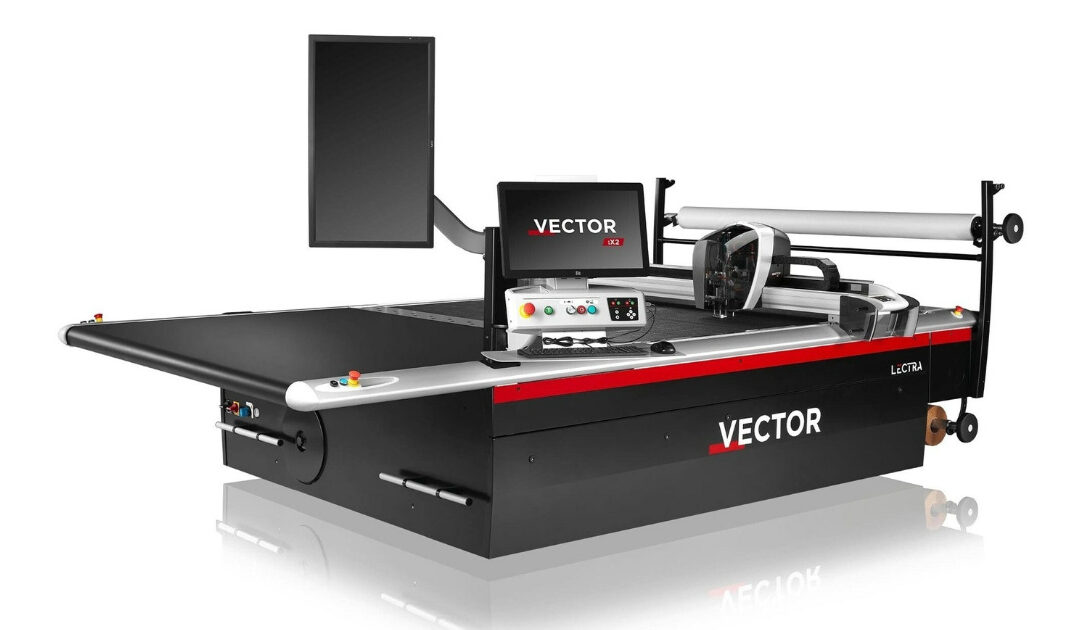
Lectra launches VectorFashion iX2 and VectorFashion Q2, a new generation of intelligent, connected cutting equipment for the fashion industry
 Lectra supports the transformation of fashion, automotive and furniture players by providing them with technological solutions that accelerate their transition to a more efficient and more sustainable Industry 4.0. The Group announces the launch of a new generation of intelligent, connected low-ply equipment for the fashion industry, VectorFashion iX2 and VectorFashion Q2. They are particularly well suited to ensuring a quick, easy transition from small-volume production to larger order volumes, while maintaining optimal cutting quality. Developed with an eco-design approach, their environmental and social impact has been significantly improved.
In fashion, the current trend is towards capsule collections and the constant renewal of products. Manufacturers therefore have to produce smaller volumes of the same design and the number of orders to process and materials to cut is increasing. VectorFashion iX2 and VectorFashion Q2 allow manufacturers to cut variable volumes in an agile manner, in all types of materials.
“As economies of scale are increasingly difficult to achieve, fashion manufacturers need to gain flexibility while controlling the costs associated with the production of the orders they receive. With optimized running costs and enhanced performance, the new generation of VectorFashion iX2 and VectorFashion Q2 cutting solutions offers them a better return on investment, and helps them increase their margins while also reducing their environmental footprint. As corporate social responsibility is a major priority for Lectra, we have reinforced the integration of eco-design principles in the development of this new range. This enables our customers to meet the fashion industry’s two major challenges: reducing energy and material consumption,” explains Maximilien Abadie, Chief Product Officer at Lectra.
A reduced environmental footprint
Fashion players also have increasingly high expectations regarding the environmental footprint of their business. Lectra meets their needs by applying eco-design principles. VectorFashion iX2 and VectorFashion Q2 use 30% to 40% less energy than the previous versions, which were already renowned for their energy performance, for superior efficiency. They weigh 200 kg less than their predecessors, and are more compact in size. As a result, the carbon footprint associated with transporting the equipment, and with the resources used in its production and maintenance, is also significantly reduced.
Ergonomics and operator protection, Lectra’s key concerns, have been completely reconsidered, with the introduction of new standards for electronic cards, the integration of motion detection radars, and the reduction of equipment noise levels. This guarantees optimum operator comfort and safety, while minimizing equipment downtime.
More connectivity, more intelligence, more efficiency
VectorFashion iX2 and VectorFashion Q2 offer a high level of connectivity thanks to numerous built-in sensors, which makes them fully compatible with Industry 4.0.
Thanks to data intelligence and improved connectivity, manufacturers have all the data they need to increase the efficiency of their processes, boost productivity, improve product quality and better meet the challenges of tomorrow.
They also benefit from new associated services, as well as predictive maintenance with enriched digital content for greater autonomy. Maintenance operations are halved, resulting in lower consumable costs, and a significant increase in equipment availability compared to the previous generation.