Technology

Gerber launches new AccuMark® 2D/3D

Gerber launches new AccuMark® 2D/3D

Gerber Technology pushes boundaries of innovation with a single, unique platform that fully connects the supply chain from design to production leveraging 2D/3D CAD, PLM and Industry 4.0 enabled Smart Machines. With the release of AccuMark 12.2, which has more than 46,000 users worldwide, the 50-year-old pioneer will solidify its position as the leading end-to-end platform by effectively streamlining the workflow through the ability to increase productivity, identify fit issues, and decrease the lead time from an average of 57 weeks to as little as a few days. This covers not only the area of digital product development but also the connection to both mass automated and on-demand production.

“A seamlessly integrated platform will allow users to not only see pretty pictures but be able to produce garments right away, drastically reducing the development cycle times,” said Mary McFadden, Vice President of CAD Product Management at Gerber Technology. “Our customers can use their own patterns to simulate in 3D, make as many fit adjustments as needed without having to use any DXF, which is a real game changer. With 12.2, we’ve added required features that are going to strengthen the connection with not only YuniquePLM® and our Smart Machines, but also with digital printers, enabling our customers to meet every challenge.”

“Our integrated platform uniquely offers the flexibility, speed, and agility that our customers need now in order to compete and thrive,” said Karsten Newbury, Chief Digital Strategy Officer, Gerber Technology. “Our focus is singularly on the success of our customers so they can tackle the burning topics in the industry including fit, sustainability, and the need for personalization. This requires a tightly-integrated data solution. We’re continuing our aggressive roadmap with the release of AccuMark 12.2, which is going to add great value to our end-to-end platform.”

AccuMark 12.2 has been designed to fully empower the industry by enhancing Gerber’s end-to-end platform through an improved digital print workflow, several new 3D capabilities that will improve fit assessment, and offer better communication among partners and team members. AccuMark 3D 12.2 also includes major improvements in 3D simulations. Our integrated 2D/3D solution provides the most efficient workflow for validating patterns during fit and style development. Patternmakers can seamlessly simulate patterns while making pattern corrections, even on graded sizes.

In order to combat the need for on-demand, personalized products, many companies are starting to leverage digital printing. AccuMark 12.2 offers new enhancements that will improve the digital printing process including the ability to apply barcodes and QR codes to seam allowances and PDF image option that supports spot colours.

The latest installment of the industry-leading CAD solution will also feature major updates to their cut planning software, AccuPlan™, which will further enable their customers to take on the challenges of mass production. AccuPlan 12.2 not only makes it simple to get a precise cut but, when combined with Gerber’s powerful nesting software, AccuNest™, is able to drastically reduce costs and material waste.

“Our pre-press process is at least five times more productive than it was before the AccuMark digital print workflow and we’ve gained, on average, 15 percent yield using marker making to layout the pieces for the print file,” said Jon Hickson of Digital Performance Gear. “Our art team will be twice as efficient with 12.2 since they won’t have to wait for simulations to finish every time they want to send out a concept with different art.”

Fashion on demand becoming a reality now

Fashion on demand becoming a reality now

The future of fashion is increasingly linked to customization. On-demand production is a business model with limited financial risk and it has many advantages for companies: It allows adapting the offer exactly to the demand by producing precise quantities, avoiding stockpiles or having to resort to price reductions. 74 percent of millennial & generation today is interested in purchasing personalized clothing.

From an economic perspective, there are many positives to on-demand production. On the plus side, it requires lower capital investment and leads to smaller inventories and more flexibility and agility. Shorter-turnaround cycles can reduce demand uncertainty and contribute to a more sustainable small-batch production cycle. However, production costs are generally higher, due to the smaller batch sizes, as are transport costs if production is nearshore or offshore.

Rising take-up of on-demand production will lead to a spike in personalization, and a new generation of customized clothing start-ups, creating a new definition of “made to measure.” In the technology space, automation intellectual property will continue to develop, with patent approvals likely to be a critical success factor in the years ahead.

To respond to new market trends and help fashion companies to meet new challenges, Lectra has developed the Fashion on demand solution. The result of the research of more than one hundred experts during the last 4-5 years, stems from the principles of the Industry 4.0 and it automates the entire process of customization, from product development to the final cutting phase.

Consumers are now driving trends

Thanks to 24-hour connectivity, consumers are making faster, more informed purchasing decisions. Not only are they defining the value proposition of products and services, but they are also empowered to impose their demands on the market. Brands, retailers and manufacturers wanting to succeed in this new business environment will have to change their focus to be more customercentric, adopt industry 4.0 best practices and invest in smart technology to keep up with consumer trends.

Conventional supply chains can no longer meet consumer demand

The conventional fashion supply chain model is too opaque, fragmented and slow to respond to diversified consumer demands quickly enough to satisfy customers. As a result, consumers will look to the nearest competitor to get the personalized products and exceptional customer experiences they want. This inability of the conventional supply chain to meet new expectations puts established fashion companies at risk.

The on-demand business model is now

The on-demand model is a way to make factories smarter and bring business closer to the consumer. The key to meeting the needs of the new consumer is learning how to integrate state-of-the-art digital technology and real-time consumer data into daily business operations. Brands, retailers and manufacturers with the flexibility to produce quickly and on demand are successfully winning consumer loyalty.

On-demand business benefits

• Generate positive cash flow: Take pre-paid orders, optimize operational overhead, gain material savings and minimize excess stock
• Achieve operational agility: Respond and react quickly to new market opportunities around on-demand production and personalization—small series, customization and made-to-measure orders—without disrupting existing revenue models
• Acquire competitive advantage: Integration of innovative technologies at each step of the product lifecycle lets you build and manage a powerful, efficient on-demand supply chain to speed your products to market and strengthen your position
• Think globally and act locally: Create, develop and produce more sustainably for specific regions, adapting your production to business models and/or individual consumers by taking advantage of nearshoring

Fashion on demand by Lectra

The industry’s first end-to-end solution to develop individualized products and automate production—is designed to help the fashion industry overcome the challenges of scaling and/or implementing made-to-order and personalized offers.

A complete solution

• Lectra Digital Cutting Platform: A powerful cloud-based solution including business applications
• Virga smart and connected single-ply cutting line
• 3 packages for a modular and scalable offer: Made to order for sampling, small series, quick assortment Made to customize for customization orders Made to measure for made-to-measure clothing
• Powerful automatons that automatically process the various activities from preparation up to cutting
• Seamless automatic synchronization between cutting line, digital platform, ERP and Lectra CAD

What you will gain

Fashion on Demand by Lectra is a game-changer in this space because it automates the go-to-market processes to expedite development while concurrently enabling manufacturers to expertly manage fabric cutting, even for complex, patterned designs. By shortening the cycle, fashion companies will be able to produce the high-quality personalized garments consumers want faster.

Improved time to market

• Simultaneous management of multiple individual orders
• Automation of production rules
• Identical cutting speed for both patterned and plain fabrics

Cost savings at every stage

• Material savings: Powerful nesting and high productivity per square meter
• No plastic and paper consumables
• Multi-line and multi-site management

Operational efficiency

• Streamlined production processes
• Pre-set cutting instructions
• Configurable workflow with rules you can change at any time

Full operational control and 360° visibility

• Supervision controls
• Vertical IT system and horizontal process integration
• Data monitoring integrated into dashboard

Flexible and secure management of personalization offers

• Management of any variant or component
• Automatic matching of orders to product catalog
• Line-item product monitoring made possible by unique product ID numbers

Optimized management of a broad range of fabrics and patterns

• Powerful scanner with fabric pattern positioning
• Material library management: Set attributes for individual fabrics
• Automatic parameter set-up for cutting

Consistent fit and sizing across products and markets

• 2D patternmaking
• 2D industrialization (including special grading)
• Reliable alterations system with automatic consistency controls

Enhanced user experience thanks to an easy-to-use solution

• Intuitive touch-screen interfaces
• Controlled sequencing of cutting jobs
• Visual loading and off-loading assistance

Why Lectra?

Lectra has more than 40 years of experience innovating in the fashion industry. It works together with major fashion and apparel players in over 100 countries. Drawing from its experience and expertise, it is continuously reinventing the value chain so that businesses can become more pro table, sustainable and agile.

Konica Minolta and True Colors teaming up to bring revolution in digital textile printing

Konica Minolta and True Colors teaming up to bring revolution in digital textile printing

When there are ideas that can change the way industry works, creates and shares the production on a global scale, the intention of expansion to make every tiny sector or a unit a better supplier arises. And that is the exact case of the extraordinary collaboration between Konica Minolta and True Colors.

Konica Minolta is a renowned Japanese brand with 44,360 employees, with sales and service provided into more than 160 countries, and holds a total sale of roughly Rs. 695.61 bn. Konica Minolta has been in the Indian market for a significant period of time but when they were looking for not just expansion but as their motto suggest “The essentials of Imaging” where essential word reflects our objective to provide products and services and that is the reason we have decided to carry our legacy with True Colors as they have a strong hold over multiple cities like Delhi, Mumbai, Surat, Ludhiana, Amritsar and Kolkata said the officials. We wanted to make our presence feel more impeccable, provide our esteem clientele with 100 percent of service and customer support is the reason we joined hands with True Colors to shape the future of textile printing.”

Since its establishment in 1873, by making the most of its diverse technologies and innovations, Konica Minolta has been expanding its business in various fields that include office equipment, optical systems for industrial use, and diagnostic imaging system. Konica Minolta, Inc. has also been included in the Dow Jones Sustainability World Index, which is one of the most prestigious global indices of ESG investment, for seven years in a row, and was again named industry leader with the highest total score earned in the three dimensions of economic, environmental and social.

True Colors Impex started its journey way back in 2011. True Color Impex is a wellknown company which deals into textile machinery. True Colors is also working as an exclusive representative for the world’s leading manufacturers. If we dig at the history of digital printing in India, True Colors is the name that sets itself apart from the rest of the companies as it was the very pillar that created and made a smooth runway for the digital printing industry. The company introduced digital printing at the beginning of this era to the Indian textile industry only to change it forever.

Since it was quite a fascinating and a fairly new concept the market was introduced with, True Colors went through gigantic hassle to educate the industry on what digital printing is and the plus point it has to offer and as gradually the market started understanding the need for the shift from the conventional methods of printing to digital printing, the company graph also went higher, making them leading supplier today. But what differentiates True Colors from the rest of its competition is their in-depth knowledge and research of this market over these years and because of that they tailored the machines as per the needs of the Indian textile market in terms of addition or deduction of spare parts, making the machines more effective with better runnability and results.

When Sanjay Desai, Director of True Colors was asked about it, he said, “We work as a bridge between the client and the manufacturer, whether it’s a matter of a service, guidance or a support in general, we’re the closest and most aware person in the picture, and that’s what made Konica Minolta understood why this collaboration was the need of the hour.”

True Colors is one of the most recognised names in the industry and forming the largest service team of service engineers led by an operations head, ensuring the smooth running of the business. And now with this global scale collaboration True Colors is all set to launch Nassanger 120, Nassanger 8 and Nassanger 10 beast into the market.

Nassanger Pro 120 is a standard printer that is equipped with 8 and 9 printheads. Nassanger 120 can support the maximum fabric quality width of 1,800 mm. Nassanger 10 offers 72 and 81 inkjet printheads, while Nassanger 8 is equipped with 16 and 32 printheads. Nassanger 120 is a perfect machine for entry-level production whereas Nassanger 8 is an optimal choice for the customers who are handling medium-sized lots and Nassanger 10 is built for customers who are handling large-lot print jobs that require both volume and quality.

Looking at the market fluctuation and changes in general both of the brand authorities believe that this collaboration will not just be an ordinary deal but something that will create a massive impact on the market future and will provide a better direction to it.

Jack opens its largest showroom in India in association with CK Trading

Jack opens its largest showroom in India in association with CK Trading

Jack Sewing Machine Co. Ltd, a China based sewing machine manufacturer in association with CK Trading Co. recently opened its largest showroom in India for live display of Jack brand sewing machines and its other products. The showroom was inaugurated by Elgbert and Sam from Jack Sewing Machine Co. Ltd on 12th July, 2019.

For last few years, Jack has beeng rowing at a very good pace in India market due to its aggressive marketing strategy and continuous investment on its branding. Jack is regularly introducing the new machine models with high precision technology and is constantly penetrating into new areas with its presence and increasing its market share.

With all these efforts, Jack’s share in India market is continuously increasing year-on-year basis. In order to get bigger share in Eastern India market, Jack in association with its Kolkata agent CK Trading Co. has opened its largest showroom in India, situated at South City Anmol Infra Park, Plot B1, Jagdishpur, Chamrail, Howrah, which is located near the upcoming West Bengal Hosiery Park, a garment manufacturing park.

Showroom is spread over in 5,000 sq. ft. area with live display of complete Jack machines range starting from single needle sewing machines and multi-needle sewing machines cutting machines, pattern sewing machines, spreading machines, eyelet button hole machines and other latest products.

The event was graced by the presence of around 100 leading industry players from in and around Kolkata. Some of the prominent names included representatives from leading companies like Turtle Ltd., HP Cotton, Kothari Hosiery, Jyoti Waterproofs Pvt. Ltd. to name a few.

Prior to taking the decision, the customers can see live demonstration of complete Jack sewing machines range at one place. They can also bring their samples and test them on the machines. In future, the company is also planning to provide sewing machine operating training to the new labour force by opening a training school nearby to this showroom. CKT is going to provide free training to the labour force, which will help in reducing down the shortage of workforce in the area.

According to Rajiv Ranjan, Proprietor, CK Trading, “The showroom comprises complete range of Jack Sewing machines, providing all the solutions together under one roof. Earlier customers used to buy one model, try that at their factory and then place the order. But now, the process has become easier as they can directly come to our showroom with their fabrics, check and try all the machines and after satisfaction can take the purchase decision. Besides, the area selected for showroom is centrally located and is nearby to upcoming West Bengal Hosiery Park where all major hosiery brands are going to have their units. So, it will bring them closer to Jack.”

Established in 2016, CK Trading Co. is a total apparel solution company. Its product range starts from Automatic CAD/CAM, cutting machines, sewing machines, finishing machines, electrical solution for the garments factories, all garments furniture systems, production line table, checking tables, cutting tables, heavy duty racks, bus bar systems & so on. CK Trading represents some of the world’s leading bands in the market and believes not only in selling products but also in building a long-term relationship with their principals, customers & dealers, ensuring complete customer satisfaction.

Besides, established in 2003, Jack Sewing Machine Co., Ltd from Taizhou, China is one of the leading companies in the world involved in manufacturing and R&D of full series of lockstitch, over lock, interlock, special machines, machines for heavy-duty materials and pocket-welting machines.

ITMA 2019 – Ends on high note with large number of quality buyers

ITMA 2019 – Ends on high note with large number of quality buyers

Themed ‘Innovating the World of Textiles’, the 18th edition of ITMA, the world’s most established textile and garment technology exhibition, concluded successfully in Barcelona, Spain. The global textile and garment manufacturing industry converged at ITMA 2019, chalking up new records for the exhibition which has been held every four years since 1951. It featured many exciting new product launches and innovative technologies and products, including those that leverage the Internet of Things, by 1717 exhibitors from 45 countries.

CEMATEX, the European Committee of Textile Machinery Manufacturers, and owner of ITMA and ITMA ASIA, reported that the industry support from visitors and exhibitors was tremendous, resulting in record-breaking number of exhibitors since its inception

Fritz P Mayer, President of CEMATEX said, “The digital transformation of the textile and garment manufacturing value chain and sustainability concerns of the industry have driven up visitor interests in ITMA 2019. We had a strong turnout, despite trade tensions and poor business sentiments. Many of our exhibitors were pleasantly surprised with the large number of serious buyers attending the exhibition.

“They were also impressed with presence of new visitor segments, such as bigger numbers of fashion and sports brands. Considering that for this ITMA edition, the exhibition duration has been shortened from 8 to 7 days, we still enjoyed good visitorship.” ITMA 2019 attracted visitorship of over 105,000 from 137 countries. The top 5 countries where visitors came from were Spain (11 per cent), Italy (10 per cent), India (8 per cent), Turkey and Germany (7 per cent). They were followed by France, United States, Portugal, Brazil, Pakistan, China and the United Kingdom.

One of the exhibitors who was pleased with the visitor quality was Johan Verstraete, Vice-President Weaving Machines of Picanol. He explained, “Overall, it has been a good ITMA for us. We came with low expectations, but they have been considerably exceeded. Although we did not get a large number of visitors, the quality was very high. We had many conversations and negotiations, which was somewhat contradictory to the ongoing negative market sentiments.”

An excited Paolo Milini, President & CEO of MS Printing Solutions, agreed: “We are very satisfied with the show. The positive results of ITMA 2019 were made possible thanks to a large number of visitors who came to our stand. We have had over 600 contacts a day, and they come from over 90 countries!”

Launched as a dedicated sector at ITMA 2019, the printing and inks chapter had grown by 40 per cent compared with ITMA 2015, and featured many established and new exhibitors who were keen to exploit the digital printing sector.

VDMA Textile Machinery Association members were also happy with the visitor quality. Regina Brückner, CEO of Brückner Group and Chairperson of the Association, enthused: “A VDMA survey conducted at ITMA 2019 showed that almost 90 per cent of our exhibiting member companies considered both the quantity and quality of visitors as ‘good’ or ‘very good’. Visitors from all over the world came to ITMA Barcelona to discuss new projects.”

ITMA 2019 also provided the platform for the announcement of a comprehensive modernisation programme for Egypt’s textile industry valued at around 1 bn euro from exhibitors including Benninger, Brückner, EFI Reggiani, Itema, Karl Mayer, Rieter, Savio and Thies.

The innovation place

Many new technologies were launched, ranging from 3D weaving and knitting to hi-tech nonwovens processes, sustainable chemicals and state-of-the-art garmentmaking technologies, and wide range of software-powered automation solutions.

“I missed the last ITMA in Milan. After eight years, I find there is a big jump in technology. There are many interesting new developments, such as digitalisation and automation, as well as more eco-friendly products. I came here to also buy equipment for my factories, so this has been a fruitful trip for me,” said Kihak Sung, Founder of Youngone Corporation and President of International Textile Manufacturers Federation.

Another leading industry player, RakhiI Hirdaramani, Director of Hirdaramani and the Manufacturers Committee Chair of the World Federation of Sporting Goods International, said: “ITMA is a meeting of the minds. As much as it is a machinery fair, it’s also about understanding new technologies; meeting with your peers and colleagues from various sectors of the industry to understand the challenges and how to address them. One of the key trends we’ve seen this year, is about sustainability and Industry 4.0.”

Hirdaramani participated in a panel discussion held at the Speakers Platform, one of the components of the ITMA Innovation Lab which was launched at this year’s exhibition. The Platform drew strong interest and participation. It featured about 60 presentations, and was attended by over 900 participants.

In addition, a number of ITMA and co-located events drew over 1,000 delegates. Among the events were the ITMA-EDANA Nonwovens Forum, Textile Colourant and Chemical Leaders Forum, Better Cotton Initiative Seminar, European Digital Textile Conference, Tex-Summit Global, Planet Textiles, SAC & ZDHC Manufacturer Forum and Texmeeting by TEXFOR.

ITMA collaborated with supporting organisations, many of which sent visiting delegations from Central Asia, South Asia, Turkey and the Mediterranean countries. Among the high-level government delegations that were at ITMA included Catalan Minister of Business and Knowledge Ángels Chacon i Feixás; Governor of West Flanders Carl Decaluwé who led a press delegation from Flanders, Belgium; and the Uzbekistan Vice Minister of Silk Jumaev Olimjon and Vice Minister of Textile Jumaniyazov Fahriddin who led a delegation of 40 people.

Charles Beauduin, Chairman of ITMA Services, which organises ITMA 2019, said: “We are extremely glad that many industry stakeholders see ITMA as an excellent platform for collaboration and sharing of ideas to make the industry more competitive in the face of digital transformation and to explore cutting-edge solutions to future proof their business.”

Alex Zucchi, President of ACIMIT also shares Beauduin’s view. He said, “This Barcelona edition has confirmed ITMA as the main B2B platform in the textile industry. The many innovations seen here, especially in the field of sustainability and digitalisation, have increased the interest of visitors. It is essential to focus on these issues also for the next edition of ITMA to be held in Milan in 2023.”

The next ITMA will be held in Fiera Milano, Milan, Italy, from 8 to 14 June 2023. Some exhibitors, happy with their participation, have already started making plans for the next show.

Some glimpses of the show…


Some glimpses of the show…


ITMA sustainable innovation award

One of Europe’s largest denim producers, Candiani SpA has won the ITMA Sustainable Innovation Award, held in conjunction with ITMA 2019. Its innovative product, Candiani Re-Gen is a ‘circular denim’ fabric created from regenerated and recycled raw materials.

Fifty per cent of the Re-Gen fabric comprises Tencel x Refibra Lyocell made of pulp from cotton scraps and wood pulp using Lenzing’s efficient closed-loop process; the other 50 per cent consists of post-industrial recycled Candiani fibres. Candiani’s fabrics are also dyed using green technologies, resulting in substantial reduction in the use of water and chemicals in the fabric production and jean washing process.

According to Alberto Candiani, President of Candiani SpA, the fabric was created to commemorate Candiani’s 80th anniversary. He said, “We are a strong believer in sustainability. In creating the Re-Gen fabric, we leveraged Lenzing’s Tencel Lyocell fibres with Refibra technology, and combined it with our inhouse expertise to create an innovative product that is fashionable and environmentally friendly at the same time.”

Nominated for the award by ITMA 2019 exhibitor Lenzing Ag, Candiani SpA received the trophy from CEMATEX President Fritz P Mayer, at a presentation ceremony on the opening day of ITMA 2019.

Mayer said, “We would like to congratulate both Candiani and Lenzing for their excellent collaboration. CEMATEX launched the ITMA Sustainable Innovation Award in 2015 as we would like to encourage greater industry collaboration and synergies, as well as spur more research and development efforts. Ultimately, we need innovation to drive our business and contribute to a more circular economy.”

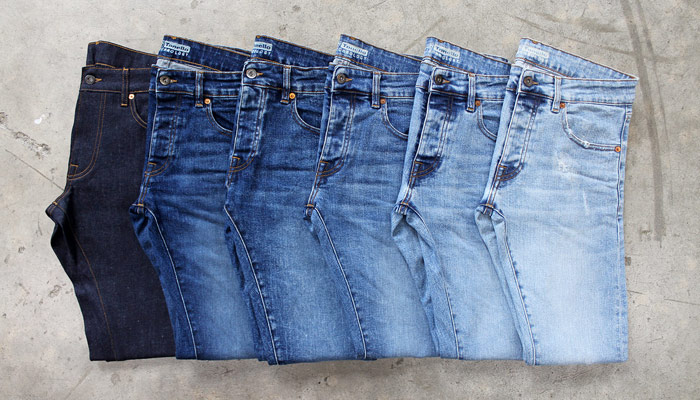
The two other finalists of the ITMA Industry Excellence Award – Levi Strauss & Co, and Lee – were also praised for their efforts to introduce green innovations into their products and processes. Winner of the first ITMA Sustainable Innovation Award in 2015, Levi Strauss & Co launched FLX Customisation Studio which revolutionalises in-store customisation by allowing customers to pick their denim finish and create a unique pair of jeans in less than two hours. The mobile studio uses sustainable garment finishing technologies and operates on 100 per cent recycled water. It leverages ITMA exhibitor Jeanologia’s water recycling system, H2Zero.

Established denim jeans brand Lee leverages Tonello’s innovative garment finishing system for its denim jeans. The All-in-One System combines four technologies that drastically reduces the water needed in the finishing stages of jean manufacturing thus reducing processing time and total production cost.

Research & Innovation Excellence Award

Fritz P Mayer, President of CEMATEX and the German Engineering Federation (VDMA), handed over the prize money of 10,000 euro with certificate to the lucky winner at ITMA 2019 in Barcelona, Spain. The 3D braiding machine consists of an existing conventional mechanical system. It has now been digitised and rebuilt according to industry 4.0 standard. With the help of the digital control, e.g. threedimensionally reinforced ceramic turbine components can be manufactured as prototypes and subsequently produced in series. Together with the company ark industrie AG, Aachen, Germany, and 2C-Composites GmbH & Co. KG, Heinsberg, Germany, the control system was completely redesigned so that the machine can be monitored and operated from anywhere.

“Every machine manufacturer is looking for ways to update its existing machinery before replacing it. We provide him with a good solution in the field of digitisation and Industry 4.0,” says Professor Dr Thomas Gries, Head of ITA. At ITMA 2015, ITA doctoral candidate Jan Jordan had already won the R&I Excellence Award for his master thesis “Development & assembly of a test bench for the analysis of magnetic weft insertion.”

The ITMA Sustainable Innovation Award was created by CEMATEX to recognize the joint efforts of the global textile industry to promote corporate sustainability through innovative solutions and outstanding industry-specific research. The award comprises two categories: An Industry Excellence Award for textile and apparel manufacturers and a Research & Innovation Excellence Award open to Master’s students.


Adobe Textile Designer debuts at ITMA

After performing live demonstrations of the Adobe Textile Designer plugin for Adobe Photoshop at the interactive Print-Make-Wear workshop at FESPA last month, Adobe exhibited Designer, for the very first time, at ITMA. “Adobe Textile Designer was conceived to help designer make prints for Fashion and fabrics for furnishing,” said Mike Scrutton, Director – Print Technology & Strategy for Adobe’s Print & Publishing Business Unit “Designers can be creative today, without worrying how they will print tomorrow. Adobe Textile Designer is flexible to allow traditional screen and engraved roller printing, as well as the latest digital techniques.”

Drawing from enthusiastic response from a broad range of textile designers, from major brands to independent professionals to part-timers and hobbyists, Adobe has developed the latest beta version of the product that it was unveiled at ITMA. With the latest beta version, Adobe also announced its collaboration with Datacolor, a global leader in colour management technology, and Color Solution International (CSI), a leading provider of colour standards and colour communication tools.

This collaboration connects Adobe Textile Designer with Datacolor’s professional colour lookup tool, ColorReaderPRO, and with the CSI ColorWall, a popular third-party colour standards library. The integration offers tremendous time and cost saving in the textile design process by eliminating the need to manually search and match textile colour samples with swatches or colour codes. Designers can now use Datacolor ColorReaderPRO to measure any source of colour inspiration and translate the colour data directly to photoshop.

Adobe Textile Designer helps fashion and décor artists to streamline the process of creating prints for fabrics. Designers can build and preview repeating patterns, define separations, and work with colorways, all within Photoshop, while keeping every element editable, and reversible, until the design is ready for printing. Like most Adobe Creative Cold applications, Adobe Textile Designer support non-destructive elements, with independent layers adjustments, filters, and allowing users to place an illustrator smart object (vector) in a Photoshop design that can be edited later. After a design is ready to print, designers can save their work in various formats, and can include XMP metadata in their output files that will be used in the fabric production process. Adobe Textile Designer is currently in beta and it invites textile designers to try out, test and provide feedback.


IMA SpA introduces Mithos 892 totally digital spreader

IMA SpA is an Italian capital company founded in 1977 in Turin. A few years after its establishment, it joined the Macpi Group and transfered its production site in Palazzolo, in the province of Brescia, home of the other companies of the Group. IMA SpA has consolidated over the years a position of absolute international leadership in offering the widest range of spreading installations, cloth rolls handling and managing systems and software programs for full organization in cutting room. One of the latest innovations by the company is Mithos 892 totally digital spreader:

Main advantages of the digital system:

• Machine information, controls and diagnostics totally controlled in digital, in real time
• The fabric supply and the voltage-free system are also electronically controlled in real time by a Digital Signal that guarantees: High precision of the positioning of the machine, Perfect alignment of the selvedges, High pulse encoder that allows the machine to work in MM. instead of cm, with a great saving of fabric and time
• Possibility to set, memorize and load in real time unlimited drafting profiles based on the type of fabric
• Low consumption thanks to eco-power technology (latestgeneration Mitsubishi inverters) and low management costs
• High speed data transfer,
• Possibility of remote connection from devices such as tablets or smartphones,
• Possibility to interface the machine with business management systems,
• Easy remote assistance service from the IMA team.

Details of the machine

• 4 drive wheels with synchronous belt
• Interactive touch-screen with flexible performance to control the drafting functions
• Possibility to display and update the use of the fabric
• Automatic braking system
• Two-way cutting device with speed and adjustable accelerations and programmable lifting
• Fixed cradle turret lowered to facilitate loading and unloading of the fabric roll, consisting of a double full-width PVC mat
• Rear carpet moved by air pistons
• Management of spreading with fixed steps


Dover Digital Printing showcases new technologies

Dover Digital Printing, part of Dover, exhibited a range of new and enhanced products and technologies. Dover Digital Printing brands MS Printing Solutions, JK Group and Caldera showcased new printing technology, specialised textile inks and latest developments in raster image processor (RIP) software.

MS Printing Solutions presented the new Mini LaRio. This 8-colour, 64-printhead printer has been developed to fill an existing gap in the market between the LaRio and the JPK-EVO in terms of speed and return on investment, said Dover Digital. With the innovative positioning of the printing heads unit, the Mini LaRio has a 2xCMYK maximum speed of 1500/3000 – 1094 mtr/hour for both fabric and paper. MS Printing Solutions also presented the new in-line fabric pre-treatment that has allowed the LaRio to take a new leap forward – set-up times are cut in half, automatic-dosage reduces raw materials used and waste produced, and a reduction in water and energy consumption makes for an improved environmental impact.

JK Group showcased their range of Kiian Digital Digistar inks. The new Digistar Bellagio reactive inks range is further expanded by the addition of two new colours. Also on display was Digistar Bravo disperse ink, developed for high runability and excellent quality, and Digistar K-Choice pigment inks, designed for Kyocera printheads, providing a huge gamut of spot colours. Caldera brought the latest version of its textile RIP suite, TextilePro, to ITMA. This is Caldera’s intuitive production suite for textile printing. Key features included RGB Workflow, which guarantees full fidelity to original colours, Custom Inkset, which allows for the addition of a new colour mode to NColor printers, Tex&Repeat module for creating repeatable and aligned patterns, and colour management, for excellent colour consistency.

Dover Digital Printing is comprised of the brands of Caldera, Kiian Digital, J-Teck, MS Printing Solutions and Sawgrass Industrial, and provides a complete solution of digital printing needs while driving efficiency for customers and leading to greater speed, accuracy and profitability.


Software suite for automated textile cutting by Zünd

Zünd presented its latest technology including its automated cutting workflows with state-of-the-art software tools. With its MindCUT Studio, Zünd offers a powerful, modular software suite for automated textile cutting. The company says that the MindCUT Studio excels in flexibility and modularity, offering highly efficient nesting for plain fabrics as well as pattern matching and a seamless print and cut workflow for digitally printed textiles. As is the case in many other industries, the proliferation of digital technology has had a profound impact on the textile industry. Consumers enjoy the affordability of tailor-made clothing and custom-made upholstered furniture. With more design and configuration options available, manufacturers are streamlining their production processes through automation and increased flexibility, thereby finding ways to successfully deal with increasing market pressures and ever shorter product Iifecycles.

With MindCUT Studio, Zünd offers a modular software solution that largely automates digital textile cutting — from capturing materials, to creating production markers and facilitating parts removal — in a thoroughly integrated, comprehensive digital workflow. In the first step of the process, a camera system captures the material, its exact position and dimensions. It makes no difference whether the fabric is patterned, plain, or digitally printed. For printed textile applications, an Over-Cutter Camera (OCC) system captures all registration marks simultaneously. In case there are no register marks, the OCC can alternatively record the position of images based on printed outlines. If no cut data is available, there is an option to generate it automatically in MindCUT Studio. Material defects can be marked in advance to avoid being noticed only after cutting, the company explains.

It adds that the system can also automatically recognise patterns and any distortions that may have occurred. When compensating for distortions, the dimensional accuracy of the parts and their exact placement on patterned fabric are precisely maintained. The software also provides pattern-matching options, regardless of whether the textile has a stripe pattern or is plaid. MindCUT Studio is able to automatically import standardised data and process it. The system recognises both part and marker-based data. In addition, MindCUT Studio lets the user create individual markers. The software uses powerful nesting algorithms to lay out parts on the fabric for maximum material usage and automatically creates production markers, the company continues. For efficient parts removal, the operator must be able to quickly and unmistakably identify each piece. MinciCut Studio provides colour coding and parts information both projected onto the cut pieces and displayed on the monitor. MindCUT Studio Production contains all essential functions for the different processing phases in digital textile cutting. With a variety of additional options, the software can be tailored to individual needs, Zünd adds.


Ichinose showcases digital textile printing innovations

Ichinose has improved its Iugo Hybrid Textile Printer, developments of which were displayed at ITMA. The printer, which does screen printing for special effects and digital printing, previously had Ricoh print heads and works as a multi-pass printer. The machine has been improved so it now runs on a Konica Minolta Nassenger 10 engine, which provides a more synchronised movement. As a result, any bottlenecks in the process are alleviated. The iugo, which can use any type of inks, can also pre-treat the fabric inline. It has three screen stations for three different added value effects, such as metallic – which digital cannot yet achieve.

Enrico Verga, Chief Operating Officer, Konica Minolta IJ Textile Europe, says: “Inkjet has some limitations. It can’t print gold, metallic etc. The hybrid combination uses screen and digital. As a result this kind of hybrid machine increases and meets market demands by providing flexibility.” However, if the machine isn’t needed for a special design at any time, so if screens aren’t needed for a certain print run, the printer can just print digitally as the Konica Minolta Nassenger 10. “Ichinose and Konica Minolta have a very good relationship,” says Verga.The technology has good prospects in Europe, having received positive feedback at ITMA. Ideal applications for the printer are high value-added textile products like accessories such as cushions.

Another interesting technology that made its European debut at ITMA was its GINGA digital printing machine. The machine digitally prints on socks, using either dye-sublimation, acid or reactive inks, depending on the substrate. A finished, unprinted sock is placed onto a carbon fibre tube (carbon fibre can with stand the high temperatures in the printer) and it is loaded onto the machine then moves into the printer. Seconds later the tube comes out with the sock fully printed. The sock is then put into an oven for less than two minutes to fix the ink and bring out the colour vibrancy. The process is completely dry.

Three machines have currently been sold and installed: One in Japan and two in the US. The company is looking to develop robotic technology to put the sock on the tube, the tube in the machine, and to place in and out of the oven to bake it, to further streamline the process in the future.

Ginga Industrial Spiral Printer for next generation has four innovative features:

High-speed spiral print: The design is generated and printed spirally by software independently developed. Compatibility of the speed and the quality became possible.

• For the start of the print and the end to become a dot, there are no line-like joint as in like the past. A print overlap and white getting away disappear.
• GINGA doesn’t have bidirectional print and no differences in ink drop jetting.

Fixed head print system: Print head and ink tube don’t move to the time of print, and sock is moved on the catapult and printed. Therefore behaviour of a head and ink jetting is stable also, a head isn’t exposed to a wind, and the maintenance improves because dryness can also be stopped.

One-pass head arrangement: It’s possible to perform high speed and efficient prints because head arrangement is different from a usual ink-jet printer. Head arrangement is lengthwise in line. It can be said a small 1 Pass machine.

Tube System: After socks are set in tube (cylinder), tube is set in machine. There it became possible to divide into print work and preliminary set work, and the productivity improved dramatically. A tube can be customized according to the kind of socks. When socks is polyester, hot coloring can be treated with a tube made of developed carbon wholly for sublimation ink.


New scanning printing systems and flagship solutions by ALEPH

Innovation and environmental sustainability in digital textile printing were central to Aleph’s showcase at ITMA 2019. A leading Italian manufacturer of sublimation and direct-to-fabric inkjet printers for the textile and visual communication industries, headquartered in the textile district of Como, Aleph unveiled a range of brand-new scanning printing systems aimed at enhancing and integrating its flagship series, LaForte. Designed as a fashion boutique, the company’s booth hosted the latest cutting-edge technologies developed by Aleph and a wealth of textile applications, including textiles printed with modern and trendy patterns and designs, aiming to demonstrate how advanced digital printing technologies are transforming the high-end fashion, fast fashion, sportswear and athleisure, home textile industries.

LaForte series, ranging from entry-level to flagship models

LaForte 600 Fabric is an industrial inkjet direct-to-textile printer designed to deliver high-volume manufacturing of extremely high-quality printed textiles. Enabling a print speed from 600 up to 1000 sq mtr/hour at a print resolution up to 1200 dpi, LaForte 600 Fabric almost reaches the same productivity as single-pass inkjet presses but featuring scanning technology. Aleph’s printer features a compact design, which facilitates its integration into various production environments, and a waterless process that reduces the consumption of water and energy, resulting in drastically lowered production costs and environmental impact.

Aleph exhibited a complete production line, featuring: A fabric feeding system that supports jumbo reels (up to 1 m roll diameter and 1.000 kg roll weight), LaForte 600 Fabric (equipped with 48 printheads), a proprietary drying system and an exit plater including optional winding unit. Both the feeding system and the plater are from Italian company Bianco Group, partnering with Aleph. Aleph also used ITMA to showcase its flagship solutions addressing different textile market segments. These include:

• LaForte 200 Fabric, a direct-to-fabric inkjet printer featuring a compact design and a patented rotary belt. The printer is designed to address mid to high print volume production (up to 400 sqm/h with 3400 mm print width in one pass and up to 300 sqm/h with 1800 mm print width in one pass). At the show in Barcelona, Aleph showcased a LaForte 200 Fabric model equipped with 8 dual-module printheads (dual channel, two colours per head) and with pigment inks, and ran live demonstrations of direct printing onto wide ranges of fibres

• LaForte 100 Paper is a versatile inkjet printing system. A water-based dyesublimation entry-level solution with production speed up to 200 sq mtr/h, LaForte 100 features 4 to 8 printheads and is equipped with a patented rotary belt with vacuum system, which enables to print on paper with grammage starting from 10 gsm.

Another highlight at Aleph’s boutique was the showcase of high-quality printed fabrics and textiles. The brand-new advanced pigment inks and direct disperse dyes developed by Aleph don’t require pre and post treatments – enabling a significant reduction in water consumption – and guarantee durability and colour vibrancy thanks to an innovative binder with ultra-clinging-to-the-fibre capability. In addition, Aleph has recently developed new pre and post treatment solutions that help further enhance the solidity and colour vibrancy also on special fibres.


EFI Reggiani presents latest innovations in digital textile

Electronics for Imaging, Inc. showcased the advanced, leading-edge technologies that make EFI™ Reggiani a textile innovator, including the game-changing EFI Reggiani BOLT single-pass inkjet printer – the first digital textile solution capable of high-quality output at record production speeds of up to 90 linear mtr (295 linear feet) per minute.

Transformational technology for the industry’s digital migration

The new, 1.8-mtr (71-inch) wide Reggiani BOLT printer is designed to give textile manufacturers high uptime and reliability, high performance throughout and unparalleled printing uniformity and accuracy, in addition to superior printhead life and minimal maintenance needs. Thanks to its cutting-edge printhead concept and high-performance ink delivery system, the Reggiani BOLT reaches a record throughput speed of 90 mtr/minute at a 600 x 600 dots per inch (dpi) resolution. It features high-end imaging in drop sizes from 5 to 30 picoliters, and also provides premium-quality 600 x 4,800 maximum-dpi resolution printing, allowing customers to address their full range of design needs.

A robust, industrial platform designed for 24/7 operation, the Reggiani BOLT printer offers an innovative, low-maintenance, fast-startup recirculation printhead that delivers more-uniform, high-quality printing with superior uptime. Users can reduce the cost per meter of digitally printed textiles with the Reggiani BOLT while creating a broader range of designs quickly and efficiently. The printer also has another remarkable advantage in its ability to include one or more analog printing stations as an option, integrated into the digital printer for special effects.

The Fiery BT-1000 DFE is a professional colour management and RIP solution that enables efficient job management and streams jobs directly to the Reggiani BOLT printer in real time. It is purpose-built to deliver fine detail, smooth gradations, clean solid colours, deep blacks, and high saturation. Superior screening and fine dithering algorithms provide high-quality print results.

Time-to-market miracles: Design and sampling solutions

EFI’s stand featured one of the industry’s most-advanced workflows for design through production. The newest-version EFI Optitex software featured in the EFI exhibit addresses retailers’ and brands’ urgent need to bring new products to market faster. The new release delivers true-to-life fabric simulations, enabling custom views of designs for consistent and adaptable 3D sample displays, minimizing the need for physical samples and costly photo shoots across the design and production workflow. A new EFI Optitex Print & Cut feature enables complete garment printing on a single roll, creating significant savings in fabric roll inventory, with typically 15-40 per cent greater efficiency compared to traditional methods. Fashion and apparel manufacturers also benefit from an improved nesting algorithm in the software that increases fabric utilization.

The Fiery DesignPro textile design software tools EFI showed at ITMA work seamlessly with Adobe® Photoshop® and Illustrator® in Mac® or Microsoft® Windows® environments. This set of powerful textile and fashion design plug-ins are efficient to use, fast to learn, and make it easy to switch between DesignPro and native Photoshop or Illustrator software during the design process. The plugins significantly reduce the time and effort needed to create repeat patterns, colorways, separations, weaves, knits, or garment sketches. Plus, Fiery DesignPro gives designers the ability to effectively and efficiently communicate colours and seasonal palettes through the entire design team, all the way to production.

EFI also announced a new EFI Reggiani BOLT Capsule proofing printer model, designed to perfectly match Reggiani BOLT print results to let users preview them before moving to production. This high-end scanning/multi-pass printer delivers high coverage and uniform printing with highly accurate fabric feeding. It features the same special, high-quality, highly reliable inkjet heads as the Reggiani BOLT model, with an efficient, innovative recirculation feature to ensure that it stays ready to print without extensive preventive maintenance.


DGI launches new direct to textile printer “APOLLON”

DGI launched APOLLON, a new direct to digital textile printer. DGI is said to be the only Korean digital printer maker that develops and manufactures with 100 per cent of its own technology. DGI developed APOLLON, featuring 16 Kyocera printheads, based on its technology that accumulated inkjet printer development. To increase print speed and productivity required by the textile industry, printheads are arranged in a staggered format (Eight colours in two columns). Its maximum printing speed is about 360 sqm/h. Additionally, it is designed to meet the various demands of customers with four, six and eight colour-select print modes. To realise high printing quality during the high-speed printing mode, a magnetic linear motor is applied to APOLLON. It meets the need for improvement requested by major customers and measures against all previous models, according to DGI. In addition, DGI built its driver firmware software, GUI, with its own technology. And, for user convenience, DGI developed its own mobile application to check the status, ink level and print history of its printer in real time.

“In the meantime, Italian manufacturers have been leading mass-production equipment manufacturing, and world-leading manufacturing is relatively insufficient in Asia,” says Bryan Choi, President of DGI. “Asian markets such as China and India are radically emerging, but service delays due to long distance have been pointed out as a problem. In response, DGI will not only sell high-speed printers for mass-production, that are required by customers, at competitive prices, but also enhance its technical support through the localisation of major service markets such as China and India,” Choi adds. Besides, APOLLON, DGI’s HS FT III high-speed sublimation printer and the FH-3204 – a 3.2 m soft signage printer – were also on display at its stand.


Digital transfer paper for printing on natural fibres by Neenah

Neenah Coldenhove unveiled its Texcol digital pigment transfer paper at this year’s edition of ITMA. The newly developed Neenah Coldenhove digital transfer paper allows users to print on a wide range of natural fibre textiles, such as cotton, using a waterless process. Texcol digital transfer paper eliminates complex pre or post-treatments of textiles, and reduces the user’s cost and carbon footprint, according to the company.

Willem Jan Bannink, New Business Engineer, Neenah Coldenhove says, “In the past, other companies have tried to create a digital pigment transfer paper, but the quality hasn’t been good. We have been able to achieve the quality. “We know the market, previously dye-sub, has only been possible on polyester, not on natural fibres, but this is only a percentage of the market. We wanted a similar process for natural fibres.” This way, Neenah Coldenhove can offer its products to a wider range of markets.

has been tested with a number of inks, including Dupont Artistri inks. There is no need for pre-treatment, with no binder required and after printing, the only step left is to transfer with the use of a calender or a press.

“It takes out a step in the production process,” says Pepijn Bourgonje, Marketing and Sales at Neenah Coldenhove. “Therefore, it’s quicker, a cheaper investment and reduces the carbon footprint. “There are no chemicals, washing off of chemicals or wastewater,” adds Bannink. The process is consequently much more sustainable and reduces costs in terms of energy, water usage and wastewater recycling or removal. As the process is completely dry.

“The biggest advantage of the technology is the reduction of investment costs,” says Bannink. Pigment inks are traditionally more expensive than dye-sublimation inks, so the reduction in other costs makes pigments a more affordable option. The technology also uses 25 per cent less ink compared to direct printing.

“We are digitalising the printing process for natural fibres,” continues Bannink. “Printing on natural fibres has traditionally been an analogue process and any direct to textile printing technologies have a high initial investment cost.” Neenah Coldenhove says that Texcol guarantees a wider colour gamut with deeper, more brilliant colours in comparison to digital direct pigment printing. The light fastness of the product is outstanding, adds the company, and the paper’s special coating makes it highly resistant to crocking. It’s this coating that also allows users to generate ink savings of up to 25 per cent on their current jobs, the company adds.

The wet rubbing of the product achieved an ISO standard of 4, dry rubbing 5 and washing 4. Texcol is designed to run on most plotter printers and allows for easy transfer when using the currently available technologies. Users can transition to this new way of printing without having to make large investments.


Colorjet launches 16 Head Vastrajet® Digital Textile Printer

Building up on the success of the Vastrajet®- 8824, ColorJet India Ltd, the biggest Indian manufacturer of digital printers launched Vastrajet®- 8164, a digital textile printer with 16 heads at ITMA. The advanced, high speed direct to fabric printer Vastrajet®- 8164 has the ability to become a commercial winner by providing users with outstanding performance, increased productivity, superior printing accuracy with minimal maintenance needs.

The latest Vastrajet®- 8164 comes with the latest technological innovation from ColorJet –AiS™ (Adaptive Ink System). The AiS™ provides the customer flexibility to use ink of their choice to address his various issues of logistics, procurement, colour consistency, etc. ColorJet has always strived to support their partners by bringing technological modifications by fine tuning the machine as per the inks. The new Vastrajet®- 8164 also comes equipped with AIVC™ technology which provides consistent print performance at varying environmental conditions. With these technological innovations and additional refinements, the Vastrajet®- 8164 is in true sense, a Commercial Winner.

“Being the leader of textile digital printing industry in India it comes as a responsibility for us to create state of the art products while keeping in mind the demands of the customers and ColorJet is dedicated to being at the forefront of fulfilling customer needs,” Jitender Pal Singh Vice President (Textiles) at ColorJet India said. “When developing the Vastrajet® 8164, our R&D team aimed to increase productivity, performance, and reliability, which ultimately resulted in a product whose performance increased by up to 70 per cent from its predecessor, making it one of the fastest printers in the market in this category,” he added.

ColorJet also demonstrated high-speed Metro-8166 which delivers industriallevel production with speeds of up to 294 sq. mtr per hour. The Metro-8166 was operated at ITMA 2019 on reactive ink, whereas the Vastrajet® – 8164 ran on pigment ink on cotton blended fabrics. As per the latest IDC report with more than 34 per cent market share in India, which is the second fastest growing digital textile printing industry in the world, ColorJet gears up to command a strong position in the textile industry globally.

ColorJet supplies the very best in digital textile technologies in the industry, whereby, ColorJet printers have production speeds which are 45 per cent more than the nearest competition, takes up 47 per cent lesser space and consumes 42 per cent less power as compared to other machines. Additionally, other digital textile printers consume 51 times more water as compared to ColorJet printers, making it the most sought after brand with its products starting at $59,000. These improvements and the development of AiS™ technology is further proof of ColorJet’s commitment to address the global digital textile printing industry’s most urgent needs.

ColorJet India markets its products in 25 countries worldwide and has installed and implemented over 4,000 of its printing solutions and products across 450 cities around the world backed by a strong 278-member team, of which almost 100 are in technical related functions.


Mouvent unveils new digital textile machine

Mouvent unveiled its new textile machine – the TX802 – for the very first time at ITMA 2019. The new TX802 builds on the success of Mouvent’s popular inaugural digital textile printer, the TX801. TX802 is a 8-colour multi-pass digital textile printer producing the highest print quality on textiles with up to 2,000 DPI optical resolution, and is associated with very high printing speeds of up to 100 linear m/min. It has double the output of the TX801, producing up to 400 sqm per hour of perfectly printed fabrics. It achieves this with only 20 per cent additional space required compared with the TX801.

“The TX802 really demonstrates the benefits of the Mouvent Cluster technology,” said Ghislain Segard, Marketing & Sales Manager, Textile Machines at Mouvent. “It is the reason why we can develop a machine that has doubled the output of the TX801 with minimal extra floor space required. By simply duplicating the clusters, each colour is jetted by two printing heads, providing the highest-quality result with the greatest efficiency of space and cost.”

The Mouvent Cluster is an ingenious digital printing technology, which uses clusters instead of fixed size print bars by colour, arranging them in a modular, scalable matrix. The result is one system that can be simply adapted for all substrates, of all widths, for all markets. The innovative cluster design is the base building block for all systems, current and in development and was the centerpiece of Mouvent machines for a wide variety of other markets beyond textiles, such as labels, corrugated board, flexible packaging, folding carton and more.

Like TX802, Mouvent also revealed its own Digital Front End – titled Mouvent DFE – for the first time at the fair. Mouvent DFE enables seamless, simple preparation of print data and excellent print results.

The TX801 was also at the Mouvent stand. It is a very durable, compact and accessible printer, which has proven to be very popular with customers worldwide since its launch in 2017. The machine runs special applications with acid-inks.


HP Stitch S300 Printer – Dye-sub printing and colour matching made easy

HP Inc. creates technology that makes life better for everyone, everywhere. Through its portfolio of personal systems, printers, and 3D printing solutions, it engineers experiences that amaze.

Colour made easy with HP SmartColor

• Confidently distribute jobs across your fleet with best-in-class colour consistency from printer to printer
• Get accurate colours over time, even as environmental conditions change, with the built-in spectrophotometer
• Automatically detect when a colour is out of gamut and get the closest visual match with PANTONE® emulation
• Easily create colour profiles in half the time, or use finished profiles from cloudbased library

A versatile, safe investment

• With a single device, print on both transfer paper and direct-to-fabric with great results
• If you’ve got limited room, this front media loading printer can save you 30 per cent floor space.
• Stay ready for production and avoid unexpected costs with preventive maintenance from HP Smart Services.

Rely on the complete solution from HP

• For your peace of mind, the printer, ink, media, and software are designed to work together perfectly
• Get the print quality you expect with 1200 dpi resolution and the Smart Nozzle Compensation system
• Reduce downtime and service costs. For the first time, you can replace the printheads yourself
• Be always ready to print outsta


First 16 channel digital textile printer by Epson

Digital fabric printing technology pioneer, Epson displayed its 16 channel Monna Lisa Evo Tre 32, the first digital printer capable of hosting up to 16 different colours. This important technological evolution provides printers with a colour range that comes close to traditional printing.

The 16 channel Monna Lisa Evo Tre 32 has an external rack which can be positioned adjacent to the machine wherever is most convenient. This rack houses up to 16 different Genesta Acid ink packs and allows the printer to use a wide range of colours, including special colours or custom treatments.

Expanded colour range and increased customisation. The first digital printer to provide up to 16 colours, the 16 channel Monna Lisa Evo Tre 32 offers a free and wide colour-selection. It is possible to use standard Genesta Acid inks (Yellow, Orange, Red, Magenta, Rubine, Blue, Cobalt, Cyan, Grey, Black), with Genesta Fluorescent colours (Flavine and Pink) and the new Genesta Brown and Navy Blue. In this way printing companies can produce both sportswear and beachwear (Fluorescent colours) and other textile markets (spot colours) with the same printer.

Those who use Across liquid to obtain perfect colour penetration on fabrics that require equal colour brightness on either side (such as silk scarves) can still use all colours available and the finished product’s quality will be far higher.

The 16 channel Monna Lisa Evo Tre 32 – Key Points:

16 channel configuration: The external rack can be loaded with up to 16 Genesta Acid inks.

• Maximum versatility: Having 16 different channels enables a wider colour range and avoids losing colours when using special inks (such as Genesta Fluorescent), spot colours (such as Genesta Brown and Navy Blue) or ink penetration liquid (Across) • Print quality: New inks further improve to the print’s appearance – especially in critical tones and large single-colour areas • Adaptability: Ability to use two black channels while keeping all other colours • Printheads: 32 Epson PrecisionCore Printheads. PrecisionCore printing technology is the latest evolution of Epson’s Micro Piezo proprietary printing technology. The latest generation MicroTFP print chip combines quality, accuracy and speed • Productivity: Standard 8 colour configuration up to 692 sqm/h (300x600dpi, 1 pass); 16 channel configuration up to 440 sqm/h (300×600 dpi) • Resolution: Up to 1200dpi. • Width: 180cm /220cm/320cm • Ink channels: Up to 16 • Ink capacity: 3 litres • Ink types: Genesta Acid, Reactive, Disperse and Pigment. Genesta water-based inks allow precision and colour fastness in fabric prints. Genesta inks obtain the highest quality on any fabric type.


DuPont presents new pigment and dispersion-based solutions

DuPont celebrated 30 years of its digital textile printing ink brand, Artistri, at ITMA 2019 and has this year further developed its ink portfolio to offer new pigment and dispersion-based solutions. The company also brought a new pre-treatment for digital pigment printing to the show, suitable for both DTG and roll-to-roll solutions, for improved hand feel and fastness. DuPont’s pigment developments have been made with wash fastness and rub fastness as the primary focus. Colour maintenance and longevity are critical for digital’s uptake by textile print houses, and Global Business Director Advanced Printing, Samuel Ponzo, says DuPont is committed to enabling “digital to become a mainstream technology.”

On 1 June 2019, DuPont re-established itself as a ‘speciality products’ company, moving away from Dow and Corteva Agriscence. Complete with a rebrand, DuPont is focusing on key vertical markets, one of which is, of course, textiles. The company also carries out R&D in the fabric space to ensure its inks are suitable for varying fabric types and qualities and has been working on eliminating pin-holing with improved ink coverage. A further pigment ink will be launched by DuPont later this year, which includes a new binder technology. The binder has been tested by a number of prominent machinery OEMs in the digital textile printing area and is said to strike the right balance between particle level, jetability and binder concentration.


Versatility and cost saving in dyeing with Alliance Machines

Piece dyeing machine manufacturer, Alliance Machines Textiles, showed its Rotora dyeing machine with an integrated drying device this year. This combination allowed wet treatment for both standard and technical fabrics and to achieve drying inside the machine before offloading, says the company. Another machine in Alliance’s portfolio includes the Riviera Eco Green dyeing machine. This product has a very low liquor ratio (1:2 to 1:3), and thanks to its air blowing system, tubular, open knitted and woven fabrics, can be dyed free of crease marks. The Riviera Eco Green machines can deal with capacities from 10 kg to 1,000 kg and storage baskets in various widths can be delivered. This means that very light fabrics as well as very heavy ones can all be dyed, the company adds. Other machines like Futura (long-type dyeing), Zephyra (finishing machine for fabrics in rope form), and Labojet, as well as machines with very large capacities, were also on show.


Karl Mayer presents Prodye-R rope dyeing machine

At ITMA 2019, Karl Mayer operated the Prodye-R rope dyeing unit – a machine that “impresses by its performance in the powerful denim player’s everyday production,” according to the company. The Prodye-R scores with respect to comparable machines with a high speed during the opening of the yarn ropes after dyeing – the so-called rebeaming – and also with a reduced number of the required dye boxes, says Karl Mayer. This opens up far-reaching efficiency and savings potential. Among other things, significantly fewer chemicals, e.g. around 20 per cent less hydrogen sulphide, are required.

The rebeaming process is 15-20 per cent faster. In addition, the “Prodye-R requires a significantly shorter dyeing section; says Enzo Paoli, Managing Director of Karl Mayer Rotal, Karl Mayer’s centre of excellence for denim, who expects fresh impetus for further business transactions. According to the company, the Prodye-R has only eight to nine instead of 12 dye units but reaches colour depths of up to 5.5 per cent. Also, thanks to the fluted rollers in the sky oxidation, the indigo dyestuff is extremely solid physically bonded, and the colour shade is bright. Due to the shorter dye section, it is possible to reduce the total volume of the indigo dye bath by more than 25 per cent and to reduce the energy consumption.

The result is a marked drop in costs. This is based on targeted technical optimisations regarding the feeding of the dye liquor and the rope guiding through the bath. Besides, the special recirculation of the dye liquor requires less chemicals such as caustic soda; and by means of the special ECO wash box design, it is possible to reduce water consumption by roughly 30 per cent, the company adds. The rebeaming process of the Prodye-R convinces by its speed. The possible time saving compared to conventional similar plants is 15-20 per cent, which can be used for reducing the required number of Long Chain Beamers, says Karl Mayer. An important prerequisite for this fact, however, are technical solutions that ensure a homogeneous build-up of the ropes during their passage through the machine.

Ropes consisting of threads that stick together considerably, can only be separated slowly after dyeing. Otherwise, it comes to yarn breakages, which have to be repaired by knotting, resulting in inferior quality and efficiency losses during weaving. Special attention is paid to a uniform rope structure already during the feeding of the material to the machine. The Ball Warper draws the yarns from the bobbins, brings the threads together to form a rope, and winds up the rope in cross lapping to a ball.

During this cycle, the computer-controlled system ensures an operation that is gentle to the material, with a constant, smooth run. Afterwards, the ropes are removed from the balls and guided through the dye section. During this procedure, a perfect tension control by load cells facility that is adapted to the material, ensures that the compact, uniform structure of the ropes is not adversely affected. In the dryer section the conventional belts were replaced by motors to ensure a perfect tension control, keeping the right elasticity of the yarn. At the exit of the dryer, a coiler with circular motion ensures a uniform storage/stacking of the ropes in cans.

This step also contains design know-how. Coilers with linear bars replace the commonly used mechanic gear coilers, offering highest flexibility instead of long reaction time. Within a very short period, it is possible to adjust the rope twist to different machine speeds and rope weights. The result: Yarn compound structures without threads sticking together, that can be separated at high speeds, and that can be wound onto a warp beam, says Karl Mayer.


Saurer displays intelligent embroidery solution

Saurer presented the intelligent, fully-fledged embroidery solution that offers a wide range of customisation options for customers, the Epoca 7 shuttle embroidery machine. The embroidery machine features enhanced automation technology and a new application device.

Epoca 7 also incorporates modernised CAD/CAM design software and a new mill management system. It sets new standards in terms of productivity, with an increase of up to 25 per cent compared to its predecessor. It also boasts a speed of up to 700 rpm. The machine requires 5 per cent less energy than its forerunner, even when machine speed is increased by 18 per cent. In terms of savings, this gives the customer the edge to total cost of ownership, according to Saurer.

The new automatic rear carriage adjustment helps in reducing the machine setting time. The rear carriage width can be set automatically according to the yarn properties, resulting in a substantial reduction in yarn breaks. The intelligent thread watcher SmartMon drives the precise and fast detection of yarn breaks, on both shuttle and needle side, which drastically lowers mending costs by up to 70 per cent. In an environment where cotton is used, cotton dust pollutes the machine, resulting in early wear of the moving parts. With the new overhead cleaner – CleanGuard, this phenomenon is significantly reduced.

The HeadLine system with sequin, cord and the new LaserHead redefines and pushes the boundaries of embroidery applications and designs. The laser technology drives the precise cutting of virtually all synthetic and natural fabrics. EmStudio incorporates all design workflow from sketch to production on a single platform. This modern tool provides the full solution from embroidery drawing, punching, visualisation of the design, product optimisation and productivity analysis to archiving design with information and machine settings. The intelligent stitch editor iSed optimises the quality of embroidery stiches.

Senses are a new innovative control and analysis tool. Senses allow to collect and analyse the production, quality and machine data. The advantage is total transparency and the optimisation of production processes. The result is enhanced efficiency and increased profitability.


Archroma presents 5 Innovations and 24 System Solutions

Archroma, a global leader in colour and speciality chemicals towards sustainable solutions, was at ITMA to launch its latest innovations and system solutions aimed to help textile manufacturers with optimised productivity and/or value creation in their markets. Archroma offers a wide portfolio of dyes and chemicals aiming to increase sustainability and innovation along the entire value chain, from fibre to finish.

Archroma is reputed for its continuous flow of groundbreaking innovations, such as the EarthColors®, a range of dyes made from non-edible natural waste from the agricultural and herbal industry, Inkpresso®, a digital printing system that enables ink mixing on site and on demand, Smartrepel® Hydro, a nature-friendlier protection that keeps cotton, polyester and polyamide textiles dry, the Color Atlas, a revolutionary colour system comprising of a physical and online library of 4,320 new colours developed on cotton poplin.

More recently, Archroma introduced the purest indigo, Denisol® Pure Indigo, an aniline-free* synthetic pre-reduced liquid indigo launched in 2018, Appretan® NTR, a new nature-based binder for nonwovens, and Fadex® AS New, a new “super UV protector” for automotive & transportation textiles, both introduced in May 2019.

At ITMA, Archroma presented 24 solution systems and 5 innovations, and held “Innovation & Solutions Sessions” at its booth to present them. The systems and innovations presented by Archroma have all been selected for their compliance with “The Archroma Way: Safe, efficient, enhanced, it’s our nature.” The approach finds its origin in Archroma’s deep belief that it is possible to make the textile industry sustainable. At ITMA, visitors were able to discover how the innovations and ingredients selected in each system are combining to help create value in their application process and end market:
• Denim & casual wear
• Home & intimate textiles
• Fashion & formal wear;
• Automotive & transportation
• Outdoor & active wear
• Workwear & uniforms


Huntsman introduces new era of digital printing solutions

Huntsman Textile Effects launched the nextgeneration of high performance digital ink ranges to help customers achieve superior printing on cellulosic and polyester/cotton blends. As the industry’s focus on sustainability and performance increases coupled with the rising market demand for polyester/ cotton blends, these two new product ranges offer state-of-the-art performance substantially enhancing sustainability and environmental standards.

Next-generation of digital inks: Novacron® Advance ink is the next generation of reactive inks for cellulosic with outstanding shade depth and colour gamut, developed for the latest industrial digital printing machines. The full range achieves remarkable deep shades with perfect reliability and reproducibility compared to currently available technologies.

“We are excited to introduce our next generation ink solution that deliver high performance in terms of remarkable brilliancy, gamut and colour depth,” said Mike Mordente, Business Unit Director for Digital Inks at Huntsman Textile Effects. “More efficient to use with higher mileage, these products require minimal maintenance and result in greater savings while meeting stringent industry standards.”

ERIOFAST® VISTA ink enables printers to achieve brilliant lasting designs on polyester/cotton blends and outperforms the best alternative solutions in digital printing in terms of brilliancy, colour depth, fabric handle and wash fastness. Using inks from this range enables printers to adopt a simple urea-free process with significantly reduced energy consumption, washing, machine maintenance and carbon dioxide emissions.

Unrivalled expertise and experience: Huntsman Textile Effects showcased its comprehensive portfolio of dyes, chemicals and digital inks. Featured products included, AVITERA® SE and TERASIL® W/ WW high washfast dyes and HIGH IQ® Repel Durable Water Repellents.


New sustainable textile solutions from Novozymes

Novozymes, the Danish and enzyme technology supplier, presented three new developments at ITMA that can save laundries and mills water, time, energy and chemicals. Perhaps even more importantly, they offer an opportunity to communicate with consumers about new, more sustainable textile solutions. Sustainability issues are becoming more urgent for the textile industry. Total greenhouse gas emissions from textiles production, at 1.2 bn tonne annually, are more than all international flights and maritime shipping combined, according to Novozymes.

Denim abrasion laundries can save 90 per cent water and cut costs on chemicals and energy with the newest denim-abrasion process with enzymes called Novozymes DeniSafe. DeniSafe is a certified process for spray machines and enzymes. It enables safe use of enzymes in new low water washing machines using mist technology, the company says. The DeniSafe system lets garment laundries reduce water and energy by up to 90 per cent and saves costs on chemicals. The low water levels boost the effect of enzymes, making complete pumice stone replacement a reality, the company adds.

Pre-treatment with less water, energy and time According to Novozymes, cotton mills can save 67 per cent water and 50 per cent energy and time on pretreatment at an equal operational cost with a completely new second-generation enzymatic bioscouring product for cotton knits and towels. Mills get consistent, reliable results because Novozymes Bioprep has new, more powerful enzymes, a carefully screened wetting agent for robust pretreatment, and a novel application design. It is said to be different than earlier enzymatic scouring solutions.

Novozymes launched an entirely new concept to extend the lifetime of fabrics. The enzymes, it says, are designed to meet rising demands from sustainable brands. By using the biopolishing process, mills, laundries and brands can produce cotton knits and now additional fabrics that last at least 20 per cent longer. Novozymes launched Livelong, a way to communicate about biopolishing to make fabrics more sustainable and last longer. “In a single word, Livelong lets people understand,” the company concludes.


DyStar shows sustainable innovations for future proofing

Dyestuff and chemical manufacturer DyStar promoted its Cadira modules at ITMA, having expanded its application portfolio to encompass more materials. The company says its aim is to help the entire textile value chain save on water and energy, as well as cutting waste, greenhouse gas emissions and process time. The Cadira modules on display included: Cadira Polyester, a module that enables environmentally-friendly exhaust processing of polyester fibres with Dianix dyes and Sera process auxiliaries; Cadira Reactive, an innovative dyeing technology for cellulosic fibres; Cadira Vat, a new dyeing concept for vat exhaust dyeing, complete with a new reduction agent that enables sulphur load elimination in wastewater by up to 85 per cent; Cadira Wool; Cadira Denim, a dyeing technique for indigo to reduce or eliminate the salt freight in wastewater streams; and Cadira Laundry.

Alongside the Cadira modules, DyStar presented its Dianix solution for high wet-fast textiles and its Remazol reactive dyes with advanced fastness properties. Forming part of the extensive Dianix range are the Dianix XF/XF2/SF dyes designed to meet the highest wet-fastness requirements for sportswear, apparel and workwear, and the Dianix AM/HLA dyes made to meet the highest light fastness requirements for automotive textiles, home furnishings and outdoor textiles.

It also introduced its Remazol MAP Black dyes, competitive MAK Amine Purified Reactive Blacks for cellulosic fibres, and new Remazol SAM items. These innovations are suitable for brands and retailers who require low amounts of parachloroaniline and other regulatory controlled aromatic amines on their finished garments, says DyStar. As a supplier of high-quality water-based inks for digital textile printing, DyStar also presented a new generation of its Jettex reactive, acid, disperse and vat inks. All featured Jettex ink ranges are said to enable digital printers to achieve prints with high fastness levels, outstanding depth and sustainable process results, as well as extended printhead lifetimes on all major printheads.

DyStar also partnered with RotaSpray to jointly develop Pad-Spray Steam (PS2 Process), a new continuous dyeing process without intermediate drying for woven cellulosic fibre fabrics with Remazol, Levafix and Indanthren dyes, together with Sera auxiliaries. The company says this latest breakthrough helps to achieve low carbon footprint dyeing, significantly reducing environmental impact. Other key innovations from this partnership include: Single-side spray coating of Imperon pigment preparations to reduce water and energy consumption as a more sustainable solution; and novel dyeing technology on denim warp yarn sheet dyeing ranges to eliminate large dye baths by using different application methods.

A final introduction by the chemical company is the Optidye N Process Optimization product. The Optidye N tool is now integrated into eliot, DyStar’s free, internet-based tool, which provides quick access guidance on product selection and process optimisation. The Optidye N Process Optimization is said to determine the optimum dyeing conditions when using Telon and Isolan dyes, and Sera auxiliaries, in the exhaust dyeing process, helping textile producers achieve better results.


Eco ink and dye solutions from Tanatex

Tanatex Chemicals aimed to break new ground with ultramodern textile processing solutions launched at ITMA, the company says. These new solutions range from pretreatment to finishing and focus on sustainability, incorporating urea-free ink in Valve Jet technology and a water-saving dyeing process. Tanatex’s solutions are all focused on reducing resources while increasing user safety, the company notes. For example, its team is committed to replacing as many hazardous or polluting chemicals with greener alternatives, increasing safety for both textile manufacturers and the end consumer. To further the development of digital textile printing ink solutions, Tanatex is experimenting with urea-free ink technology for both reactive and acid inks. The company says this is an important pilot for both its own experts and the company’s selected customers, as urea-free products are far less polluting than traditionally used inks. In addition, the company has been working to improve dyeing results and save on resources. Based on the company’s lab results and practical experiences, the company says it has found a new dyeing concept for polyester to reduce dyeing time by up to 25 per cent. At the same time, the company says its products improve dyeing results by optimising the right-first-time rate.


Tonello’s garment laundry revolution

Tonello’s signature Laundry revolution was once again named a finalist at the ITMA Sustainable Innovation Awards, this time with its All-in-One-System through its collaboration with VF Corporation.

VF Corporation leverages Tonello’s garment finishing system for its Wrangler and Lee denim brands. The All-in-One System combines four technologies that drastically reduce the water needed in the finishing stages of jeans manufacturing to 13.5 l/kg, compared with the traditional process requiring almost 100 l/kg.

Besides saving energy, it also cuts down chemical consumption, processing times and total production costs. “It is, in effect, a revolution based on three clear words: Simplicity, digitisation, and automation,” says Tonello.

According to the company, two technologies centrally manage the entire finishing cycle both efficiently and flexibly, reducing waste and optimising resources. Laser Blaze replaces manual abrasion processes allowing the creation of authentic vintage effects as well as the creation of new projects with extreme ease. The features of Laser Blaze include: A natural vintage look; Crea, the software that speeds up all the operations and has a host of new functions; four working positions for 360° vintage effects; automatic size selection for automatically adapting the design to the size of the garment; and Mago – for remote assistance from Tonello’s specialists and designers. The All-in-One-System performs all washing operations by integrating four sustainable technologies into a single machine: ECOfree 2, which uses ozone in both the water and air, for a brighter garment and lower water and chemical consumption; NoStone+ for authentic, sustainable and pumicefree stone-wash effects; UP, which optimises the washing of the garment, bringing the bath ratio to levels never before seen (LR 2: 1) and reducing consumption, time and costs; and Core, a nebulising system that creates effects and applies products to the garment, improving performance and reducing water consumption by up to 96 per cent.


Jeanologia shows new production model for denim

Jeanologia, developer of sustainable and efficient technology, presented a new production model based on digitalisation and sustainability that reduces times and simplifies processes, reinventing the way of producing jeans. The company showed a complete solution that achieves 100 per cent ecological production, speeding up time to market through the perfect integration of hardware and software. This new agile and efficient way of producing drastically reduces lead time from months to weeks or even days, adapting to the new market needs, according to Jeanologia.

The innovative process also reduces to a minimum the use of water and chemicals, obtaining significant savings and eliminating discharge; helping companies to reduce their environmental footprint, lower costs and taking care of workers’ health.

At ITMA, Jeanologia exhibited the first complete production centre that included all its technologies and disruptive solutions, from fabric to garment finishing; given that to obtain a sustainable production it is necessary to consider the environmental impact throughout the whole product development process The process starts with G2Dynamic, which completely redefines the fabric finishing without using water and chemicals and improves production enhancing the results during the following processes. Fabric finished with G2Dynamic are laser boosters, which means that during the garment finishing faster and more efficient results are gained.

It goes on to Laundry 5.Zero, the first garment finishing plant that guarantees zero pollution and obtains 85 per cent saving in water. Laundry 5.Zero efficiently combines the technologies: Laser, G2 ozone, e-flow, Smart Boxes and H2Zero, the company’s first water recycling system; eliminating potassium permanganate, pumice stone, substances of concern and discharge from the textile finishing industry, as well as the manual processes of scraping and grinding.

Jeanologia goes a step further and offers all the technology and tools necessary for the textile industry to achieve the perfect communication throughout the process, and thereby, be more efficient and competitive with a completely sustainable product.

“Sustainability has always been our driving force, working to identify the sector needs and developing the necessary technology. We were facing a production model that was obsolete, with an intensive use of manual labour and natural resources. This brought us to completely rethink the way jeans are produced. Today we can assure that we are technologically prepared to introduce a production model which is completely technological, efficient, ethical and sustainable; without compromising product authenticity. With Jeanologia as the expert technological partner, the industry has all the tools it needs to face the future of jean manufacturing,” Enrique Silla, CEO at Jeanologia said.


Alchemie highlights waterless smart dyeing process

Alchemie hosted an event in ITMA, where the company presented the latest data from its breakthrough endeavour waterless smart dyeing process to brands and tier 1 textile industry suppliers. Alchemie delivers the next generation of inkjet inspired digital manufacturing technologies to enable industries of the future.

At the event, Alchemie demonstrated the technology and reporting key process data demonstrating exceptional wash fastness, excellent dry rub test results and colour consistency of less than 0.5 from polyesters dyed using the endeavour process. Alchemie also provided a detailed end-to-end process analysis to illustrate the 50 per cent cost savings that can be delivered by switching from dyebath to the endeavour process technology, the company said A key feature of the endeavour process includes more profitable production. The process reduces wastewater by more than 95 per cent and energy by over 80 per cent, delivering more than 50 per cent reduction in cost. It also eliminates wastewater. The waterless process demonstrates a remarkable sustainability advantage by eliminating post dyeing washing steps. The technology delivers exceptional results with high colour consistency and colour fastness. With throughputs of more than 2,000 sq mtr per hour, a single line replaces at least five dyebaths. The system can deliver any colour shade required and enables on-demand digital colour changeovers in any run length from a few metres to several kilometres.

Texprocess 2019

Texprocess 2019

Latest apparel manufacturing technologies review

At Texprocess, the textile and apparel industries displayed their most progressive side and even in challenging times still inspired a positive mood throughout the sector as a result. Record numbers of exhibitors and the highest levels of international participation to date have once again confirmed Frankfurt as the sector’s global marketplace. With a total of 1,818 exhibitors from 59 countries and, in all, some 47,000 trade visitors from 116 countries, the two biggest editions of Techtextil and Texprocess ever to be held, ended in Frankfurt recently. Accordingly, for four days, the Frankfurt Fair and Exhibition Centre once again became the leading international platform for users of technical textiles from the widest variety of sectors, as well as for manufacturers of apparel, fashionwear, upholstered furniture and leather products. Texprocess was also all about digital solutions for the sector – from fully networked production lines in the form of micro-factories and machines capable of autonomous learning to cloud-based collaboration between designers, product developers, manufactures and retailers across national boundaries.

In the next few pages we are covering the second part of the review of latest apparel manufacturing technologies being presented during Texprocess show.


Caddon presents solution for printing and colour management

Caddon Printing & Imaging GmbH is a specialized manufacturer and service provider for digital, large-format printing and color management. From the system-controlled monitoring of the printer fleet to the calibration of monitors and printers through to innovative multispectral color measurement, caddon offers clients custom-made software and hardware solutions plus independent advice on the newest color and print management technologies.

can:view

An essential module of digital color communication is the standard light observer station can:view from caddon. It is almost impossible to judge colors even on conventional screen. Even if the monitor is perfectly calibrated, light and colours in the environment affect the viewer’s perception. At the can:view it does not matter, because the environmental influences can be faded out with one touch as far as possible. Remaining ambient light is measured and compensated.

• can:view is the only system in the world that allows an individual calibration of the observer. This can be used to calculate the viewer’s very personal colour perception during image display.
• can:view is the only system in the world that processes classic pre-press data and multispectral data. The patented process of can:view operation allows you to place physical patterns directly on the monitor and visually compare them with the screen image.
• This makes can:view the best prerequisite for binding control and proof-taking processes in the graphics industry and production.
• Using the software solution can:connect, different types of light can be calculated and displayed in the system.
• The viewer sees at a glance how a colour or design will look in the design office, in the production hall or in the neon light of the department store.

can:scan

can:scan is the core of the caddon color measurement technology. From Physical patterns true color digital patterns are produced. can:scan works like a spectral measurement per pixel of an image. In contrast to conventional spectrophotometers, can:scan makes it possible to precisely color detect complex colored patterned surfaces such as wood, leather or textiles.

Benefits

• Easy and fast production of color accurate multispectral samples.
• Highest precision in color measurement of patterned and structured surfaces such as textiles, plastics, leathers and woods. Aging problems with reference patterns are solved by multispectral patterns.
• Time and cost savings with the highest quality. Simple, lossless duplication and archiving, fast electronic data transmission.
• Multispectral patterns can be distributed worldwide via the Internet and measured on each computer at the click of a mouse. With can:view, the patterns can also be visually displayed and assessed in terms of color.

can:fabric

First spectral Knit & Weave samples for the valid colour prediction of a textile product. The new data format allows to create images from knitand weave-textures by using the 3DFabric system from company EAT in Krefeld and to colourize these with spectral values by using caddon can:connect. The source of the colours are either individually measured or already hosted spectral yarn colours. The coloured weaves and knits then serve as digital, colour-accurate samples for the communication between supplier and buyer. This allows a true-to-colour, realistic prediction of a product before it’s even physically created on a machine.

With spectral yarn values hosted in the colour database can:web, the fast evaluation of various bindings in combination of various yarn colours is realistic and fast. The textures generated in this way are just as suitable for digital pattern communication as they are for use in CGI / 3D visualization.


Groz-Beckert demonstrates its innovative strength

Groz-Beckert – the world’s leading supplier of industrial machine needles exhibited its comprehensive product and service portfolio in the knitting, weaving, felting, carding and sewing product areas. In the area of Knitting, Groz- Beckert exhibited its portfolio for the product areas of circular knit, legwear, knitwear and flat knitwear. The focus is on system solutions – precisely coordinated system components enable smooth interaction and thus ensure uniform appearance of the goods and increased process reliability. Another key topic is the expansion of the product portfolio, for example by offering needles in new intricacies – including coated needles. Additional needle types in the patented litespeed® plus version and new system components, which have been developed in close cooperation with machine manufacturers meet their high quality standards and complete the product portfolio. In addition, Groz-Beckert enables its customers to enter new business fields with individual developments for specific applications.

At Techtextil, Groz-Beckert’s Weaving product area presented its range of products for weaving preparation and weaving accessories. In addition, the trade fair stand will be offering both special healds and new insights into monofilament: In addition to highest row densities, these also allow a particularly thread-gentle processing. Combined with the innovative thread eye, which is not soldered but glued into the monofilament, Groz-Beckert healds ensure consistent fabric quality and maximum machine efficiency. The new ANTABRA surface treatment provides additional wear resistance.

The Felting area presented an absolute novelty with Groz-Beckert customized product: Thanks to the customizable customer label, Groz-Beckert customers not only benefit from enhanced know-how protection, but also from more security and safety when handling needles in production. Another highlight of the stand is the 3D print model of the staple fiber needling line (SVL). The SVL has been available to Groz-Beckert customers and partners for the last two years at the company’s Albstadt headquarters, in the Technology and Development Center (TEZ), in Germany.

Within the traditional nonwovens industry, Groz-Beckert’s GEBECON® felting needle offers the best possible fracture/bending properties and thus optimized needling parameters, as well as an improved surface quality of the final product. Groz- Beckert presented details of the patented shape of working part of this needle at the trade fair stand using a man-sized needle exhibit. Groz-Beckert also has such an exhibit ready for Spunlace customers: In addition to its improved handling properties, the innovative HyTec® P jet strip also has a significantly higher hardness, which has a positive effect on all mechanical properties such as scratch resistance, flexural rigidity and service life.

In addition, the Sewing area was on-site with INH (Ideal Needle Handling) quality management. The patented process helps customers handle sewing machine needles throughout the sewing process and also provides a digital solution for documenting needle breaks.

The Groz-Beckert Academy and the Technology and Development Center (TEZ) jointly presented their cross-departmental service program. This unites diverse training courses, test services and joint developments under one roof. With customer-oriented standard solutions or individual offers, suitable solutions are found for a wide variety of requirements.


Compact single-head embroidery machines by Happy Japan

HappyJapan’s core technologies are centered on mechatronics and applied in various areas from consumer use to industrial use, to create numerous distinctive products. All its products are produced in an integrated manner from idea developments through technical supports. The company is enhancing our R&D organization and undertaking academic-industrial joint development with outside research institutions in order to establish next-generation core technologies to venture into new fields.

HCH Series: Compact single-head embroidery machine

HCH series machine has been released as small single head embroidery machine for entry levels to semi-professionals. Easy threading, a touch screen control panel, and 100 ready to use embroidery designs enable users to kick-off their embroidery works without any confusion. The machine has a compact and light body with decent embroidery speed, including all professionally required automatic functions such as thread break detection, colour change and thread trimming. This user-friendly compact size table top machine is suitable for all kinds of apparel shops.

Main features

• Colour LCD touch screen control panel • Single head 7 colours • Maximum speed 1,000 r.p.m. • Tubular Embroidery Area: 285 x 290 mm • Low-profile cap frame(option): 67 x 180 mm • Wide cap frame(option): 67 x 290 mm • Free PC connection software • LAN/Wi-Fi and USB network port • USB memory stick port • Ready to use 100 embroidery stock designs • Easy threading • Take up lever safety guard • Automatic thread trimmer • Automatic colour change • Automatic thread break detection • Built-in bobbin thread winder


Coloreel returns with revolutionary instant thread coloring unit

In 2017 Coloreel won the prestigious Texprocess Innovation Award for outstanding new technology. This edition they returned to the fair with the world’s first digital instant thread coloring product, the Coloreel unit, fully industrialized and available to the market. The Coloreel technology enables high-quality instant coloring of textile thread while in the textile production. The first product based on this technology is the Coloreel unit that works with any existing industrial embroidery machine. By instantly coloring a white base thread during the embroidery production, Coloreel enables complete freedom to create unique embroideries without any limitations in the use of colours.

At the Coloreel stand, visitors experienced live demonstrations of the revolutionary thread coloring unit, producing uniquely colored embroideries never seen before. Coloreel also explained how the technology and process work by showing the inside of the unit. “Coloreel received the 2017 Texprocess Innovation Award for its instant thread coloring technology. Consequently, it is delighted that the company is making such an extensive presentation of its innovations at Texprocess. This shows that Coloreel identified a market potential and succeeded in developing a successful and marketable product,” says Michael Jänecke, Director Brand Management, Technical Textiles and Textile Processing, Messe Frankfurt Exhibition GmbH.


New embroidery designing software by WILCOM

A leading provider of innovative, quality embroidery solutions for over 40 years! In 1979 Wilcom’s founders shared a vision for automating the embroidery industry that has changed the way people create and produce embroidered goods. A global organization headquartered in Sydney, Australia, Wilcom has led the industry with ongoing innovations that push the boundaries of creativity in personalized expressions and apparel decoration. The latest release of Wilcom’s EmbroideryStudio e4 suite has been a resounding global success. Incorporating CorelDRAW Graphics Suite for a complete multidecoration solution, it has proven its tagline “Creative by nature. Efficient by design.”

EmbroideryStudio e4 Designing

Ultimate Embroidery & Multi-Decoration Software for professional digitizers, embroidery shops, industry trainers and educators, and apparel decorators. With new technical and creative stitching effects, even faster digitizing and over 200 professional embroidery fonts, you can digitize more creative advanced designs quickly with full professional control. CorelDRAW® Graphics Suite is included, fully integrated and provides full vector and bitmap graphics software for multidecoration, printing, cutting, engraving and more.

CorelDRAW® Graphics Suite – World’s #1 Professional Graphic Design Software for Embroidery

CorelDRAW® Graphics Suite provides full vector and bitmap graphics software for multi-decoration, printing, cutting and engraving designs. Run CorelDRAW fully integrated with EmbroideryStudio e4 Designing or Decorating, or standalone. It can be configured to use an Adobe® Illustrator® style user interface.

Open and edit popular vector and bitmap graphic design formats e.g., Corel .CDR, Adobe .AI, .PDF, .EPS, etc. Convert graphics into embroidery by auto or manual digitizing. Convert selected embroidery objects into vector or virtual embroidery bitmap graphics. Switch back and forth between Corel and Wilcom windows. Save everything in the Wilcom .EMB design file. CorelDRAW is the industry’s choice for screen printing, DTG, heat press and more! With its content-rich environment and professional graphic design, photo-editing and website design software, you have everything you need to express your style and creativity with endless possibilities.


TREVIL presents finishing equipments

Trevil designs and manufactures professional ironing equipment and electric steam generators for industrial use. Founded in the early ’80s, the company is among the top ten international manufacturers of professional ironing systems. With a network of over 150 exclusive importers around the world, its products are sold worldwide successfully. Trevil products are technologically innovative, with exceptional quality and meet the highest European standards.

Pantamat 5307 – Topper for denim trousers

Powerful Pantamat 5307 provides strong and efficient finishing thanks to the 1,5 kW (2HP) motor and to the 900W steam superheater. This machine is perfect for sizing: The tensioning device is more powerful than regular toppers, moreover, the carriage is able to add tension to the leg during steaming. Waistband and leg size selectors are provided as standard.

Accurate: The strength of waistband expanders and leg tensioning carriage can be fine adjusted by means of knobs on the front of the machine. The antistretching device prevents deformation of elastic denim and can be quickly activated by means of a button on the console. The device can be independently used for waistband, leg length or both to allow for finishing of single-direction stretch fabric.

Versatile: The finishing cycle is controlled by the Trevil programmer, which is rich in functions but easy to use: up to 9 programs can be stored into the computer and all frequently used functions are quickly activated by means of a button on the console. Each program stores finishing times, exclusions, finishing modes and special parameters that can be used to customize and fine tune the cycle. The cuff clamps can be used outside in to clamp trousers or inside out for fabrics that cannot be pressed (e.g. corduroy). The function of the clamps is easily selected by means of a button on the console. A water spray gun is available as an option to improve the finish of particularly wrinkled areas.

Treviform 5123 – Tensioning form finisher for all jackets and coats

• Effective: The Treviform tensioning form finisher is the top-quality choice for jackets and coats. An accurate tensioning system guarantees superior quality of finishes, reducing touch-ups to a minimum, for high productivity without compromises on quality.

• Immediate: The machine is comfortable to use and simple for any operators to run. The control board is clear and intuitive, with pre-set programs for quick start-up. The machine is activated by means of a single pedal.
• Versatile: Standard “anti stretch” device that forms the shape of the garment without it overstretching; Optional all-steam iron for touchups directly on the finisher; Optional pneumatic clamps for side vents; Allows to finish small size or fitted ladies jackets; Optional electronic adjustment of blowing power


Richpeace Automatic Cutting and Embroidery Machines

Tianjin Richpeace Computer & Machinery Co., Ltd has three wholly owned subsidiaries: Shenzhen Richforever Cad/Cam Co., Ltd (CAD software), Tianjin YingRuian Technology Co., Ltd (CAM software), Tianjin Richpeace Trading Co., Ltd (import and export). The company is located in Tianjin Baodi economic development zone.

Richpeace 1 cm Mega-size Multi Layers Automatic Cutting Machine

Description

• Cutting blade is made of diamond hardness stainless steel, equipped with automatic sharpening device
• Cutting blade change cutting speed automatically, automatic side cut compensation, ensure quality of final markers
• The automatic sharpening device performs blade sharpening automatically, keeps cutting blade always in tartness condition, extends working life of cutting blade
• The cutting head with cutting blade is specially designed, made by extraordinary stainless steel, automatic Cleaning System
• Full protection shield system, can be manually emergency stopped anytime

• Segment adsorption and cutting, realize tailoring, pick up materials, materials with simultaneously, no cutting blind angle, there were no cutting phenomenon
• Meet the requirements of personalized clothing production, the compatibility with any clothing CAD software, high precision, long service life

Richpeace Computerized Mixed Coiling Embroidery Machine

• Alternative embroidery machine type: It enables to select flat embroidery or coiling embroidery automatically with high efficiency
• Adjustable zigzag device: The stitch length can be set up on the operation panel from 6mm to 16mm, to avoid the collisions with needles during thick rope embroidery
• Easy change of coiling feeding devices: different type of feeding device on the coiling heads can be changed by hand very easily
• According to material thickness, presser foot lifting adjustable range is 0-6mm
• Automatic stitch data creation of zigzag devices: the 6 types of zigzag stitches can be processed in flat embroidery stitch data, so it is easy to create zigzag stitch data
• Flat embroidery or coiling embroidery or laser cutting or sequin embroidery can be alternative


Macpi Belt Fusing Machine and Tunnel finisher

Macpi, founded in 1961, is a worldwide leader in manufacturing highly technological machines for garment industry following the tradition of Made in Italy with a constant research in terms of quality, style and innovation that cannot make compromises with a downward policy. The accrued experience of almost 60 years brought Macpi to produce greatly sophisticated automatic units for thermo- fusing, loading and unloading system, complete line for the intermediate and final finishing of jackets, coats, jeans, knitwear, trousers, shirts, automatic machines for stitch-free applications and special units for industrial laundries.

341.00 – Continuous Belt Fusing Machine

Continuous Belt +Fusing Machine, split in the following sections:

Features

• Cold loading belt with inverter control
• Length 1100 mm
• Fusing heated area with no. 2 cylinders drive
• Length 1000 mm
• Unloading belt with inverter control
• Length 1060 mm
• The machine is already adapted to be connected with the automatic loader Mod. 985 and unloader Mod. 978
• Useful working area: 1000 mm
• 7″ colour terminal TCW for parameters setting complete with USB port and Wi-Fi connection. It is also adapted to control by video the loading and unloading devices
• Automatic switch off

534 – Tunnel finisher

Continuous module-type tunnel for garments finishing. In function of its composition and the type of work to do, it can produce from 500 to 800 pieces per hour. The tunnel is composed and complete with:

• An automatic right load station for single garments complete with garments lack signal; and an unload station
• Variable-speed chain conveyor (controlled by an inverter) with hooks spaced out at 317 mm. intervals
• One steaming chamber
• One variable-temperature ventilation chamber and variable capacity through inverter
• Steaming quantity regulation
• Steaming humidity adjustment
• Garments falling signal
• Pillows for steam containment in the steaming chamber
• Programming and regulation with TCW “7 programmer


Tajima present Flat embroidery machine

Since its foundation in 1944, while building a trustworthy relationship with its customers by offering them high technology and elaborate service. While carefully protecting the TAJIMA Heritage, the TAJIMA group responds to the times with the power to give new solutions and it keeps on evolving with the times. TAJIMA, have provided over 3,000 embroidery machine models to our customers in over 100 countries around the world.

TMCR-VF Series

Features

• DCP (Digitally Controlled Presser Foot) reduces fabric fluttering that occurs during embroidery
• FS Mode enables to embroider loosely twisted or thick thread
• Direct command switches enables various operation with one button allocated to the front of each head
• (Auto Trim & Hold / Presser Foot Switch / Customized Switch 1 and 2, etc.)
• Multi-cording device obtains a soft and fluffy feeling by using textured cord materials, and makes cording embroidery and looping embroidery possible
• Sequin Device III (Twin Type) – 2 different sequins by freely switching them at high speed / Sequin Device IV
• Seed Beads Device
• Brings you smooth finish, rich designs with sequins, normal embroidery by automatic colour change. Available with bead size dimeter 2.0mm with height 1.5mm
• Barcoding ready (Easy networking)
• Flat Type
• Needles: 6,9,12, or 15 needles
• Speed: Up to 1,100 stiches / min


Tubular and Multi-headed flat embroidery machines by SunStar

SunStar is a leading manufacturer of Industrial sewing and embroidery machine which is located in Korea. The company provides the machine through its regional partners and do service through them.

KS-UH1506-45 – Newly upgraded tubular embroidery machine

• Max speed at 1200 rpm.
• Controlled by servo motor
• Adjustable presser foot
• New operation box(15.1 inch)
• Increased colour change speed

SB7-WH1212-65 – Newly upgraded multi-headed flat embroidery machine

• Max speed at 1200 RPM
• Controlled by servo motor
• Adjustable presser foot
• New operation box(15.1 inch)
• Increased colour change speed


Latest Embroidery solution from Barudan

In 1959, Barudan produced the first multi-head embroidery machine in Japan. Since then, as a leader in the industry, the company has developed many products with superior value and the highest quality customer service for worldwide distribution. Today, its products are used in over 100 countries. As always its goal is to grow with its valued customers.

BEKY-CII Series – Compact Embroidery Machines

Barudan 2 through 8 head machines now have: SH embroidery head (Smart Head technology) for higher performance and increased durability, Servo motors for increased production and more power, and K automat. Barudan K Series multihead machines were introduced in September of 2016. K automat features 10.4″ Color Touch Screen, higher resolution and a 100 design, 70 mn stitch memory. User-friendly icons and an intuitive main screen provide quicker access to functions and features. It is available on all new Barudan multi-head machines. LAN and COM connectors are standard for Barudan networking along with 2 USB ports for devices such as barcode scanner, keyboard, mouse, hub and card reader.

BEKS-Y9 Series (Rotary Head – High Speed) – Multi-Head Embroidery Machines

The company introduced its newest Barudan high speed multi head embroidery machine with a maximum speed of 1000rpm. Having a LAN Connection and Networking makes Production Control easier than you ever imagined. Backed by the most advanced technology, the BEKS will change your concept of embroidery machines.

Features:

• Touch screen (10.4 inch, Resolution 800×600)
• Ability to register shortcuts into multiple groups
• Customize able display
• Easy Icon based operation
• Lan Connector Standard, 1×COM Port & 2×USB Ports, 1×Remote controller connector
• 70 mn stitch capacity, 100 memory locations


Mimaki presents latest dye sublimation printer

Mimaki presented the latest dye sublimation printer TS55-1800 at the Digital Textile Micro-Factory, in collaboration with the Denkendorf Institutes for Textile and Fibre Research (DITF).

The (R) evolution of Textile Printing

Designed for users that demand productivity at high quality on high speed. The TS55-1800 delivers just that. Utilized with a plotter roll for small runs or with a mini jumbo roll for long runs, the TS55-1800 grows alongside with your company.

• Continuous operation • Optional mini jumbo roll
• Possible to print on high resolution (480 x 600DPI) with a higher ink density using one-pass printing at 140m2/h
• Continuous operation with Mimaki’s Nozzle Check Unit and the Nozzle Recovery System
• Upgraded with the newest TxLink4. This dedicated textile RIP software features new functionalities and improvements on usability
• With the Optional Mini Jumbo Roll it reaches a level of productivity at market disruptive pricing
• Available in very competitive 2L packs or low cost 10L tanks, the new Sb610 ink sets allows you to grow your business profitably
• Create: Interior fabrics, sports and fashion apparel, flags, tapestry and much more…


Ironing machines by Malkan Machine

Malkan Machine is ‘Industrial type Ironing and Finishing Machine’ manufacturer since 1971, leading in Turkey and exporting to 5 continents and serving to more than 30.000 customers. We produce over 750 different industrial ironing machines and presses in Turkey since 1971 with high quality and low prices, under ISO 9001 quality system according CE norms.

KAR1011S Carousel System Double Station Jacket Front Form Ironing Press

• PLC controlled touch screen
• Runs with central system boiler, vacuum and air
• 220V monophase
• European padding and CNC process
• Energy saving by serpentine aluminium bucks
• Vacuum and steam from upper buck
• Rating technique for steam and air at head buck
• Blowing from lower buck
• Programmable sensitive pressures adjust (digital)
• Circumference vacuum system, Easy placing with laser pointer and high ironing quality
• Steam amount and time adjust at head bucks
• Vacuum time adjusts at head and lower bucks

UPP19KI Pneumatic Linear System Double Legs Trousers Line Ironing Press

• PLC controlled touch screen
• Central system • 220 V monophase
• Linear and vertical motion capability at head buck
• Sensitive buck joint as for head buck weight
• Programmable steam and sensitive vacuum on head buck
• Safety frame for operator on head buck
• Stable vacuum on left-right sides of lower buck
• Programmable rating technique for steaming and air blowing on head and lower bucks
• Antishine function on head and lower bucks ensures seperate steam and vacuum system on seam parts


New range of digital textile printing solution from Epson

Epson presented several exhibits at this year’s Texprocess. Thus, in cooperation with the “Digital Textile Connection”, an association of different companies 1, a textile workflow with the passing on of color information is shown. At the Assyst stand, textile samples are scanned and forwarded along the production line using the DMIx Cloud and the respective solutions of the companies of the “Digital Textile Connection” with regard to color-accurate processing. Finally, at the Epson stand, were colour proofed on a SureColor SC-P5000 printer.

Furthermore, the results of the project “New Production Models – From Digital Printing to Confection” were presented by students of the University of Applied Sciences Niederrhein, which Epson awarded for the first time last year as an external client. The team working on this project was the winner in a total of 26 participating projects. One of the students of this group, Anna Charlott Buttkus, sew a dress of the project at the Epson stand with the help of an ultrasonic welding machine from Nucleus GmbH. The pattern is printed on an Epson SureColor SC-F9300 sublimation printer and sublimated live on the stand. In this way, Epson shows a complete digital workflow for customers in the fashion industry.

Epson also participated in this year’s sustainability competition at Texprocess and produces reusable fruit bags (Design Wiebke Hüskes) made of a fabric from KREA Technische Textilien GmbH on its stand. These are also produced by a sublimation process, which does not require water and less energy than other production processes.

In industrial textile printing, the Epson Monna Lisa as an industrial textile printer was at the center of attention at Texprocess. On the basis of various exhibits, the possibilities of producing textiles in digital printing are demonstrated.


ErgoSoft RIP presents software solution for the digital printing industry

The company’s latest offering is Ergosoft RIP Version 15. Developed by ErgoSoft AG, a software company with more than 25 years of experience in creating digital printing application, ErgoSoft RIP brings highest productivity, quality control and a broad variety of colour, production controlling and automation tools to your printing facility. Combining all the benefits of ErgoSoft Tex- Print, PosterPrint and StudioPrint, ErgoSoft RIP is one strong solution addressing all the different applications in the wide ranging market of digital printing and RIP Software.

Based in Switzerland, ErgoSoft runs five subsidiaries in the United States, China, the Netherlands, Portugal and France. The ErgoSoft RIP is distributed and supported all over the world thanks to a great network of authorized ErgoSoft partners.


Amann to provide insight into future of yarn

Thread specialist, the Amann group, provided insight into the future of yarns at Texprocess 2019 from May 14-17 at Frankfurt, Germany. With its smart yarns, Amann provides innovative textile solutions for areas of application that go beyond sewing and embroidery threads. Its intelligent threads can now be used as sensors or transfer media.

“The threads ensure a secure hold, replace plastic components or take on safety-relevant tasks: They are an essential part of ultra-modern technological products for a wide variety of industries and do far more than just perform their traditional functions in seams,” said report by Amann group. “The applications of conductive threads are wide-ranging. They can transfer electricity and data and thus provide information about the stress on components, temperature or humidity. Embroidered on car seats as touch switches or incorporated into the sole of a shoe, intelligent threads could replace raw material-intensive plastic switches and cables. This not only makes them significantly more environmentally friendly; they are also easy to process and more pleasant to grasp or wear.”

Conductive threads can also offer advantages in medical technology: As an essential component of pain relief belts, the use of Amann’s conductive thread Silver-tech enables electrical impulses to be transmitted to the nerve endings, which has a positive effect on the patient’s pain memory. Besides new fields of application, various processing methods also play an important role. The conductive Steel-tech thread, can be integrated directly into the fabric and takes on the role of an RFID antenna, recording the number of wash cycles of an item of clothing. Conductive threads can also be suitable as pressure sensors that are used in composite material recording stress data.

Not only can intelligent threads replace bulky parts in a space-saving manner, they are also particularly lightweight. This makes them attractive materials above all for future technologies such as electro mobility or lightweight construction. In particular, by avoiding materials that are difficult to recycle such as plastic and other synthetics, the threads make a significant contribution to the sustainability of components and products. “Thanks to our longstanding experience and our investments into our Innovation Lab, we consider ourselves as pioneers of forwardlooking solutions relating to threads,” said Bodo Th Bölzle, CEO and Chairman of the management board of the Amann group. “We are also proud to be part of innovations in other industries, whereby our smart yarns are crucial in showing the way”.

Cover Story

Face To Face

New Managing Director at OETI Applies
Mimaki India At the forefront of digital printing technology
Solunaris: Pioneering the future of digital textile printing inks

FREE NEWSLETTER