Drive Sustainable Production with Lectra Design to Manufacture

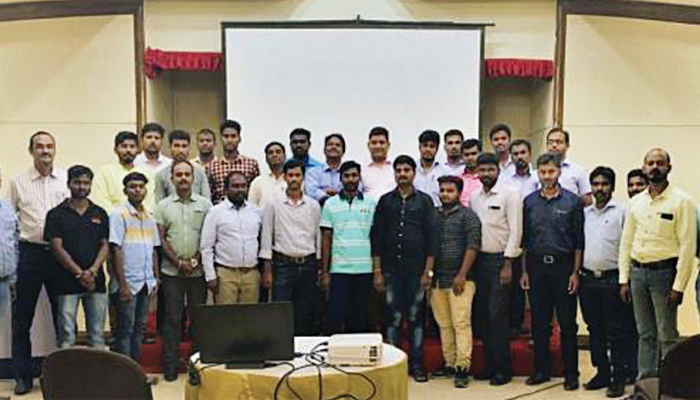
Lectra, the technological partner for companies using fabrics and leather, hosted a seminar on “Drive Sustainable Production with Lectra Design to Manufacture” recently in Tirupur. Dedicated to mass manufacturers and exporters, the seminar focused on how fashion companies can optimise performance of their cutting room operations leading to increase in equipment efficiency and thus increasing productivity in the cutting room.
Social and economic changes have transformed the way fashion is designed, developed, produced and consumed. To keep up with the ever changing challenges, expanding markets and to design quality clothes, fashion companies need to adapt how they work. The event brought together the top exporters and mass manufacturers present in the region to exchange knowledge on the technology to optimise operations in the cutting room.
Prasenjeet Shambharkar, Solutions Consultant, Lectra India took the audience through the cutting room importance and how one can improvise to achieve efficiency in the cutting room by enabling changes and monitoring the task. Somina Mehrotra, Field Marketing Manager, Lectra India also explained the importance of service contracts and how it actually benefits a customer along with discussing the importance of genuine consumables and spares.
In the current scenario, with growing labour issues, fashion companies realise that there is no longer a cost advantage this industry had a few years ago and the defined solution that looms up is an organisation’s ability to respond to this change and adapt automation. Investing early in the lifecycle also gives them the competitive edge in business apart from faster ROI on technology investments. With Industry 4.0, the focus is creating smart factories with importance on interoperability where machines, devices, sensors & people connect and communicate with one another increasing serviceability, predictability. Lectra with over a decade experience in industrial Internet of things, combined with its expertise in software solutions to automate and optimise design and development of fashion collections, is in a formidable position to help customers step into this new industrial age.
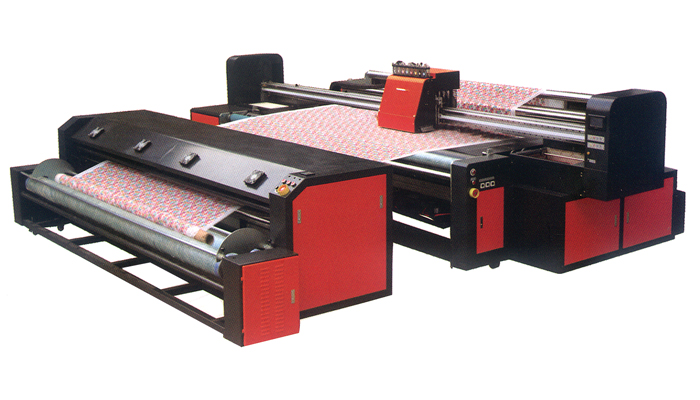
Color Pixel launches high accuracy digital printing system for embroidered fabric
Located in Surat, Color Pixel has been engaged in the research, production and manufacture of digital printing and prepress plate making equipment. In order to ensure stable and reliable product quality, the company set up CNC Machining Centre for spare parts in China, and established a joint venture with Navrang Jari, which manufactures metallic yarn and embroidery thread.
Color Pixel and Navrang Jari work closely with the continuous development of high-tech products in line with market demand. In addition to long-term production of standard digital printing presses and pre-press plate-making equipment, but also according to customer requirements for special modification. The company launched a revolutionary Precise localization printing system at Garfab-TX exhibition held recently in Surat. Precise Digital textile printing is a specialized technology based on computer vision and control printing in real time. It is initially used for textiles warp and weft recognition and developed by control printing image’s position. Typical application is printing technology of cross stitch products.
Precise digital textile printing is computer vision technology at first, make use of textile fabric’s warp and weft vision features or semi-finished product’s printing logo pattern (Jacquard pattern) and confirm current printing image’s position and form based on computer vision technology. With further development of computer vision technology. With further development of computer vision technology and printing control technology, precise digital textile printing will achieve great apply prospect.
 Given are some of its advantages:
- Automatic alignment printing: Using computer vision technology to identify semi-finished products (e.g. Pieces) position, controlling the print pattern to achieve the alignment print.
- Chromatography printing: Using equipment stations to control print pattern achieve chromatography printing online; using design identity location to achieve trapping print offline.
- Jacquard colour filling: According to the jacquard patterns to confirm the print position and achieve the jacquard colour filling printing.
Operation principal
It uses the high definition industrial camera to give the fabric a photograph, and uses the image processing software to distinguish the warp, weft and mesh, so it can get an contour. According to the longitude and latitude angle, it can rotate, scaling, and other deform action processing to the image, which is under printing. So it can print any orientation.
- Software included: Puzzle software, Image RIP software, printing software.
- Hardware included: High-definition industrial camera, PCI high-speed image processing card.
- Application area: Cross stitch fabric printing, Jacquard, embroidery fabric printing, Shoe, Leather, Positioning Printing.
Given are its application areas:
Embroidery precise localization printing technology
The limitation of traditional embroidery is the colour of embroidery, unable to achieve the same smooth with digital printing. Since the application of embroidery precise localization printing technology, people can only embroidered white lines or contours, greatly lower the production cost. At the same time, the pattern has both traditional embroidery stereo feeling and also exquisite of digital printing and abundant colour, greatly improved the grade of products.
Lace precise localization printing technology
Traditional lace are mostly dyed and printed fabric, after the application of precise localisation printing technology, people can localization printing within the lace contour which will be the important technology for produce high-grade lace.
Table cloth precise localization printing technology
Table cloth precise localization printing technology is the latest technology of 2016 which SDF digital technology co. ltd development. The original cloth was based on artificial counterpoint printing which is very difficult to counterpoint. Since the application of camera localization printing technology, all become simple, put the roll of table cloth on printer, the computer will localization, fast, safe and save large amount of labour cost.
Jacquard, wall cloth precise localization printing technology
High-grade wall cloth is mostly composed of jacquard fabric. Precise localization printing is mainly accurate printing on the counter of jacquard fabric, production high-end, strong stereoscopy products.
Shoe pattern precise localization printing technology
Current fashion shoes requires good air permeability and very abundant colour, shoes pattern precise localization printing technology arises at the historic moment, greatly improved the additional value of shoes materials.
Jacquard fabric precise localization printing technology
High-grade jacquard fabric refers to weaving processing on silk by high-grade jacquard, precise localization technology can location at small letters and contour, produced the fabrics used in high-end clothing, bags and other various occasions.
Revolutionary ColorZen® technology making dyeing process efficient and environmentally friendly
ColorZen® is a breakthrough technology thathas transformed the cotton dyeing process, making it significantly more efficient and environmentally friendly for the first time. Cotton is the most popular fabric on the planet, and once treated by ColorZen, it can be dyed using far less water, energy, dye, salt, and toxic chemicals. This is revolutionizing the global cotton dyeing industry. ColorZen is on a scaling path to treat hundreds of millions of pounds of cotton and billions of garments over the next few years.
ColorZen has created a holistic and sustainable solution for cotton dyeing, one of the most inefficient and environmentally problematic links in the textile supply chain today. In doing so, ColorZen has also provided the industry a remarkable new innovation that allows for both beautiful new design along with rapid speed to market. Below is a general overview of ColorZen’s model and how its technology will benefit the future of the industry and the world.
We all wear colored cotton
Until now, there has not been a way to dye cotton without using enormous amounts of water, energy, an chemicals. The current process is not only inefficient, but has a deadly toxic output. In many cases, our precious environment is polluted by this process. This renders fresh water unsafe to drink for millions of people.

Cotton is the most popular fabric on the planet
By positively affecting cotton’s environmental footprint, ColorZen is leading the fashion industry and its consumers into a new era of sustainability. Until now, the industry has not been able to dye cotton without using toxic chemicals. ColorZen technology allows any brand or retailer to produce truly responsible and sustainable garments.

How was cotton dyed before ColorZen?
Raw cotton is grown, harvested, and ginned to remove impurities. The raw fibres are then spun into yarn. A mill knits or weaves the yarn into fabric, and that fabric enters the dyeing process. The dye bath conventionally requires a large amount of water, dye, salt, and chemicals, in order to create a chemical bond between the dye and cotton fabric. ColorZen’s unique treatment adjusts the molecular composition of cotton, allowing it to accept dye without the use of toxic chemicals. The ColorZen® process not only dyes cotton cleaner, it can achieve bolder and brighter colors than ever before.

How does ColorZen do it?
ColorZen’s treatment of cotton creates a natural attraction between the cotton and dye.
ColorZen dyes with 95% less chemicals and zero salt

ColorZen® technology requires a 50% reduction in dyestuff, with 97% dye retention, which means the water left over after a ColorZen dye cycle can be reused. Traditional cotton dyeing techniques require toxic chemicals, which are often dumped into and pollute fresh water sources.
ColorZen allows for innovation in heathers
ColorZen heather yarns are produced by blending a percentage of ColorZen® cotton fiber with conventional cotton fiber. The ColorZen® fiber absorbs the dye while the conventional fiber doesn’t. The fabric (or garment) can be dyed as one piece with one dye bath and a single dye cycle, which results in a multi-colored heather fabric.
ColorZen’s process also accelerates speed to market for heather and patterned garments. ColorZen® fabrics can be stocked in an undyed form and dyed upon demand later down the supply chain. Additionally, unlike conventional heathers, ColorZen® heather fabrics can also be pre-bleached so bright heather colors or even pastel colors can be produced.

Sourcing in India
In India, questions about ColorZen® can be directed to ‘Tangibles’, a Coimbatore, Tamil Nadu-based company. Tangibles is headed by Kumareswar, who has over 28 years of experience in the apparel industry.
Pegasus making Japanese technology more affordable, and getting closer to customers
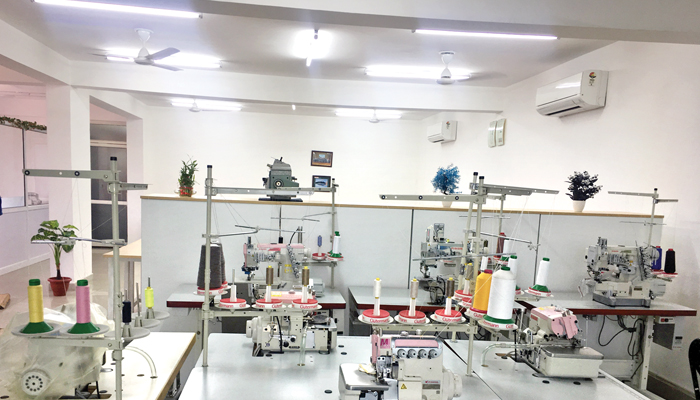
 Pegasus Sewing Machine Mfg. Co., Ltd. from Osaka, Japan is one of the leading manufacturers of sewing machines in the world today. The company specialises in industrial sewing machines that produce chain stitches (Kan-nui), which are used in garment factories. This Kan-nui is most suitable for sewing stretchy knit fabrics such as T-shirts and swimsuits, etc. Since its establishment in 1914, Pegasus has always aimed for the top rank of industrial sewing machine (Kan-nui) manufacturing business on a worldwide basis. Sewing factories around the world choose its products through approximately 200 agents in about 70 countries.
Pegasus always focus to strengthen its core business, build solid foundations for its manufacturing facilities across Japan, China and Vietnam. The company started Liaison Office in India in 1993 with only 2 people and today is having a team of 20 people. Now, Pegasus is planning to launch its new affordable M900/DDM series, which is equipped with direct drive motor for the Indian customers next month. The technology allows 70 per cent electric saving with direct drive motor. Its concealed casing design prevents dust from entering the motor coil, eliminating maintenance problems. It maximises direct drive motor transmission by original factory installation.
The main reason behind launching it is to offer more affordable machines so that domestic manufacturers can also afford it. Earlier only good exporters, who were looking for high quality, were using such technologies but now Pegasus main intention is to capture the huge domestic Indian market. “When we compare it with previous Pegasus model, the machine is similar. But earlier motor was coming from a different supplier but now it is fitted in the factory and coming from Pegasus directly. Due to this, we have more quality control over the motor and you don’t need to install the motor again and again, which saves lot of time,” says Prem Singh, General Manager, Pegasus Sewing machine PTE. LTD. “Pegasus is known for its high quality sewing heads but now we have control on both parameters – head quality and motor. However, we are aiming to make the machine more economical for the customers without compromising on the quality of the machine. We are looking for volume and bringing it within the reach of more customers with this new attractive pricing,” says Prem.

The new Pegasus made motor comes with more power and it’s a high performance 550 W. “Motor is the main part to run the machine and 550 W makes it stronger, faster and durable. Besides, it comes with CE Certification, which most of the companies today are not using. CE means European Conformity, which conforms to the strictest health, safety and environmental protection standards for products sold within Europe. That’s why we have selected and opted for CE certification,” says Prem.
Some other features of this technology are: Dust seal at upper looper mechanism which prevents dust from entering the machine via the upper looper shaft; prevents installation mistakes and minimise installation time; concealed casing design prevents dust from entering the motor coil, eliminating maintenance problems; maximise direct drive motor transmission by original factory installation.
When asked about the competition Pegasus is facing due to increasing presence of Chinese sewing machine players in the Indian market he said, “Yes I agree, competition is there but according to my experience, we have seen many Chinese people coming and going. About seven eight years back many Chinese companies entered this market and all have gone back. Companies that give consistent quality will sustain. Pegasus is still growing, so that’s important because we are maintaining our quality. Our company’s focus is to provide better service support to our customers and agents. So, product wise we are not compromising on anything, at the same time increasing the service support.”
Meanwhile, in line with efforts to be closer to the customer and provide best service support, the company last year in June opened Pegasus showroom and training center in Okhla, New Delhi. “As per the company, we always focus to provide the service, knowledge, and support to our customers and agents. Our main aim is to give them the right product, strong technical support and training. We have maximum technical people in our team who are regularly providing training and technical support, and show them how they can best utilise the machine. Our purpose is to make them more familiar with the machine and maximise the use,” says Prem.
“Today we also have offices in various places like Ludhiana, Bangalore and Tirupur, having showroom machines in each location. Last year we feel the need to have our own showroom cum technical center where we can show our latest machineries, customers can come and make samples, see the live demo and we can give them the technical knowhow. So, first showroom has been established in Delhi. We have started the showroom around two months back so far around 50-55 customers have visited us. They can also send their operators and technicians for training here. Business wise, now, we are launching our new M900 economical series in April 2018, which is expected to give a boost to our overall turnover,” concludes Prem.
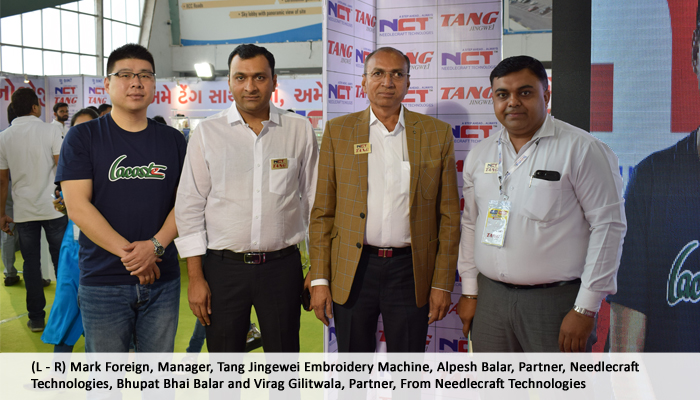
Needlecraft Technologies takes dealership of Tang Embroidery Machines
Hangzhou Jingwei Electronic Mechanical Manufacture Co., Ltd. produces multihead multi-needle computerised embroidery machines and related products. For years, the company, in the philosophy of “Professional manufacturing” and the principle of “Good reputation, excellent product,” has become one of the leading embroidery machine manufacturers in China. Its products, covering chain embroidery, lock embroidery, compounded embroidery, etc., not only enrich embroidery stitches but also reduce the usage cost of the customers. In 2004, the company launched Tang high-grade embroidery machines and related products which is running successfully in markets all over the world.
Through years of development, the company has become a modern enterprise with more than 700 staff and more than 60,000 sqr mtr of factory area from a small “workshop” and “family size” manual factory. Today, in India Tang is considered one of the best Chinese brands by customers for its stitch quality, low maintenance & long life. The company recently appointed NCT – Needlecraft Technologies as its agent for Gujarat, Maharashtra and Southern India markets. NCT was started in December 2017 by three partners Virag Gilitwala, Pawan Singh and Alpesh Balar in Surat. The Founders of the company have 12 years of experience of working with Tang embroidery machines earlier dealer for the pan India market. During this tenure Virag worked as Service Manager, Pawan Singh as Chief Service Engineer wherein Alpesh as the user having 100 Tang machines at his plant. NCT will be looking after the sales and after sales service of the machine in the above mentioned region. Besides, they will also be looking after the service of old Tang machines operating in the market.
“Tang is leading embroidery machines brand in China, and has very good reputation in the Indian market due to their high quality. We have altogether 12 years of experience of working on Tang machines and making a lot of changes as per customers’ requirement, customizing and upgrading the technology year-after year. We are very happy to take their dealership, and recently participated in Garfab-Tx Surat, where we received overwhelming response from the customers,” says Virag Gilitwala, Co-Founder, Needlecraft Technologies. “Though market currently is little slow as due to GST and E-way bill introduction, the customers are very apprehensive about placing the orders as their own customers are not placing many orders and not keeping the stocks. We are expecting everything to improve after March, once all the govt. policies become clear and industry comes back on its old track. Even if the situation gets stablied till July we may expect to sell around 250 machines by the end of this year”

All jeans in the world to be 100% water free thanks to Jeanologia
Jeanologia has saved around 800,000 cubic mtr of water in the last month, the equivalent of 283 Olympic swimming pools. Jeanologia’s objective is to reduce environmental impact in its entirety, not partially mitigate it With Jeanologia as the expert technology partner the textile market is more competitive and respectful of the environment. Through their technology, the company also eliminates the use of potassium permanganate, pumice Stone, manual bleaching and traditional laundering Valencia (03-21-18).- Enrique Silla, CEO at Jeanologia, with a view to the upcoming World Water Day, highlights that using a combination of their technologies, “In 2025 all jeans in the world could be 100 per cent water free.”
For Silla, “With Jeanologia as the expert technology partner, it is possible, within a few years, for production to use zero water and create zero waste; increasing productivity and accelerating time to market.”35 per cent of the 5 bn jeans produced every year are made with Jeanologia technology. As such, the company CEO explains, “if we develop products in an eco-efficient way, we will produce an eco-sustainable product and bring a sustainable product to the market, achieving one of our company’s objectives: To reduce environmental impact in its entirety, not partially mitigate it.”
Water generates life and prosperity, and its care is essential for sustainable development. Furthermore, it plays an important role in the reduction of poverty and economic growth. With this in mind, the CEO at Jeanologia has pointed out that “we continuously work to increase awareness and involve everyone while reducing the water footprint, and without losing competitiveness or compromising on design and quality.”
During the past month, Jeanologia technology has led to a saving of 800,000 cubic mtr of water, the equivalent of water used to fill 283 Olympic swimming pools. “This saving has been possible thanks to the laser, ozone, and eflow technology being used in the 60 countries Jeanologia works in,” explains Silla.
It is worth remembering that the combination of the company’s technology has contributed to a saving of around 8 mn cubic mtr of water in 2017; equivalent to the quantity of water needed for human consumption in the city of Miami for a whole year.
Furthermore, the company’s technology has allowed the elimination of potassium permanganate, pumice stone, manual scraping and traditional washing at the same time as considerably reducing chemical use. Leading to, as the CEO highlights “the detoxification of jeans”