
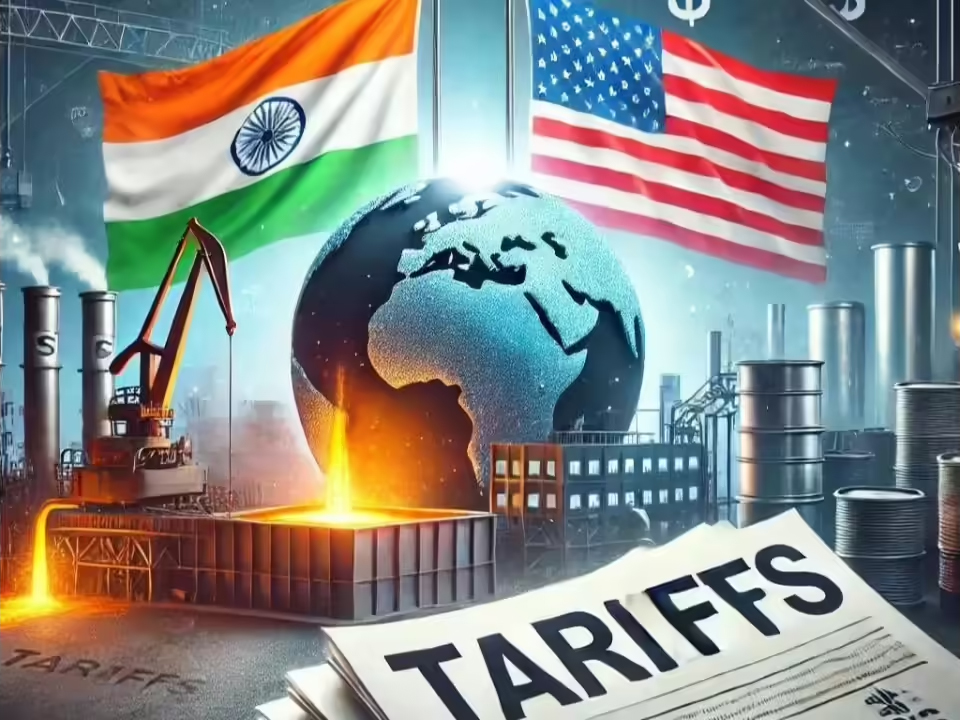
 Already facing uncertainty over the frequent position taken by Trump on the tariff issue, the war in West Asia has cast a shadow on the proposed trade pact (FTA) with the US. However according to experts, the India – EU FTA hailed as the “Mother of all Deeds” by the EU Commission President is likely to materialise. What has lent credence to this is that the 22 out of 27 EU members who participated in the New Delhi AI Summit agreed to speed up ratification by EU Parliament of the EU – India FTA deal. Worse, the global trade scenario has been in turmoil after Trump announced “reciprocal” tariffs on India and certain other countries on August 7 last year. The situation has only worsened with frequent statements by Trump by raising tariffs on all countries by 10 percent on February 20 and increasing it further to 15 percent on February 25, What is more, the 15 per tariff will be over and above the current tariffs that is, 18 percent after reducing it from 50 percent plus the most favoured – Nation (MFN) tariff which is now 12 percent for India. This means New Delhi has to cough up a total duty – a halfy one – of 40 percent – 18 percent plus MFN tariff of 12 percent and the newly announced rate of 10 percent. With this, India’s textile exporters have received a severe beating at the hands of the US administration. What is in store for India and others is unclear at the moment. New Delhi has put on hold further negotiations with Washington.
On February 26 he issued a stern warning to America’s trading partners to “stick to the existing trade deals along the same successful path we negotiated or they will find the next chapter far more painful”. This warning has made Indian exporters more nervous at a time when they were offering discounts to their American buyers to clinch deals even at the cost of losing export margins. Some are worried over their shipments already made to the US.
Amid this rather “fluid” world trade scenario, however there is some hope. India may be able to fend off competition from Bangladesh if the former gets the same concession offered to Bangladesh by the US. Briefly stated, Bangladesh garments made with US cotton could avoid the 19 percent reciprocal duty. Total duty payable comes to 19 percent plus 12 percent MFN totalling 31 percent compared to 30 percent for India.
Given Bangladesh’s export structure and heavy dependence on non-US textile inputs mean the arrangement is likely to result in only a limited increase in garment exports to the US, said Trade Research Body (CTRI). Commerce Minister is hopeful that India will get the some concession.
In addition (CTRI) he said Bangladesh has agreed for more concessions to bag the deal from the US opening its market to US machinery, chemicals etc. It also noted that the import of US cotton involves transportation cost and the spinning industry in and around Bangladesh is not very competitive. It has been struggling until a few months ago. “A large part of the global trade uses man-made fibre. So we do not have much reason to worry”, said Premal. H. Udani, CMD of Keytee Corporation. The US would also like itself to satisfy that American cotton is indeed used by Bangladesh for converting into garments and supplying them to the US.
Yet another development that may weigh in India’s favour is that Bangladesh’s status as s Least Developed Country (LDC) may expire in November – December this year. So it may not receive duty free access in the EU bloc, whereas order the proposed FTA deal with EU India gets zero duty access to its textiles and garments. So we may be more competitive than Bangladesh.
The US – India economic relationship has never been stronger. With the new dollar 500 bn target in bilateral trade, both countries are creating jobs, driving innovation and building shared prosperity, US Ambassador to India Sergio Gor said. Piyush Goyal said, talks with US commerce Secretary Howard Lutnick in New Delhi signalled that the two sides remain engaged on the tariff issue. Lutnick is the highest ranking American official from Trumps economic team to visit India.
In the EU the European Parliament is to ratify the recently finalised FTA with India. In India, tariff reduction as agreed to only after the legal act because US tariffs (rates applicable to countries with which concessional or FTA rates have not been worked out, says commerce secretary Rajesh Agrawal.
Indian exporters have been at tenterhooks for the last three quarters as they have been offering very heavy discounts to retain US business. The US economic resilience is the only help that mitigated these efforts. Over the last 10 months Indian exporters have seen multiple changes and most businesses are bracing for more twists and turns as the current tariffs of are in place for 150 days.
The proposed deal with the US will “expand cotton demand” rather than hurt domestic growers, Goyal said, adding Indian farmers stand to gain from increased textile exports”. Explaining he said “if you buy cotton or yarn from the US and process it and use it to make garments, you are able to export to the US at zero duty. That is an established principle of theirs and India will benefit from the same way of working”.
Goyal said that India has concluded nine FTAs in the last three and a half years with 37 developed economics, effectively opening up to over 70 percent of global trade.
There has never been a country that became developed while remaining insulated from the global economy”, he said, adding that India’s calculated opening up is designed to balance consumer interests, farmer protection and export led growth.
More than half of India’s trade is now covered under trade pacts, without taking into account deals with countries like Sri Lanka and China. It is believed that the trade agreement with the EU appears to have provided a strong goad for the US to wrap up the long lingering negotiations with India.
Indian government officials clarify that New Delhi has offered quotas for most agricultural goods, where duty is sought to be reduced as part of the deal with the US. In most cases, the quantities offered is small and inputs such as cotton that are already being imposed will be allowed in a way that they feed into the requirements of the textiles industry. It can step up exports after the finalisation of trade pacts with the EU and the UK.