Biomass Energy Transition
Sri Lanka’s textile and apparel industry has always leaned on two things to justify its place in the global supply chain: quality and compliance. Sri Lanka’s textile and apparel industry has traditionally competed on quality, reliability and compliance rather than cost. But that old formula is starting to wear thin. Vietnam, Bangladesh and Indonesia have all closed much of the gap in recent years, helped along by an uncomfortable trend for Sri Lanka, an exodus of experienced industry talent into factories and operations across the region. When the thing that used to set you apart is no longer unique, you have to look elsewhere for an edge.
For Teejay Lanka PLC, one of the country’s largest textile manufacturers, that search has led straight to energy. The company’s energy transition is a key pillar of its Abhivarah 2030 Environmental Sustainability Strategy and supports its Science Based Targets initiative (SBTi)-validated commitment to reduce greenhouse gas emissions while strengthening long-term business competitiveness. Within the company, energy cost reduction and efficiency gains are increasingly viewed not just as sustainability priorities, but as strategic business drivers. The scale of Teejay’s investments suggests this is far more than an aspiration it is a long-term business strategy.
Some of that urgency has roots outside Sri Lanka entirely. The renewed instability in the Middle East has put fossil fuel markets on edge again, and it’s a useful reminder of how exposed a country like Sri Lanka is when it comes to energy. Nearly everything is imported, which means a crisis on the other side of the world can still show up as a spike in a factory’s power bill within weeks. For a manufacturer running energy-hungry operations around the clock, that kind of exposure isn’t an abstract risk to plan for someday. It’s already shaping decisions being made right now, including ones where the financial case doesn’t fully add up on paper.
Rooftop Solar PV Installation
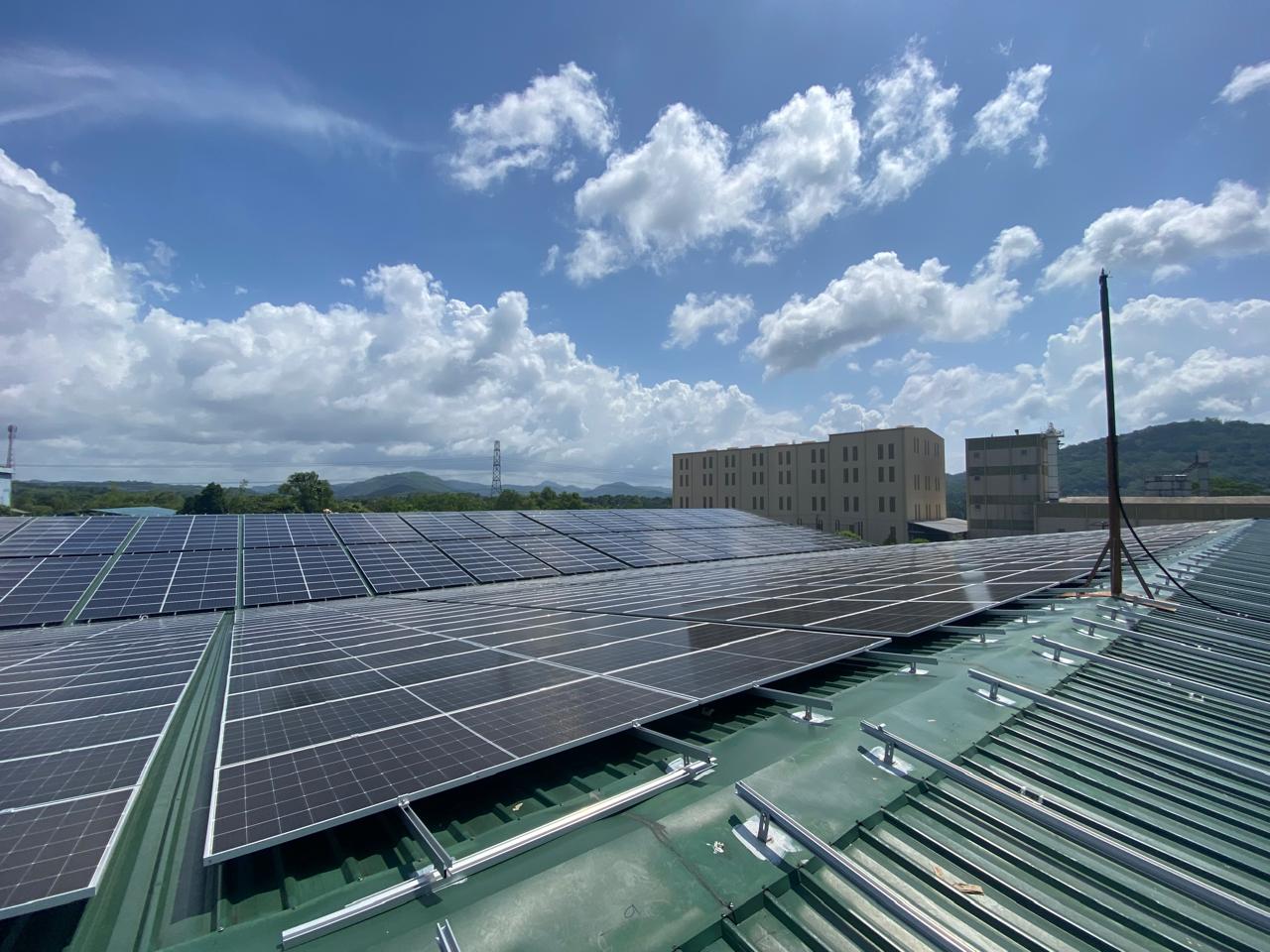
That tension shows up clearly in Teejay’s rooftop solar project. The company has committed USD 2.57 million to a 7.2 MW solar installation covering somewhere between 45,000 and 50,000 square metres of factory roof, split into five sections so installation could move faster across the site. At the time of writing, the roof bracketing and mounting structures are fully finished and around 40% of the panels are in place, though transformers and inverters are still awaited. Grid connection is expected by September 2026.
Here’s the part that doesn’t usually make it into the glossy version of these stories: the economics of solar in this part of Sri Lanka aren’t great. The region gets only around 4 to 4.5 hours of usable sunlight a day, compared with 6 to 7 hours in sunnier parts of the country, largely thanks to persistent cloud cover and rain. That works out to roughly 17% solar yield, well short of the 25% theoretically possible elsewhere, and it stretches the payback period out to 10 or 11 years. That’s a long time to wait for a return by most investment standards. Teejay is going ahead anyway, treating the project less as a quick win and more as insurance against where fuel prices and supply might be headed. Once it’s fully operational, the system is expected to cut total emissions by 13% and add 17% to the site’s renewable energy share.
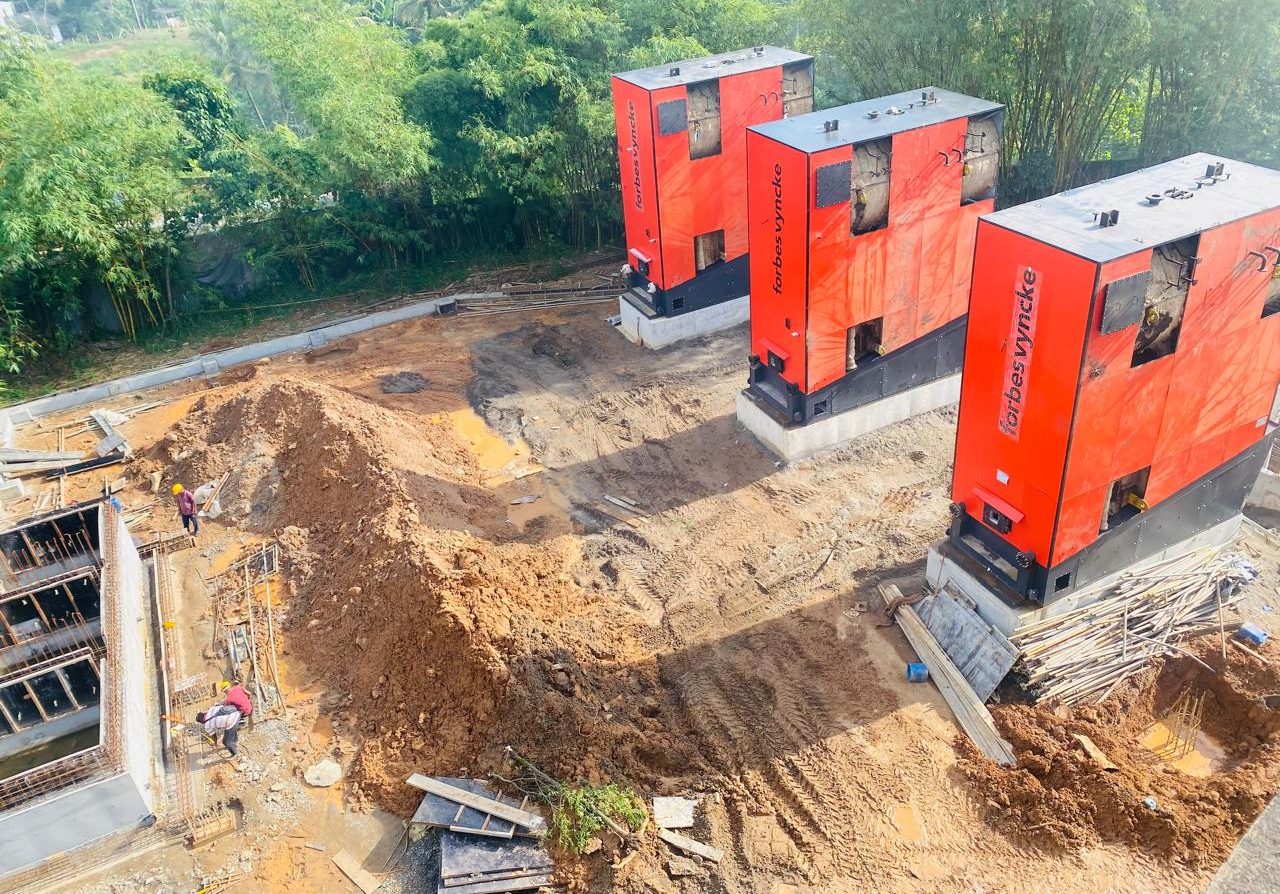
While solar strengthens renewable electricity generation, Teejay’s largest emissions reductions are expected to come from a USD 2.65 million transition from coal to sustainably certified biomass under its Abhivarah 2030 Environmental Sustainability Strategy. The project is expected to deliver a 49% reduction in facility-level greenhouse gas emissions while increasing renewable energy use by 42%. It is also expected to reduce fuel costs by 25–30%, as locally sourced biomass reduces dependence on imported coal and avoids the mining, shipping and long-haul transport associated with fossil fuels.
The sourcing itself is being handled carefully. The biomass is SLSI-certified and traceable back to its point of collection, and it deliberately excludes rubber wood, wild wood or anything from unverified mixed sources. Long-term supply contracts are being used to keep that discipline in place. On site, the new boiler building already has its foundation, structure and cladding done, with roofing sheets due in early July before work moves on to dust collectors and material handling systems.
Together, these two projects are expected to carry Teejay’s Scope 1 and 2 emissions reduction target under its Science Based Targets initiative commitments, a 42% cut by 2030 against a 2022 baseline, possibly as soon as September 2026. That would put the company years ahead of its own schedule. Progress so far sits at around 4.5% against the base year, with most of the movement still to come once both projects are fully up and running. The numbers have been verified against ISO 14064 and are published in Teejay’s annual report, alongside the company’s first IFRS S1 and S2 disclosures this year.
None of this means the harder questions have been resolved. While these investments significantly advance Teejay’s Scope 1 and Scope 2 decarbonisation journey, Scope 3 emissions remain the next major challenge, reflecting emissions across the wider value chain that extend beyond the company’s direct operational control. Under its Abhivarah 2030 strategy, Teejay is progressively strengthening supplier engagement, responsible sourcing and circularity initiatives to support long-term Scope 3 emissions reductions in collaboration with customers and supply chain partners.
What this moment makes clear is that, for Teejay, sustainability and cost competitiveness are no longer separate conversations. The company’s investments in solar and biomass are not simply about reducing carbon emissions they are strategic investments in energy security, operational resilience and long-term competitiveness. In an increasingly competitive global textile industry, energy transition is becoming a source of business advantage as much as environmental responsibility.