Apparel exporters have called for the restoration and re-fixing of cash incentives on the use of local yarn, citing the deteriorating condition of domestic spinning mills and the need to improve export competitiveness. They have proposed restoring the cash incentive on the use of local yarn in export-oriented apparel production to 5.0 per cent through apparel exporters.
The incentive earlier stood at 4.0 per cent before being reduced to 1.5 per cent as part of government preparations for Bangladesh’s graduation from the least developed country (LDC) status. Exporters also decided to request the government to provide a direct 10.0 per cent incentive to spinners as an alternative support measure. At a closed-door meeting recently, leaders of the BGMEA, BKMEA and BTMA agreed to jointly appeal to the government on the issue.
Speaking to the media, BKMEA President Mohammad Hatem said the associations had agreed to seek restoration of the cash incentive considering the interests of local spinning mills. He said re-fixing the incentive from the current 1.5 per cent to 5.0 per cent would benefit domestic millers and increase local value addition-an important requirement under the rules of the newly imposed US reciprocal tariff.
Mr Hatem also noted that under WTO rules, countries are allowed to provide such subsidies for a three-year grace period after graduating from LDC status. Raising concerns, he questioned why Bangladesh plans to fully withdraw cash incentives citing WTO rules, while India continues to provide various incentives to its exporters, enabling them to remain competitive in global markets.
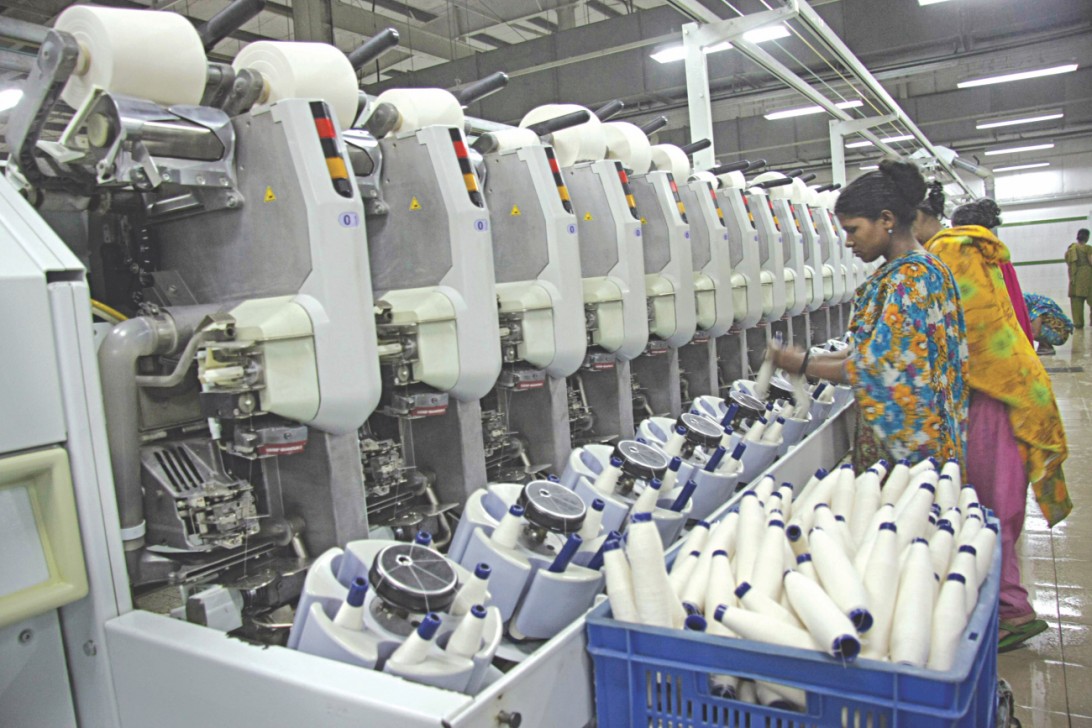
Salehudh Zaman Khan Jitu, managing director of NZ Group, said domestic spinners are under growing demand-side pressure as yarn buyers increasingly source cheaper imports. As a result, many spinning mills are currently operating at only 50-60 per cent capacity. He added that Indian spinners are offering yarn at prices at least 40 cents lower than local production costs, largely due to government subsidies in India.
Referring to a letter from the Bangladesh Tariff Commission to the Ministry of Commerce, Mr Jitu said the government is aware that Indian subsidies are enabling spinners to dump yarn in the Bangladeshi market, threatening the survival of local producers. The commission also found that yarn prices in the Indian domestic market are higher than export prices.
“If the government initiates anti-dumping measures against Indian spinners, the process will take at least two years,” he said, adding that the sector urgently needs decisive policy support to survive.
Meanwhile, the textile sector has urged the government to extend the existing export cash incentive facility for another three years, warning that failure to do so could further weaken export performance amid rising costs and global economic uncertainty.
In a letter dated December 24 to Dr Md Khairuzzaman Mazumder, secretary of the Finance Division, Ministry of Finance, BTMA President Shawkat Aziz Russell requested continuation of export incentives and cash assistance for BTMA member textile mills until December 31, 2028.
The letter said export-oriented textile industries are facing severe challenges due to the combined impacts of the Russia-Ukraine war, the Israel-Palestine conflict, global economic slowdown, sharp depreciation of the taka, a 250 per cent hike in gas prices, and a 70 per cent increase in workers’ wages.
The association noted that the textile sector supplies around 70 per cent of inputs to the ready-made garment industry. Together, the textile and apparel sectors account for nearly 85 per cent of Bangladesh’s export earnings, while retaining about 30 per cent of foreign exchange domestically. It also highlighted challenges such as currency depreciation, political instability, labour unrest, and persistent shortages of gas and electricity, which have reduced capacity utilisation and sharply increased production costs.
Under Bangladesh Bank FE Circular No. 28, issued on July 10, 2025, export incentives and cash assistance were approved for the period from July 1, 2025 to December 31, 2025, and are set to expire at the end of this year.
BTMA noted that spinning mills are holding large volumes of unsold yarn due to prolonged market challenges, forcing many units to significantly cut production and incur continuous losses. This could eventually disrupt supply to export-oriented textile and apparel industries.
“In the prevailing circumstances, extension of FE Circular No. 28 for another three years has become imperative to ensure business continuity, protect investment, and support export competitiveness,” the BTMA president said.