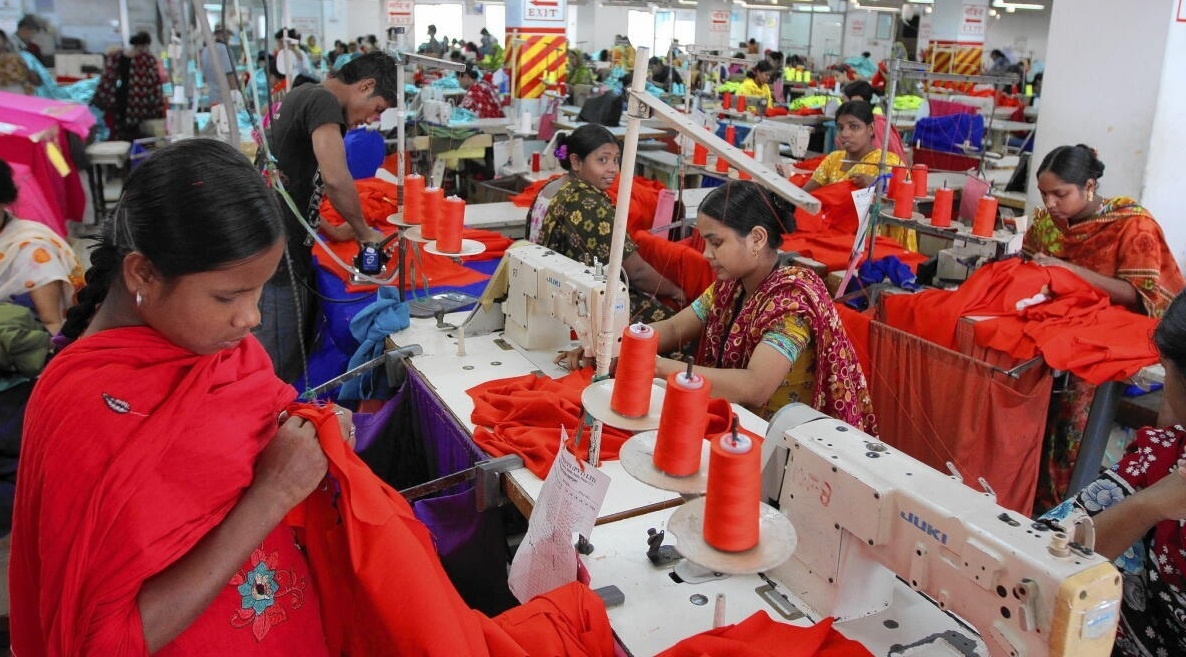
Bangladesh has risen from the 14th position in 2006 to become the world’s second-largest textile exporter in 2025, while Vietnam advanced from 21st to third, with China retaining its position as the largest exporter.
Together, China, Bangladesh and Vietnam accounted for about 44 per cent of global textile exports in 2025, marking a significant shift in the global clothing manufacturing landscape, according to Just-style, a leading publisher of global apparel industry information.
Bangladesh and Vietnam have overtaken much of the competition in the global garment industry over the past two decades, narrowing the gap with China in textile exports, according to the International Cotton Advisory Committee, or ICAC.
In its August 2026 issue of The Textiles Observer, the ICAC said global textile exports increased from about $560 billion in 2006 to $914 billion in 2025, with knit and woven garments accounting for nearly 60 per cent of the total.
During the period, Bangladesh and Vietnam recorded sharp increases in export volumes, outpacing many established players, Just-style reported.
The concentration of manufacturing in East and Southeast Asia contrasts with a broadening market for finished textile products.
Although the United States remains the world’s largest textile importer, its share fell from 18.9 per cent in 2006 to 13.7 per cent in 2025.
The ICAC pointed to the growing importance of several European and Asian markets, resulting in a more dispersed and multipolar global textile trade.
Despite changes in export rankings, competition between cotton and synthetic fibres is also reshaping the sector.
Cotton’s share of global fibre demand fell from 68.3 per cent in 1960 to 21.1 per cent in 2025, while synthetics’ share rose from 4.6 per cent to 71.7 per cent.
For knit garments, cotton exports increased from about $69.9 billion in 2006 to $128.3 billion in 2025 but lost market share to synthetic and man-made fibres, whose exports rose from $35.6 billion to $99.2 billion over the same period.
The trend was even more pronounced in woven garments, where man-made fibres overtook cotton in export value in 2021.
The ICAC publication also highlighted persistent quality challenges in the cotton sector.
Dr Marinus (René) van der Sluijs, writing in the August issue, noted that stickiness and seed-coat fragments remained significant risks to product quality and supply-chain efficiency.
According to a global study cited in the report, 64 per cent of respondents identified stickiness as a significant cotton-fibre defect affecting yarn quality. Cotton from regions associated with the problem can face price discounts of up to 50 per cent, the report said.
The ICAC concluded that the textile and garment sector was undergoing substantial realignment, with manufacturing leadership shifting, demand becoming more diversified and competition between fibres intensifying.
While cotton remains an essential fibre for global apparel, its competitiveness is increasingly being challenged by synthetic fibres and tighter expectations regarding quality and processing performance, it said.