 Imports of finished fabrics and yarn have risen for apparel exporters’ liking of foreign intermediate inputs as local spinning and textile millers lose out on the swap, sources say.
Over 13-percent increase in the intermediate raw-material imports in September 2026 stands out as an explainer of the change.
The trend suggests export-oriented garment makers are increasingly sourcing intermediate inputs from abroad instead of relying on local spinning and textile mills, even as the government seeks to promote local backward-linkage industries through policy support.
According to National Board of Revenue (NBR) data, combined imports of fabrics and yarn rose 12.33 per cent to 221,324 tonnes in September from 197,026 tonnes in August. The import bill stood at about $1.08 billion.
Over the same period, raw-cotton imports fell to 107,824 tonnes, worth about $228 million. Fabrics and yarn imports by volume were thus more than double those of cotton, and their combined bill was nearly five times the cotton bill.
Combined imports of woven and knit fabrics stood at 115,407 tonnes in September, up 19.70 per cent from 96,417 tonnes in August. This was an increase of nearly 19,000 tonnes in a single month. The import bill for fabrics stood at about Tk 8.69billion or roughly $703 million, according to the NBR data.
Woven fabrics imports grew 20.02 per cent to 63,174 tonnes from 52,638 tonnes, worth about $388 million.
Knit fabrics imports rose 19.31 per cent to 52,233 tonnes from 43,779 tonnes, worth about $316 million.
Fabrics imports alone exceeded raw-cotton imports in volume during the month, and the fabrics-import bill was more than three times the cotton bill.
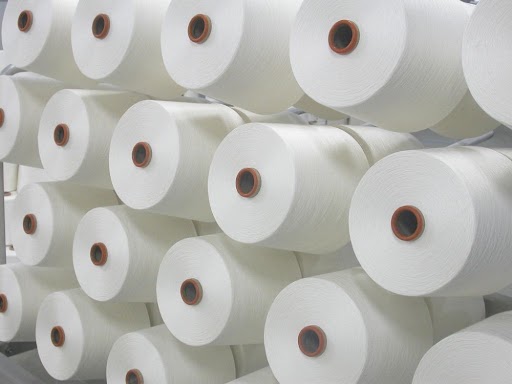
Yarn imports rose 5.28 per cent to 105,917 tonnes from 100,609 tonnes, at a cost of about $374 million.
Cotton-yarn imports grew 5.28 per cent to 64,120 tonnes from 60,902 tonnes, worth about $229 million.
Synthetic filament yarn imports rose 6.37 per cent to 32,485 tonnes from 30,539 tonnes, worth about $103 million.
Imports of yarn made from synthetic staple fibre edged up 1.57 per cent to 9,312 tonnes from 9,168 tonnes, worth about $42 million.
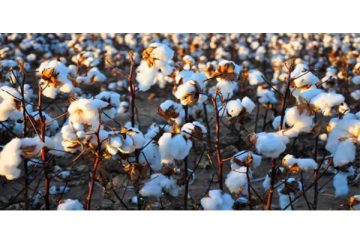
Raw cotton, the main raw material for local spinning mills, saw an import fall of 13.38 per cent to 107,824 tonnes from 124,476 tonnes in August, in a drop of 16,652 tonnes.
Polyester staple fibre imports fell 7.12 per cent to 7,553 tonnes from 8,132 tonnes, worth about $10.6 million.
Viscose staple fibre was the only raw material to post growth. Its imports more than doubled, rising 102.62 per cent to 3,633 tonnes from 1,793 tonnes, worth about $10.1 million.
Overall, imports of the three raw materials fell 11.45 per cent to 119,010 tonnes from 134,401 tonnes.
The shift is reflected in falling supplies from local primary textile mills. According to NBR data, fabrics exports by local mills, mostly deemed exports to export-oriented garment factories, dropped 38.67 per cent to 14.69 million metres in September from 23.96 million metres in August, valued at about $38 million.
Yarn exports by member mills declined 22.19 per cent to 25,791 tonnes from 33,146 tonnes, fetching about $86 million.
BKMEA President Mohammad Hatem has said exporters are trying to reduce production costs to remain competitive in export markets.
“The import trend indicates that locally sourced raw materials are more expensive than imported ones. How can we source materials from local mills when their prices are much higher?” he asks.
He has further said if the government continues to restrict the import of certain categories of yarn under the duty-free bond facility, it would also affect the local knitting and weaving industries.
He also fears that considering the local prices in the coming days, buyers’ nomination for fabrics and yarn could increase.
BTMA President Showkat Aziz Russell says the rising imports of finished fabrics and yarn indicate declining value addition to ready-made garments (RMG).
“On the other hand, local textile mills are gradually weakening. Such product mixing is not good for the country,” he said.
He warns that greater reliance on imported raw materials by the RMG sector could also undermine Bangladesh’s preparation for graduation from the least- developed-country (LDC) status.
After LDC graduation, Bangladesh’s RMG exporters will need to maintain local value addition of 40 per cent to 60 per cent, depending on the destination market, he reminds.
Russell also has alleged that some imported goods brought in under the bonded- warehouse facility are diverted to the domestic market, causing the government to lose substantial revenue.
“We have also observed that law-enforcement agencies, including customs and police, have seized such goods during recent drives.”
He adds that such illicit practices could continue unless the government corrects the relevant policies.