
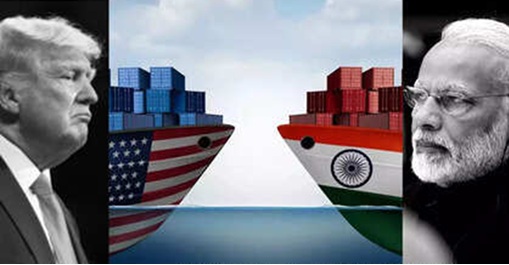
 The US administration’s moves to impose fresh tariffs on India and several other countries have not gone on well with New Delhi, textile bodies, industry and others. Even many US companies have opposed the investigations under Sec.301 of the US Trade act., particularly on what it calls “structural excess capacity” and failure to act on forced labour. They fear the probes would hurt competitiveness and raise the cost for consumers.
Jockey Internationals, a US camp any says “Even if structural excess capacity is found for apparel manufacturing in the countries being investigated such excess capacity benefits the American consumer by keeping apparel costs low and supporting US job creation in warehousing, retail and management position “ It further argued that attempts to mass reshore apparel manufacturing jobs through section 301 tariffs will only create inflationary pressures on the economy and hurt job growth in higher paying jobs.
The current administration is well positioned to implement innovative trade policies that can increase the growth and restoring of US manufacturing and increasing the value of US content in IT products. There are a myriad of policy tools that can be used to achieve these goals without rapidly increasing production and end – user costs on risking operational delays of key products on components, Dill said in its filing.
US chamber of commerce says, there is a need to make a distinction between China and other trading partners. The material provided in the notice trade balance and capacity utilisation do not provide a reasonable analytical basis for imposing tariffs or other trade restrictions under Sec.301, it argued.
What Delta Airline has to say is this tariffs would not remedy excess capacity or over production but would instead exacerbate existing shortages undermine aviation safety and supply chain resilience jeopardise US aviation jobs and weaker US competitiveness.
Countering the moves, New Delhi has sought to clarify that there is no excess capacity and only is due to rising demand at home. Moreover the industry works on commercial principles and exports just 6 percent of production.
Besides the robust legal and compliance eco system, “Indian entities have not relied on cotton imports from high risk regions such as X INJIANG and manmade fibre imports or accessories are buyer driven and subject to strict compliance verification by global giants”.
The government has also countered allegations of structural excess capacity arguing that increase in nominal capacity is in line with projected use in demand. Both India and the US are members of the International Labour Organisation. There is no reason for the later to initiate a probe into forced labour. New Delhi has also said that the US labour department’s list of goods produced by child or forced labour has limited exposure to downstream goods produced in India”.
Across industries specified in the initiation notice, India’s manufacturing capacity is anchored in domestic demand. More critically, “USTR’s selective focus on specific sectors, in which India happens to have a global trade surplus does not automatically establish that India has structural excess capacity in some of the indicated sectors”.
New Delhi also junked the charge of the $42 bn trade surplus with US being due to over production or excess capacity, it is a macro – economic phenomenon which is a product of concatenation of circumstances.
A setback to Trump after the Supreme Court verdict on reciprocal tariffs imposed by the US administration on several countries including India. But that does not deter Trump who is hell bent on levying duties on imports from India and other countries under the above section.
The US has an instituted investigations involving several countries. Both sides will sit together and discuss how these issues need to be structured and addressed. Commerce Secretary Rajesh Agrawal has said.
In the filing on forced labour, the Indian Commerce Department has said that it has international commitments on the subject and given the ILO’s robust framework, there is no need for a member of the global agency to unilaterally initiate a probe.
Indian entitles ranging from Reliance Industries to Adam Group, ACMA, Confederation of Indian Textile Industry (CITI) and TEXPROCIL have said that the Constitution prohibits all forms of forced labour and laws have specific provisions. “The initiation notice is effectively challenging the foundational principles of comparative advantage that underpin international commerce”, New Delhi has argued.
The USTR (US Trade Representative) should consider the broader strategic partnership between the US and India. India serves as a critical partner on the US efforts to de-risk and diversify global supply chains away from non-market economies confederation of Indian Industry (CII), said in one of its submissions.