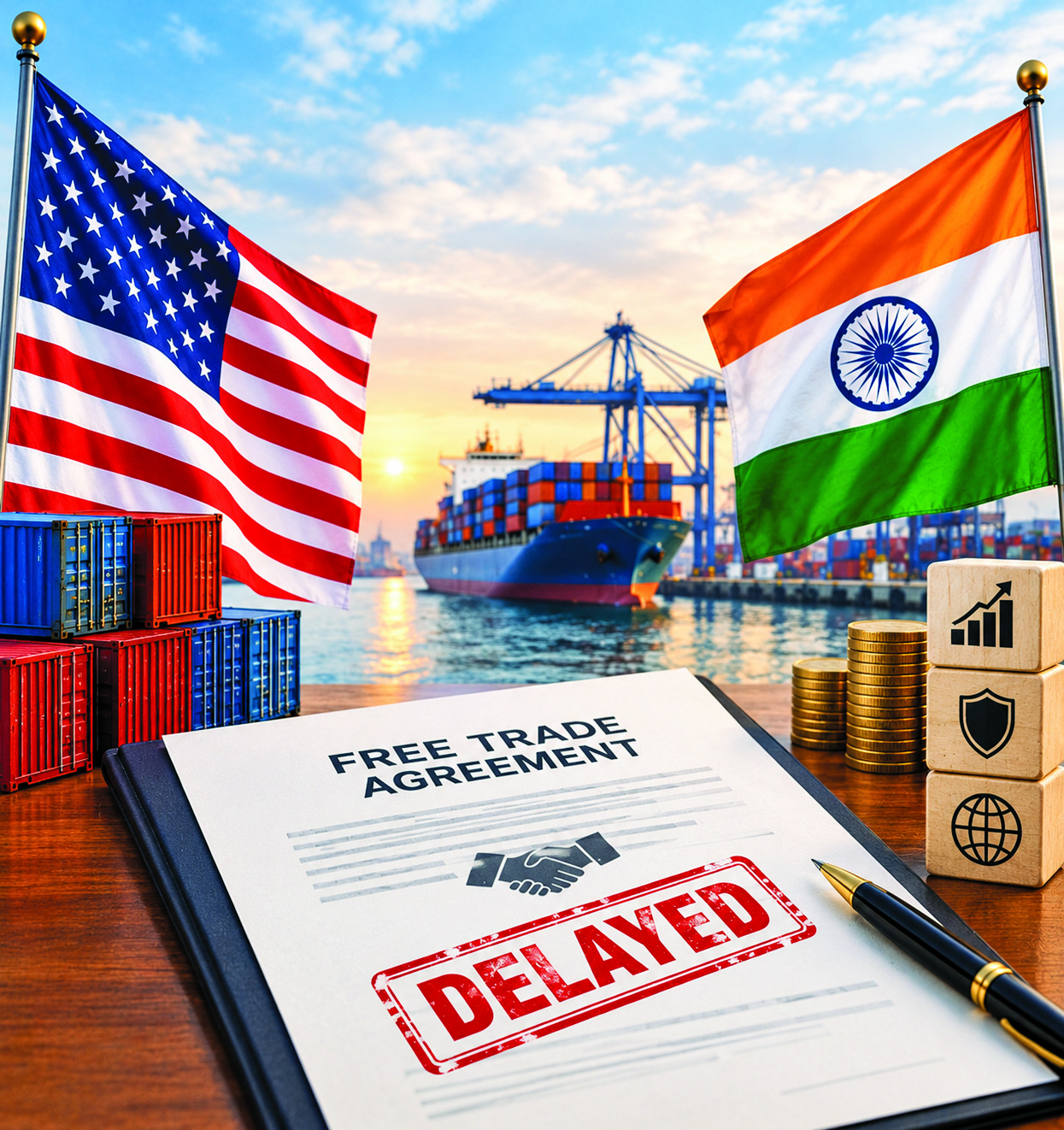
 The US Ambassador Sergio Gor’s recent statement in New Delhi that “the trade deal is, in price able almost everything is done” A lot of legal technical language that needs to be sorted out. So I am optimistic we will get done should inspire Indian policy makers. But alas, these kind of statements often come from the US side, leading nowhere. The deals as it now looks with the West – Asia War dragging on is likely to be delayed with the US “threatening to impose a 12.5 tariff on India over “forced labour” and a steep 100 percent tariff on India and others for buying Russian oil.
Lets analyse GOR’s statement, “With a month of getting here (New Delhi) at one point we announced that we had a deal. Supreme Court struck down a big part of what the deal was based on – so right now we are reconfiguring some of that text” GOR said.
The US ambassador said the bilateral trade agreement under discussion is on its way while pointing to surplus trade members. The numbers don’t lie. If you look at the trajectory of our relationship, just go by the numbers. And so, 15 years ago, our bilateral trade was dollar 20 billion. Today it is dollar 240 billion. And it’s continuing to grow. The two leaders Donald Trump and Narendra Modi deal set an ambitious goal of dollar 500 billion in the next few years said GOR. He continued we have two of the biggest economies, working together is a natural partnership and you can look decade by decade and forget the daily bumps. The relationship has been doing this decade by decade and growing.
The US Trade representative (USTR) recently proposed a 12.5 percent tariff on exports from 53 countries, including India because of their failure to prohibit import of goods, using forced labour. The announcement came amidst discussions between US officials and their Indian Counterpart in New Delhi regarding details of the frame work agreement which commerce minister Piyush Goyal had said was close to finalisation.
USTR is expected to make known its report on the second probe launched by it regarding excess capacity in 16 countries, including India – a move to replace the temporary 10 percent in place till July 14.
The Commerce Ministry said “India remains engaged with the US on the matter as a part of section 301 proceedings. In its submissions to the USTR the ministry made it clear that businesses had dismissed the allegations and described the probe as unjustified. It argued that it was an issue on which there were global rules.
India officials who had discussions will their US counterpart expect USTR to rely or section 301 to impose additional tariffs. This is a main policy lever employed by America to discourage exports and get countries to negotiate duties bilaterally.
Reports have it that a bipartisan group of US senators had unveiled a bill seeking to impose 100 percent tariff on five countries, including India and China for purchase of Russian oil. The new version of the bill includes a provision that allows Trump to waive the sanctions, if he deems it in the US national interest to do so.
On the USTR’s second probe Rajesh Agrawal, Commerce Secretary had said that it will take four to six weeks after the provisional findings are made public that the final levy can be levied. He however indicated that the issue will be handled through the bilateral trade agreement with “possible pathways”, part of the deal that is billing negotiated.
“But we are on a safe way, our understanding is safe, both sides are very clear what is there in the framework deal, what is being negotiated under FTA, and are progressing there, he said.
The commerce secretary reiterated India’s demand for comparative advantage in the trade deal “deals are about comparative advantage, trade deals are all about that”. In the past, Piyush Goyal had said that India wanted to have a tariff advantage over rivals such as China, Asian nations and Bangladesh which compete in segments such as textiles and footwear.
According to Agrawal, “there is no negativity or any sort of differences between India and the US. Both sides know each other’s expectations, what is coming in the frame work deal and both sides know what is beyond the frame work deal that is being negotiated between the two sides”.
Goyal dismissed a report that there was no consensus during the visit of USTR JAMIESON GREER’S visit to India “both sides reaffirmed their commitment to an agreement that is balanced, commercially meaningful and delivers tangible benefits for businesses, farmers, workers and consumers in both countries. Our teams remain fully engaged in achieving this objective. US Ambassador too trashed the report “Both sides had very constructive meetings and reaffirmed through commitments to finalising the trade deal”, he added.
Among other products, India has a stake in the textile sector in the US. Readymade garments, the most important item in the textiles export basket, attract an average duty of 15 percent in the American market. India does not enjoy comparative advantage as Bangladesh being a least developed country, enjoy zero duty access in the US.
Unlike in the US India gets duty – free access for garments in the UK and 27 member European Union (EU). The FTA with the EU – called the mother of all FTAs by the European commission President VAN Der Zeyen will be signed by this year end. “We have been moving fast to deliver our commitments”, she said adding the work on an investment agreement will get accelerated. At the recent G-7 summit, Indian Prime Minister Narendra Modi stressed the conclusion of negotiations for the India – EU FTA as a “Historic achievement”. The FTA would unlock “huge opportunities for trade and investment and contribute towards diversification of supply chains, particularly in the current turbulent political context”.
Modi said the India – EU FTA will benefit Indian start – ups by easing access to funding and innovation eco-systems. The deal would accelerate the Atmanirbhar Bharat campaign and strengthen the resolve of the “make in India make for the world” under the agreement with the EU. More than 99 percent of India’s exports will be either zero or very low duty, benefiting industries such as textiles leather, gems and jewellery etc., It will bring in more investment into India.