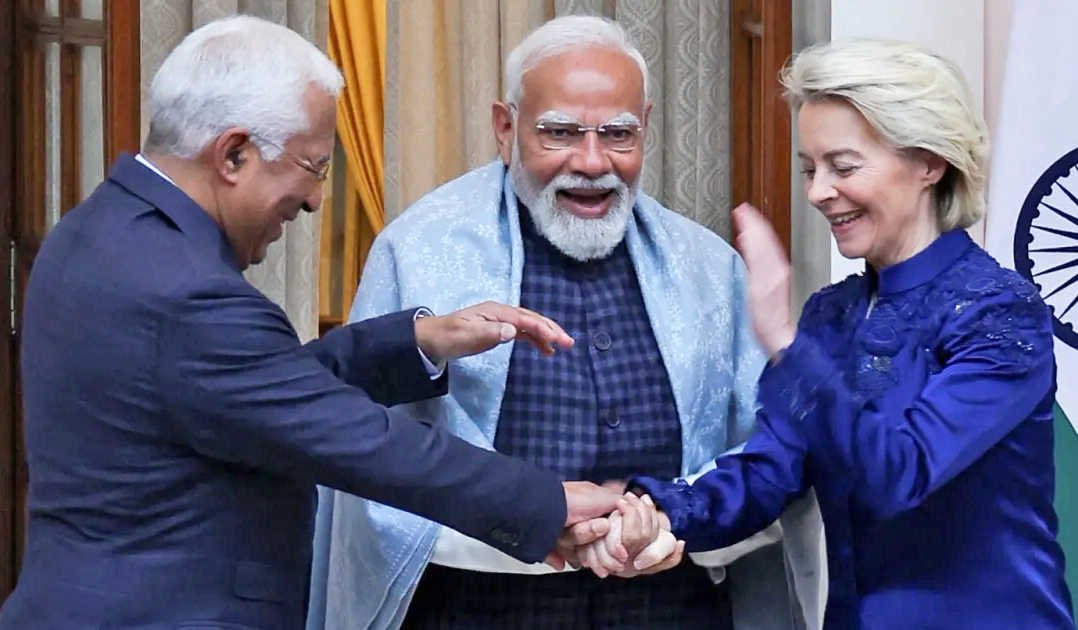
 With the current on-going structural resetting of the global supply chain, the recently announced India-European Union Free Trade Agreement comes across as more than a trade negotiation. It is in fact a strategic opportunity to redefine how fashion is sourced, produced, and scaled. For the apparel and textile ecosystem, this agreement is likely to become a cornerstone in building a more resilient, transparent, and future-ready manufacturing network between two of the world’s most influential markets.
Europe remains one of the largest consumption hubs for fashion globally, while India has evolved into a full-stack manufacturing powerhouse—spanning raw materials, design capabilities, skilled labor, and increasingly, digital infrastructure. Amidst this, the India–EU FTA has the potential to unlock this natural complementarity at an unprecedented scale.
Reducing Friction, Unlocking Competitiveness
At the heart of the FTA lies a simple but powerful outcome: reduced trade friction. Currently, tariffs on apparel and textile exports to the EU range from moderate to high, directly impacting cost competitiveness for Indian manufacturers. Therefore the gradual elimination of these duties will significantly improve price parity for Indian suppliers, allowing European brands to diversify sourcing without compromising on margins.
For the fashion brands in Europe, especially mid-sized and emerging labels, this pact will allow access to a broader supplier base with a combination of cost efficiency, speed, flexibility, and scale. On the other hand, the agreement offers a level playing field against other exporting nations and a pathway for the Indian manufacturers, thereby paving a way for them to move up the value chain.
The India–EU FTA promises wide-ranging tariff liberalization across goods and services, which is especially significant for the fashion sector: Providing multi-fold benefits, the deal will liberalize duties on more than 96 % of EU goods exported to India and approximately 99 % of Indian goods entering the EU. Beyond just trading goods, the agreement also offers opportunities for services, investment, and digital trade, sectors where India has high competitive strengths.
Strategic Impact for Fashion Supply Chains
Over the years, India has emerged as a vital production base for global fashion. Its strengths — vast skilled labor, manufacturing versatility ranging from cotton to high-tech performance textiles, and evolving compliance standards thereby strengthening India’s position in the global supply chain networks. The India–EU FTA further boosts this potential in several ways including competitive cost advantage, broadened product reach and simplified trade logistics.
Opportunities and Challenges
For fashion enterprises, the FTA opens avenues to rethink sourcing, manufacturing strategies, and market positioning. For the Indian manufacturers, their exports are anticipated to grow by up to 50% in the next five years accompanied by free trade access to key markets. The benefits are both ways, the European labels will get advantage from diversified supply sources and shorter, more transparent supply chains.
However, the pact also comes with certain challenges at the implementation stage and compliance issues.
The Bottleneck
The India–EU FTA marks a pivotal shift in the post-pandemic global economy. For the fashion industry, a sector that is both labor-intensive and globally atomized, this trade deal offers a platform for deeper integration, innovation, and growth.
By lowering barriers and fostering closer economic ties, the agreement sets the stage for more dynamic, efficient, and resilient fashion supply chains. For Indian manufacturers, it reinforces the country’s role as a core production hub. For European brands, it provides enhanced access to talented manufacturers and rising consumer markets.
As this agreement moves toward implementation, stakeholders across the fashion ecosystem from MSMEs to major brands should prepare to seize the opportunities it presents and navigate the challenges with agility and foresight.
By Abhishek Sharma, Co-Founder & CEO at Fashinza