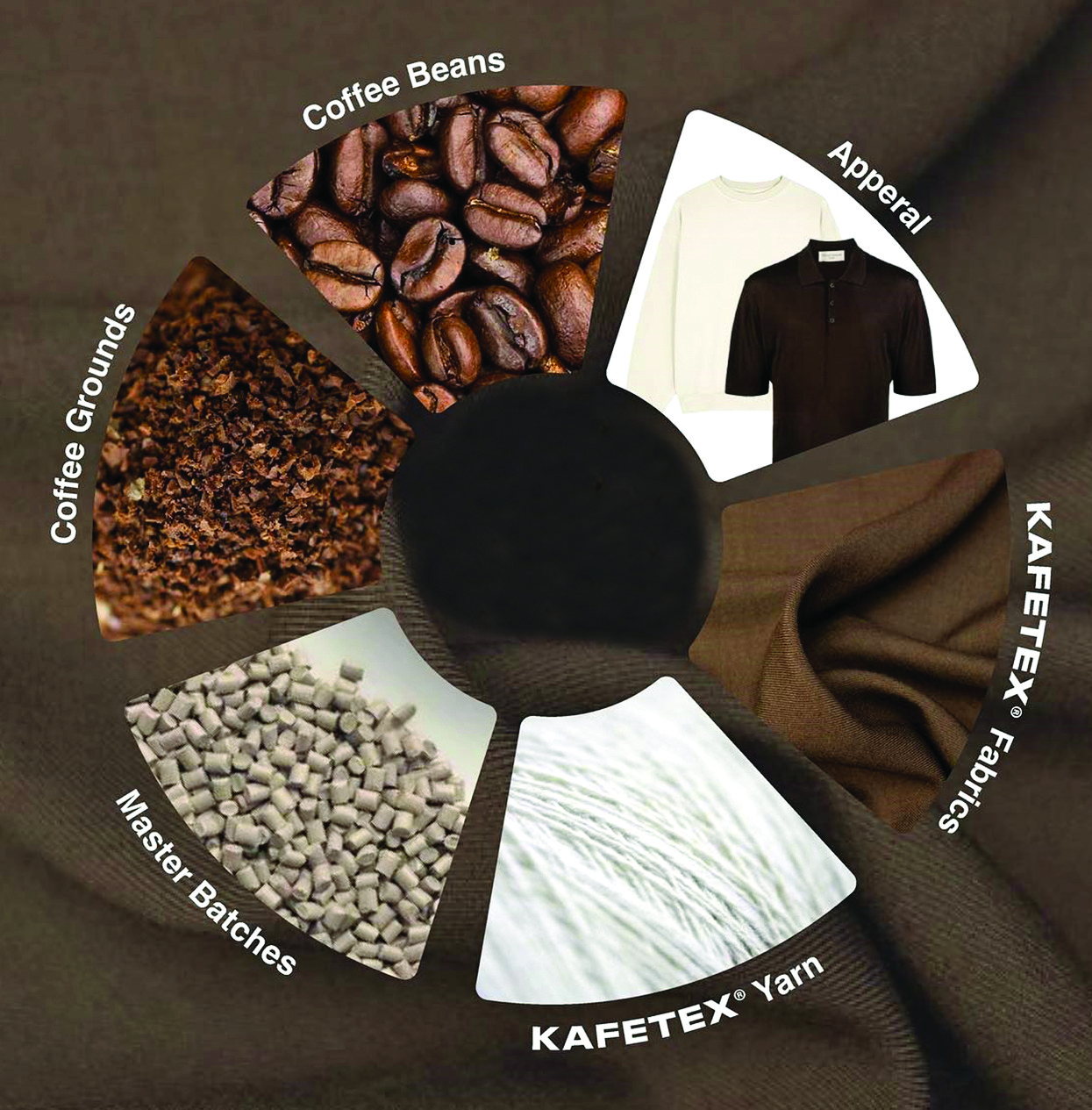
 The spent coffee grounds fiber market is entering a faster commercialization phase as textile manufacturers seek recycled materials that can support functional performance while fitting existing synthetic production systems. It stood at USD 107.9 million in 2025 and is projected to rise from USD 122.4 million in 2026 to USD 430.7 million by 2036, expanding at a 13.4% CAGR.
Why Coffee Waste Is Entering Textile Manufacturing
Apparel brands reducing reliance on virgin synthetic inputs are evaluating recycled alternatives that offer measurable functionality. Spent coffee grounds fiber provides a route for incorporating processed coffee residue into synthetic textile systems, particularly where odor management and material circularity matter.
Textile producers are assessing dispersion quality, processing stability, and supply reliability as key qualification factors.
Market Snapshot
• The market is estimated at USD 122.4 million in 2026 and projected to reach USD 430.7 million by 2036.
• The market is expected to expand at a 13.4% CAGR from 2026 to 2036.
• Yarn leads the form segment with a 46.0% share.
• Recycled polyester dominates the blend segment with a 54.0% share.
• Apparel leads the application segment with a 58.0% share.
• Sportswear dominates end use with a 41.0% share.
• B2B supply leads the channel segment with a 72.0% share.
• Vietnam, India, and Taiwan are among the fastest-growing markets, at 14.8%, 14.2%, and 13.9% CAGRs.
Yarn Leads the Form Segment
Yarn is expected to account for 46.0% of revenue in 2026, making it the leading form segment. Textile engineers are evaluating coffee-derived materials at the yarn stage because integrated properties can carry into finished fabrics without depending entirely on surface treatments.
Producers need consistent dispersion and stable processing, while quality teams assess performance through repeated laundering.
Recycled Polyester Anchors Blend Demand
Recycled polyester is estimated to hold a 54.0% revenue share in 2026. Its established role in synthetic textile manufacturing provides a practical matrix for incorporating processed coffee residue. The combination also supports demand for recycled inputs and functional performance. Better masterbatch design and process controls can improve extrusion compatibility.
Apparel and Sportswear Drive Applications
Apparel is projected to represent 58.0% of revenue in 2026, while sportswear is expected to hold a 41.0% share by end use. Performance clothing is a natural testing ground because brands and consumers focus on odor management, moisture performance, durability, and responsible material sourcing.
Successful activewear qualification can support wider adoption.
B2B Supply Shapes Commercialization
B2B supply is estimated to account for 72.0% of revenue in 2026. The dominance reflects the technical nature of the product, requiring cooperation among compounders, spinning mills, fabric producers, garment manufacturers, and brands. Long-term supply relationships matter as manufacturers seek reliable masterbatch and fiber inputs. Limited processing capacity creates opportunities for regional bio-refineries.
Asia Pacific Leads Growth
Asia Pacific is a major growth center because of its large textile manufacturing base. Vietnam is expected to register a 14.8% CAGR through 2036. Vertical integration supports specialized material adoption.
India is projected to expand at a 14.2% CAGR. Spun-yarn producers upgrading assets can create pathways for recycled synthetic blends.
Taiwan is expected to grow at a 13.9% CAGR, supported by specialized textile manufacturing. China follows with a 12.8% CAGR as producers explore highervalue recycled applications.
United States and Europe Offer Opportunities
The United States is expected to register an 11.6% CAGR. Athletic brands and performance apparel developers are placing greater emphasis on measurable product characteristics, creating opportunities for technically consistent suppliers.
Germany and Italy are projected to grow at CAGRs of 11.2% and 10.9%, respectively. European manufacturers focus on traceability and circular materials, favoring transparent suppliers.
Competitive Landscape
Key companies include SINGTEX Industrial Co., Ltd., Smartex Yarn Corp., Bao Lan Textile Co., Ltd. (WELL FABRIC), FASLINK JSC, Thai Son S.P Sewing Factory, Jay Ho Corp., Ltd., and Jia-Zhan Textile Co., Ltd.
Competition centers on processing expertise, consistency, technology, and reliable supply. Commercial-scale performance can strengthen supplier relationships.
Opportunities and Constraints
Masterbatch localization can reduce supply-chain dependence. Nonwoven composites and footwear membranes offer routes beyond apparel. The main constraint remains processing capacity. Converting coffee residue into consistent textile feedstock requires controlled preparation, particle processing, and polymer compounding. Infrastructure investment and long-term commitments may help companies capture expansion.
About the Report
Future Market Insights’ Spent Coffee Grounds Fiber Market report covers form, blend, application, end use, channel, and regional segmentation. The study provides forecasts from 2026 to 2036 with country-level analysis across more than 40 markets. It profiles major companies and examines adoption, production capacity, competitive positioning, and commercialization of coffee-derived textile materials for global textile manufacturers Spent Coffee Grounds Fiber Market Gains Ground as Textile Makers Scale Functional Recycled Materials.
(Source: openPR)