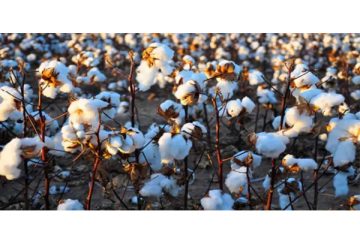
 The predominantly cotton-based textile industry is encouraged by the continued support extended by the Government of Tamil Nadu. The industry particularly appreciates the recommendation of the Hon’ble Chief Minister of Tamil Nadu to the Union Government, which resulted in the exemption of the 11% import duty on cotton, providing significant relief to the cotton textile value chain.
Tamil Nadu’s textile industry is the backbone of the country’s textile and clothing sector, accounting for nearly 25% of India’s textile business, 45% of the spinning capacity, 22% of the powerloom capacity, 70% of the cotton knitted garment manufacturing capacity, 40% of the home textile manufacturing capacity and 12% of the handloom capacity. The State’s textile industry consumes around 120 lakh bales of cotton (170 kg per bale) annually and contributes nearly 28% of India’s textile exports, valued at approximately US$10.5 billion.
Tamil Nadu is also home to 80% of the country’s spinning machinery, spares and accessories manufacturing capacity. The industry provides direct employment to nearly 70 lakh people, predominantly women and rural workers, while contributing over ₹4,500 crore annually towards State GST (SGST). Furthermore, the livelihoods of several million cotton farmers, powerloom and handloom weavers, garment workers and home textile employees across the country are closely linked to the performance of the textile industry in Tamil Nadu.
To retain Tamil Nadu’s dominant position in the textile sector, Shri Durai Palanisamy, Chairman of The Southern India Mills’ Association (SIMA), has appealed to the State Government to provide adequate budgetary allocation for bridging the industry’s skill gap by establishing industry-led training centres and supporting the upskilling of the existing workforce in alignment with the Skill Development initiatives of the Government of India.
Tamil Nadu produces only around 5 to 7 lakh bales annually (from 25 lakh bales produced during 1990s), but consumes around 110 to 120 lakh bales annually and the State has potential for cultivating high value-added specialty cotton such as ELS, organic and naturally coloured cotton; dedicated mission mode approach is essential to achieve this. To strengthen the raw material security, SIMA Chairman emphasised that enhancing the production of natural fibre cotton and polyester fibre needs to be addressed.
He further emphasised that modernisation of manufacturing machinery is essential for producing high-quality and cost-effective textile products, thereby enhancing global competitiveness and sustaining export growth. In this regard, SIMA has requested the State Government to introduce suitable capital subsidy schemes to encourage the replacement of obsolete technology textile machinery. Highlighting future growth opportunities, Shri Durai Palanisamy stated that technical textiles and value-added products manufactured from man-made fibres (MMF) represent the fastest-growing segments of the global textile market. He appreciated the initiatives taken by the State Government in formulating the draft Tamil Nadu Industrial Policy 2026, which proposes focused measures for strengthening the State’s textile ecosystem and enhancing its share in the national and global markets.
Shri Durai Palanisamy further pointed out that a large section of the textile manufacturers in Tamil Nadu are dependant on processing facilities located in other States due to limited processing capacity within the State. While the processing units in Tamil Nadu have successfully adopted the Zero Liquid Discharge (ZLD) system to comply with stringent environmental norms, the process has resulted in the accumulation of substantial quantities of mixed salts, for which there is currently no scientifically viable and economically sustainable disposal mechanism.
He urged the State Government to formulate a comprehensive scheme for the environmentally safe disposal of treated waste through deep-sea outfall, wherever technically and environmentally feasible, and to establish an effective mechanism for the scientific utilisation or disposal of the accumulated mixed salts. According to the SIMA Chairman, addressing these critical environmental and infrastructure challenges would significantly strengthen the textile processing sector in Tamil Nadu, improve the competitiveness of the State’s textile value chain and facilitate cost-effective textile manufacturing while ensuring environmental sustainability.
Considering that a significant proportion of the textile workforce comprises women and interstate migrant workers, SIMA has also urged the Government to allocate adequate funds for developing quality residential facilities, including family quarters with childcare centres and well-equipped hostels. Such infrastructure may be created either within individual textile manufacturing units or through cluster-based models to improve workers’ living conditions, enhance labour retention and support sustainable industrial growth.
Shri Durai Palanisamy expressed confidence that the forthcoming State Budget would recognise the strategic importance of the textile industry by providing targeted policy support and adequate financial allocations.