India’s textile sector is one of the nation’s oldest and most diverse industries, deeply rooted in centuries-old traditions. The Union Budget 2026–27 places the textile sector at the heart of India’s growth, underlining its strategic importance to the economy. By prioritising this labour-intensive industry, the Budget acknowledges textiles as a key driver of job creation, export growth, rural livelihoods and sustainable manufacturing.
 Ashwin Chandran, Chairman, The Confederation of Indian Textile Industry (CITI)
The Confederation of Indian Textile Industry (CITI) warmly welcomes the Union Budget for the financial year 2026–27 presented by the Hon’ble Finance Minister, Smt. Nirmala Sitharaman, for the decisive boost it can provide to the pivotal textile and apparel sector in raising its global competitiveness, increasing exports, and safeguarding employment.
Commenting on the Budget, CITI Chairman Shri Ashwin Chandran said, “The Budget is a strong manifestation of the Government’s commitment to future-proof the textile and apparel sector, make it more resilient to global headwinds, and comes as a huge shot in the arm for the industry.”
“We convey our heartfelt gratitude to the Hon’ble Prime Minister, the Finance Minister, the Textiles Minister and all senior officials for announcing measures that will help the textile and apparel industry attain greater heights, emerge in a stronger position to contribute to the Viksit Bharat (developed India) mission, and create more and better-quality jobs,” he added.
The CITI Chairman said the launch of the National Fibre Mission, announcements about the Mahatma Gandhi Gram Swaraj Initiative, Tex-Eco Initiative, establishment of mega textile parks in challenge mode, textile expansion and employment to modernise traditional clusters, National Handloom and Handicrafts Programme, and the SAMARTH 2.0 skill development scheme will help local manufacturers become more efficient, innovative and sustainable, and expand their presence in global markets.
Referring to the three Kartavya that inspired the Budget, Shri Chandran observed, “The first Kartavya focuses on improving cost competitiveness. While we are studying the proposal, no direct announcement for the removal of import duty was made towards improving the cost competitiveness of Indian cotton-based products, which accounts for about 60% of India’s total textile and apparel market.”
The CITI Chairman welcomed the Government’s emphasis on nurturing champion MSMEs and supporting micro enterprises, noting that the textile and apparel sector is predominantly MSME-driven. However, he pointed out that the industry has consistently sought a dedicated investment incentivisation scheme, particularly to support MSMEs in transitioning towards sustainable production models, which will also help in leveraging the upcoming India-EU FTA. “While the details of the Tex-Eco initiative are awaited, the absence of a direct investment support mechanism is felt,” he said.
The proposal to extend the time period for export of final product from the existing 6 months to one year for exporters of textile garments, enhanced focus on improving logistics through freight corridors, the decision to establish a High-Level Committee on Banking for Viksit Bharat, and simplification of export-import procedures are also particularly welcome, he added.
“On its part, CITI reiterates its commitment to work closely with the Government to ensure effective implementation of the announced measures, keeping in mind the national aim of creating a $350 billion textile and apparel industry by 2030, including achieving exports worth $100 billion by that period,” Shri Chandran said.
India’s textile and apparel industry is the second-biggest generator of jobs and livelihoods in the country. It is also a significant contributor to the GDP and the nation’s overall exports.
The textile and apparel sector has been adversely affected by the 50% US tariff on Indian goods, effective August 27, 2025, which has put exports worth billions of dollars and millions of jobs at risk. The US is the single-largest market for India’s textile and apparel exports. At nearly $11 billion, India’s exports of textile and apparel items to the US accounted for close to 28% of the country’s total exports of these products in the financial year 2024-25.
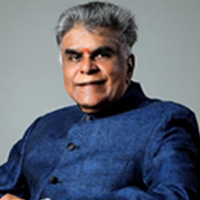 Dr. A. Sakthivel, Chairman, Apparel Export Promotion Council (AEPC)
“The Budget is forward-looking, growth-oriented and balanced, reflecting the Government’s strong commitment to building a competitive, resilient and globally integrated textile and apparel sector.” This budget provides a roadmap for strengthening India’s textile and apparel ecosystem, with a strong focus on self-reliance, sustainability, employment generation and global competitiveness. AEPC welcomes the government’s clear commitment to positioning India as a resilient and future-ready textile powerhouse, he added.
“The Budget 2026–27 provides a significant boost to SMEs and MSMEs, which form the backbone of India’s apparel and textile exports. The emphasis on providing liquidity, ease of exports, particularly through customs-related reforms and simplified documentation procedures, will reduce transaction costs, enhance efficiency, and improve the overall ease of doing business for exporters,” Dr. Sakthivel stated.
Further Chairman said, the strengthening of Trade Receivables Discounting System (TReDS), with mandatory onboarding of Central Public Sector Enterprises (CPSEs), credit guarantee support through Credit Guarantee Fund Trust for Micro and Small Enterprises (CGTMSE), linkage with Government e Marketplace (GeM), and introduction of TReDS receivables as asset-backed securities, will greatly enhance liquidity, access to affordable finance and cash-flow stability for MSMEs.
AEPC also welcomes the proposal to set up Mega Textile Parks in challenge mode, with a focus on value addition in technical textiles, which will attract investment, boost scale, and strengthen India’s presence in high-growth segments. Also, the Textile Expansion and Employment Scheme to modernise traditional clusters through capital support for machinery, technology upgradation, and common testing and certification centres will greatly enhance productivity, quality and employment opportunities, particularly in MSME-dominated clusters.
The announcement of the National Fibre Scheme is a significant step towards self-reliance across natural fibres such as silk, wool and jute, man-made fibres and new-age fibres. This integrated approach will help India build a robust raw material base and reduce import dependence while supporting innovation. The launch of the Mahatma Gandhi Gram Swaraj Initiative will further energise khadi, handloom, and handicrafts, promoting inclusive growth and rural livelihoods.
The launch of Samarth 2.0 to modernise and upgrade the textile skilling ecosystem through collaboration with industry and academic institutions will help bridge skill gaps and promote employment especially for youth and women.
The Tex-Eco Initiative is a timely and much-needed intervention to promote globally competitive and sustainable textiles and apparel. This will further reinforce India’s image as a trusted supplier of environmentally responsible fashion in international markets.
Trade facilitation measures such as recognition of trusted importers, reduced cargo verification, and factory-to-port clearance using electronic sealing will significantly reduce logistics costs and improve ease of doing business.
The Chairman AEPC welcomed the National Handloom and Handicrafts Programme, which seeks to integrate and scale up existing schemes. Dr. Sakthivel overall expressed confidence that the Union Budget 2026–27 will accelerate export growth, strengthen domestic manufacturing, promote sustainability, and support India’s journey towards becoming a global textile and apparel powerhouse, in line with the vision of a Viksit Bharat.
 Suketu Shah, CEO, Vishal Fabrics Ltd.
“The Union Budget 2026-27 provides a well-balanced and forward-looking roadmap for the textile industry in India, stressing upon on self-sufficiency, modernization, and employment generation. The integrated approach to the National Fibre Scheme, the Textile Expansion and Employment Scheme, and the focus on cluster development is a recognition that the competitiveness of the industry can be improved by making the value chain stronger.
The focus on fibre security in natural, man-made, and new fibres tackles the existing challenge in the industry regarding input volatility and quality, which is essential for capacity planning and export competitiveness. On the other hand, the call for the modernization of the traditional textile sector through technology upgradation, joint testing facilities, and certification assistance will ensure that the gap between the country’s manufacturing capabilities and new global standards is bridged.
The shift in focus to Samarth 2.0 is a move made in the right direction towards developing an industry-ready workforce that is in line with automation, efficiency, and scale. Further, the challenge mode development of mega textile parks along with the SME Growth Fund of ₹10,000 crore will definitely have a positive impact on the MSME sector. On the whole, the Budget has created a robust foundation for a resilient and future-ready textile sector and is a confidence booster for the entire textile value chain in India.”
 Madhu Sudhan Bhageria, Chairman and MD, Filatex India Ltd.
“We see the Union Budget 2026-27 as a comprehensive and forward-looking framework for strengthening India’s textile ecosystem, particularly through its integrated approach to fibers, manufacturing, skilling and sustainability. The proposed National Fibre Scheme, with its focus on man-made fibres alongside natural and new-age fibres, is a timely recognition of how the global textile industry is evolving and of India’s growing role within it.
We believe initiatives such as the Textile Expansion and Employment Scheme and SAMARTH 2.0 can play a meaningful role in modernising clusters, upgrading technology and building a skilled workforce aligned with industry requirements. For manufacturers, this emphasis on capital support, testing infrastructure and skilling is critical to improving productivity, quality and global competitiveness.
For a company like Filatex India Ltd., which operates at the upstream end of the man-made fibre value chain, these measures support a more robust downstream ecosystem, improve demand visibility and encourage long-term investments in capacity, quality and value-added products. The emphasis on the Text-ECON initiative further reinforces the industry’s shift towards sustainable and globally competitive textiles, a direction that is closely aligned with Filatex’s ongoing focus on circular recycling, responsible manufacturing and traceability through its Ecosis sustainability platform.
Overall, we believe the Budget lays a strong foundation for a more resilient, globally competitive and sustainable textile industry, encouraging capability building and investment across the value chain.”
 Ronak Chiripal, Promoter, Chiripal Group
The Union Budget 2026 provides a clear policy roadmap for the labour-intensive textile sector, with a welcome focus on fibre self-reliance, cluster modernisation and sustainability. The proposed integrated programme that covers natural and man-made fibres, technology upgradation in traditional clusters, targeted support for handlooms and handicrafts, and the Tex-Eco initiative; addresses long-standing structural gaps and also aids in improving India’s export competitiveness.
The emphasis on building ‘Champion SMEs’ through dedicated equity and liquidity support is equally significant for textiles, where MSMEs drive employment and value addition. Measures such as the Rs 10,000-crore SME Growth Fund, additional risk capital for micro enterprises, and expanded use of TReDS for faster invoice settlement should ease working capital pressures. The proposed ‘Corporate Mitras’ framework can further help smaller units manage compliance efficiently, particularly in Tier-II and Tier-III textile clusters. Long-term growth in competitiveness will further aid a stability to apparel and textile prices for end-consumers as well.
 Sanjay Jain, Group CEO of PDS Ltd
We welcome the integrated vision for the Indian textile and apparel sector outlined in the Union Budget 2026. As a sector that provides direct employment to over 45 million people and supports nearly 100 million livelihoods indirectly through allied industries and MSME clusters, these measures are both timely and impactful. The continued thrust on public capex, creation of champion MSMEs, and targeted support for labour-intensive sectors like textiles will significantly strengthen India’s global competitiveness.
The launch of SAMARTH 2.0 is a positive step towards modernising the skilling ecosystem through deeper collaboration between industry and academic institutions, while enhancing productivity across export-oriented clusters. At PDS, we are deeply committed to building a learning-driven culture through a structured three-tier learning and development framework. Our approach is anchored in the globally recognised 70-20-10 learning model, where the majority of learning takes place on the job, supported by peer and mentor interactions and formal training programmes.
Further, the Text-ECON initiative sends a strong signal of India’s ambition to emerge as a global hub for sustainable and value-added textiles. The renewed focus on PM MITRA mega textile parks, along with targeted capital support and infrastructure upgrades for traditional clusters, is expected to drive higher investments and accelerate sectoral growth. These measures will also strengthen domestic manufacturing by reducing import dependence and promoting the production of man-made fibre (MMF) apparel and technical textiles.
We believe these initiatives will also help boost exports and reduce logistics costs, further enhancing the competitiveness of Indian textiles in global markets. This Budget reinforces confidence in India’s journey towards becoming a globally integrated, high-quality manufacturing hub under the vision of Viksit Bharat.”
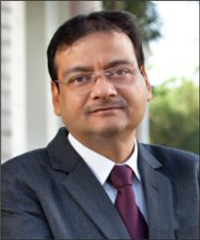 Vinod Kumar Gupta, Managing Director, Dollar Industries Limited
We warmly welcome Union Budget 2026’s decisive push for manufacturing, particularly the ₹10,000 crore credit boost for MSMEs, also for introducing the National Fibre Scheme, a transformative step towards achieving self-reliance in both natural and man-made fibres. This initiative directly boosts domestic supply and competitiveness for the hosiery sector, addressing our core raw material needs. It lays a strong foundation for sustainable growth and robust employment generation in our labour-intensive industry.
 Sanjay Gandhi, Group CFO, Pearl Global Industries Limited
“The Union Budget 2026 outlines a comprehensive and integrated approach to strengthening India’s textile ecosystem, with a clear focus on infrastructure development, capital access, and skill augmentation. Initiatives such as SAMARTH 2.0 signal a renewed push towards industry-aligned skilling, while the emphasis on self-reliance in natural, man-made and new-age fibres is a positive step towards long-term raw material security. The strong focus on building technical textile capabilities is particularly significant as the sector moves up the value chain. From an apparel perspective, greater clarity will emerge once the detailed framework of the Text-ECON initiative is available, especially around its role in driving globally competitive and sustainable manufacturing. Overall, the budget seeks to enhance cost competitiveness across the textile value chain, enabling the industry to better leverage recently announced FTAs with Europe, the UK and other markets, and compete more effectively with manufacturing hubs such as Vietnam and Bangladesh. As always, the actual impact will hinge on timely execution, detailed guidelines, and the pace of on-ground implementation.”
 Rajeev Gupta, Joint Managing Director, RSWM Limited
The Union Budget 2026–27 presents a decisive and reform-led roadmap for the textile sector, firmly positioning it within India’s strategy to scale manufacturing, reduce import dependencies and generate employment. The announcement of an Integrated Programme for Textiles, with clearly defined sub-parts, reflects a holistic policy approach that addresses the entire value chain, from fibre security to skilling, sustainability and global competitiveness.
The National Fibre Scheme is particularly significant in strengthening self-reliance across natural, man-made and new-age fibres, while mitigating supply-chain vulnerabilities amid global disruptions. Complementing this, the Textile Expansion and Employment Scheme will accelerate modernisation of traditional clusters through technology upgradation, testing and certification infrastructure, directly enhancing productivity, quality and formal employment, especially in MSME-led regions.
The consolidation of handloom and handicraft interventions, along with the Mahatma Gandhi Gram Swaraj Initiative, reinforces inclusive growth by strengthening artisans, weavers and rural enterprises through market access, branding and skilling. The continued focus on Samarth 2.0, Tex-Eco and mega textile parks, particularly with an emphasis on technical textiles, signals strong intent to future-proof the sector. With effective implementation, these measures can significantly strengthen India’s position as a globally competitive, sustainable and resilient textile manufacturing hub.
 Abhishek Sharma, CEO & Co-founder of Fashinza
Union Budget 2026 has marked a decisive shift in India’s textile policy, signalling a move from scale-led apparel manufacturing to higher value-added and technology-driven segments. The Finance Minister’s proposal to set up mega textile parks with a focused thrust on technical textiles reflects a strategic attempt to address long-standing structural gaps in the sector.
While India has built significant scale in apparel manufacturing over the past decade, its presence in technical textiles ranging from industrial and medical textiles to performance and protective wear-has remained limited. Global demand, however, has increasingly tilted towards synthetics, blended fabrics, and specialised textile applications, making value addition and innovation critical to future competitiveness.
The proposed mega textile parks aim to create integrated manufacturing ecosystems that combine infrastructure, processing, finishing, and ancillary services within unified clusters. Industry experts view this as a necessary intervention to overcome the inefficiencies caused by fragmented production capacities, which have historically impacted turnaround times, quality consistency, and compliance with global sourcing standards.
The Budget sends a positive signal for manufacturing and reinforces the broader Make in India vision. From a textile industry perspective, it acknowledges several structural gaps that have existed for years. While India has achieved scale in apparel manufacturing, technical textiles and higher value-added segments have lagged. The renewed focus on technical textiles, along with targeted support for man-made fibres, is therefore a welcome step.
Support for man-made fibres (MMF) is another notable aspect of the Budget, aligning domestic manufacturing priorities with global consumption trends. MMF-based textiles dominate segments such as performance apparel, industrial applications, and home textiles, where consistency, durability, and functionality are key.
The importance of integrated infrastructure, adding, “Large, integrated manufacturing clusters are essential for India to compete globally on speed, quality, and compliance. Historically, fragmented capacity has limited efficiency, and bringing infrastructure, processing, and value addition together can significantly enhance competitiveness.”
In parallel, initiatives such as SAMARTH 2.0 underscore the government’s intent to align skilling with capacity expansion, addressing labour productivity and workforce readiness. If executed consistently, industry stakeholders believe these measures could help India transition from volume-led growth to a more resilient, value-driven textile ecosystem, strengthening its position in global supply chains.
 Kumar Rajagopalan, CEO, Retailers Association of India
“Union Budget 2026–27 is not designed to stimulate consumption in the short term. Instead, it focuses on shaping the operating environment for retail through fiscal consolidation, infrastructure investment, MSME enablement, skilling, and regional growth. For the retail sector, its impact will be gradual and uneven, driven more by improvements in supply chains, workforce readiness, and rural and non-metro demand than by direct policy support.”
 Gautam Shahi, Director, Crisil Ratings
India’s tariff-impacted textile sector and its entire value chain have received support from an array of schemes announced in Union budget 2026. The proposed establishment of textile megaparks, coupled with initiatives such as the National Fibre Scheme, Textile Expansion Employment Scheme, Tex Echo Initiative, Samarth 2.0, and the Mahatma Gandhi Gram Swaraj Initiative should enhance its long-term global competitiveness. This, complemented by free trade agreements, will expand market access for domestic textile makers.
 Sidhant Keshwani, Founder and CEO, Libas
The Union Budget 2026-27 presents a visionary, long-term roadmap for India’s textile industry. By focusing on Mega Textile Parks and the National Fibre Scheme, the government is building the infrastructure needed to turn India into a global fashion leader. These steps will provide a massive boost to the sector, helping it transition from traditional roots to a modern, high-speed manufacturing powerhouse.
The new Text-ECON initiative and modernization schemes directly address the industry’s need for better technology and global competitiveness. Furthermore, programs like SAMARTH 2.0 and the Mahatma Gandhi Gram Swaraj Initiative will empower our artisans, linking traditional crafts with global markets.
At Libas, we have always focused on speed and scaling Indian wear. We welcome this budget as it tackles key industry pain points like skilling and supply chain gaps. These measures will help accelerate the growth and take Indian fashion to the world stage.
 Abhishek Dua, Co-Founder, Showroom B2B
“The Budget’s integrated approach towards strengthening the labour-intensive textile sector is a positive and much-needed step for India’s apparel manufacturing ecosystem. The focus on fibre self-reliance, modernisation of textile clusters, and targeted support for handloom and handicraft segments addresses long-standing structural gaps across the value chain.
Initiatives such as the National Fibre Scheme and capital support for machinery and technology upgrades will help manufacturers improve productivity, quality standards and supply reliability, which are critical for both domestic growth and export competitiveness. The proposal to set up mega textile parks further strengthens the ecosystem by enabling scale, shared infrastructure and compliance readiness. For apparel manufacturers supplying large-scale value fashion retailers, these measures provide greater confidence to plan capacity, invest in modernisation and generate sustained employment while remaining globally competitive.”