Company has developed a proprietary 3D printing and materials system that integrates into brands’ existing workflows, with the aim of reducing vast industry inefficiencies.
Variloom, a Palo Alto-based startup in the fashion textile space, is developing what it claims is a “transformative filament and 3D printing system designed for ultra-efficient fabrication of versatile and recyclable fabrics”.
The company’s technology is patent pending, and the goal is to provide the industry with a 3D printing system for apparel production that eliminates pattern waste and enables on-demand manufacturing closer to brands’ facilities.
Billions of garments produced annually worldwide go unsold, and traditional cut-and-sew methods generate substantial scrap waste, inefficiencies the company wants to address with its system which allows brands to produce exact quantities in final form without excess material or inventory.
Variloom’s modular units integrate into existing production sites, reducing supply chain touchpoints and transportation emissions. Traditional garment manufacturing involves journeys of thousands to tens of thousands of miles from fiber to finished product per garment.
US startup Variloom has developed a proprietary 3D printing and materials system that integrates into brands’ existing workflows
“Our main goals are to bring production closer to brands and suppliers, to customize for them, and to work with sustainable, recyclable materials,” stated Bethany Meuleners, Apparel/Textile Design & Development Lead at Variloom.
Variloom uses biobased thermoplastic polyurethane for durability and tensile strength, combined with natural fibers and additives sourced from agricultural and textile waste. Third-party testing showed the materials maintained integrity through three recycling cycles, addressing an industry where less than 1% of garment fabrics became new clothing.
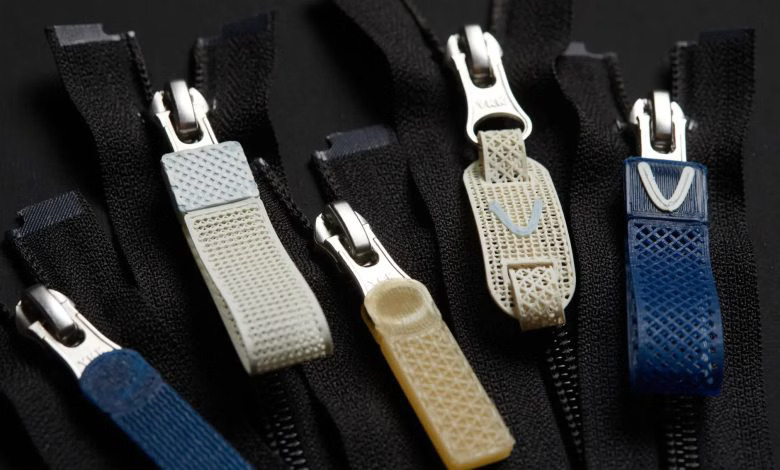
The company has already worked with Japanese zipper manufacturer YKK and Australian sportswear brand Rip Curl, with products scheduled for 2026 release. YKK used the technology to produce zipper pullers without meeting the high minimum order quantities required by injection molding, while reducing carbon footprint and eliminating metal molds for custom designs.
Rip Curl deployed the system for board shorts made from biobased TPU and wool, replacing elastane while maintaining performance in harsh surf conditions involving UV exposure, saltwater, and chemicals. The precision manufacturing enabled design modifications, including reinforced waistbands and ventilation panels.
Jake Koh, CEO of The Hong Kong Research Institute of Textiles and Apparel, which validated Variloom’s feedstock recyclability and co-developed the printing machine, highlighted the integration between materials and hardware. “The printing machine works seamlessly with Variloom’s materials, adding a powerful new dimension,” he stated.
Variloom plans to launch a pilot facility in 2026, transitioning from research to production volumes.