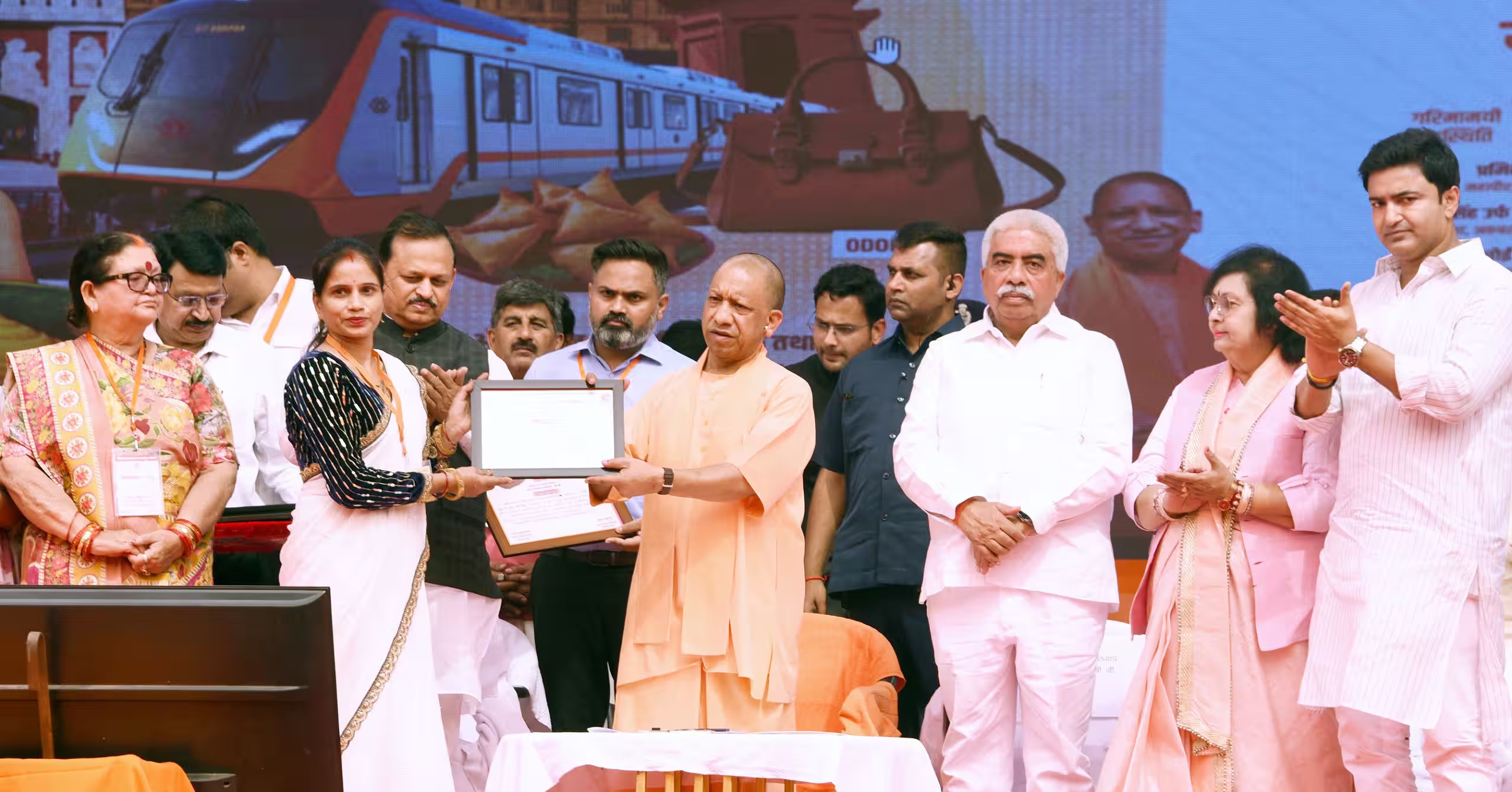
The Uttar Pradesh Cabinet on Tuesday approved Ramky Infrastructure Ltd as the preferred bidder to develop a 1,000-acre PM MITRA Mega Textile Park on the Lucknow-Hardoi border at an estimated cost of ₹1,947 crore. The textile park, being developed under the Centre’s PM MITRA scheme, is expected to attract private investment and generate direct and indirect employment for around one lakh people, according to a state government statement. The Cabinet, chaired by Chief Minister Yogi Adityanath, accepted the single bid received for selecting the master developer and approved Ramky Infrastructure as the preferred bidder for the project.
Handloom and Textiles Minister Rakesh Sachan said the project would be developed with an estimated investment of ₹1,947 crore, with the Centre providing financial assistance of up to 30 per cent of the project cost, subject to a maximum of ₹500 crore. The park is expected to create opportunities for domestic and international private investment and benefit weavers, garment manufacture₹and exporters, the minister said.
The project will be implemented through PM MITRA Park Uttar Pradesh Ltd, a special purpose vehicle jointly owned by the Centre and the state government, with the Uttar Pradesh government holding a 51 per cent stake and the Centre 49 per cent. The state government has provided 1,000 acres of land to the special purpose vehicle on a 99-year lease at a nominal rate of ₹1 per acre per year, Principal Secretary (Handloom and Textiles) Anil Kumar Sagar said. Following a national tendering process, Ramky Infrastructure was found eligible after technical and financial evaluation, he added. The project will be developed under a design, build, finance, operate and transfer (DBFOT) public-private partnership model, with a five-year construction period and a total concession period of 50 years.
The park will have internal roads, electricity distribution networks, ready-to-use factory sheds, an incubation centre and a common boiler facility. A common effluent treatment plant based on zero liquid discharge norms will be set up to ensure treatment and recycling of industrial wastewater. The infrastructure will also include hostels and residential facilities for workers, particularly women, along with a health centre, skill development institute, warehousing facilities and a logistics hub. The state government will provide external infrastructure, including six-lane road connectivity and arrangements for uninterrupted power and water supply.