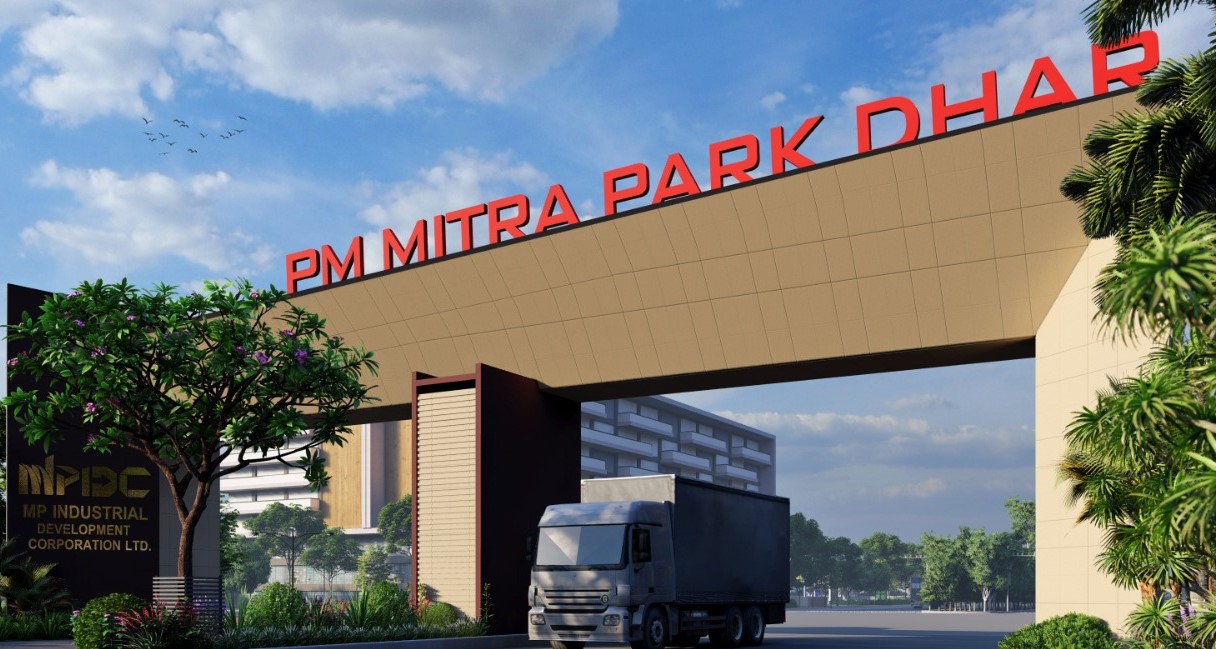
Madhya Pradesh’s PM Mega Integrated Textile Region and Apparel (PM MITRA) Park in Dhar district has emerged as the frontrunner among the seven textile mega parks, drawing the highest level of committed investment and the fastest pace of land allotment, even as several competing locations remained at earlier implementation stages.
Based on the Centre’s 5F vision farm to fibre to factory to fashion to foreign the park aims to create integrated manufacturing infrastructure, upgrade technology, foster innovation, enhance skills and reduce production costs across the textile value chain.
In the second phase of allotment completed recently in MP, 320 acre were allocated to 13 companies proposing investments of about Rs 7,500 crore and generating more than 16,000 jobs. Around 1,130 acre was already allotted, while lease execution and plot possession were being expedited ahead of the third phase.
“We are establishing an integrated unit to supply fibre to our existing plants. The favourable industrial climate in Madhya Pradesh, coupled with our successful pilot project in Ujjain, made this an attractive opportunity. We are optimistic about growth in MP, especially given its accessibility to raw material and supportive policies,” said Rajkumar Ramasamy, managing director of a Tamil Nadu-based textile company planning to invest Rs 981 crore in the park.
A major anchor investor is Bhilosa Industries, which proposed an investment of about Rs 4,500 crore over 200 acre and is expected to generate 3,500 jobs, strengthening the man-made fibre ecosystem in central India.
Industries attribute MP’s lead to faster development of the park, quicker approvals, proactive investor outreach and integrated planning of social infrastructure such as housing, healthcare, education and recreation around the park. Industry participants said a comparative study of all 7 PM MITRA parks gave Madhya Pradesh an edge due to its early start, competitive power tariffs and strong traction of anchor industries. They added that power prices offered by MP are very competitive, significantly improving project viability and long-term cost efficiencies.
“We are developing a 30-acre integrated project inside the PM MITRA park in Madhya Pradesh, covering knitting, dyeing, and garmenting on one campus. The EU tariff advantage, combined with plug-and-play infrastructure and state garment and labour incentives, makes integrated manufacturing cost-effective and globally compliant, exactly what European buyers are now seeking,” said NASAS Fibre to Fashion managing director Sanjay Agrawal.
MPIDC managing director Chandramauli Shukla said, “Response from industries is very encouraging for the park. So far, 38 firms submitted proposals with cumulative investment commitments crossing Rs 21,500 crore, which are expected to generate nearly 55,000 jobs. Our priority now is to accelerate plot possession, build social infrastructure, and ensure early commissioning of anchor units so that integrated textile manufacturing begins at scale.”
Seven PM MITRA parks have approved across Tamil Nadu, Telangana, Gujarat, Karnataka, Madhya Pradesh, Uttar Pradesh and Maharashtra under a central outlay of Rs 4,445 crore, each targeting large-scale textile investment and employment generation. Of these, five are greenfield sites, while two brownfield locations, Amravati in Maharashtra and Warangal in Telangana, are being developed on existing industrial land.
Progress across states remained uneven. Telangana grounded investments of about Rs 3,862 crore with 540 acre allotted, while Tamil Nadu completed land acquisition and secured clearances with proposals of about Rs 2,076 crore. Maharashtra initiated land allotment and other states remained at preparatory or early implementation stages. The information was provided by minister of state for textiles Pabitra Margherita in a written reply to a question in the Lok Sabha.
“Maharashtra started the process of inviting investment proposals and DPRs for the projects being developed on the PPP mode were also ready. Infrastructure work is in process in all the seven parks and the next phase of the programme will focus on fast-tracking infrastructure completion, attracting large anchor investors and enabling integrated value chains from fibre to finished apparel,” said a senior textile ministry official wishing anonymity.