SPGPrints’ JAVELIN® digital textile printer wins EDP Award 2017
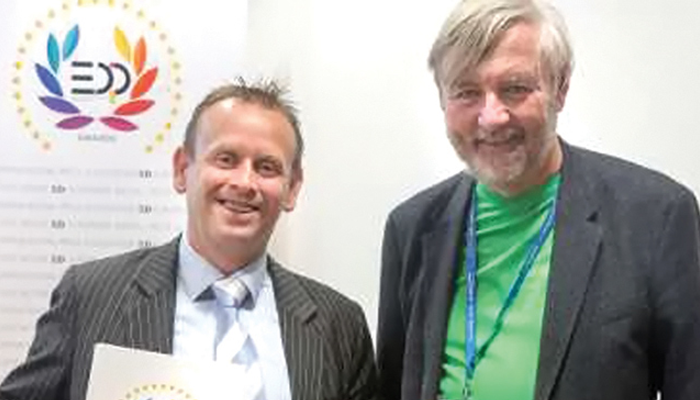
SPGPrints announced that its JAVELIN® digital textile printer has won the European Digital Press Association (EDP) Award for “Best Textile Solution” in the Print and Finishing Category. The award was presented by the Association at a ceremony during the FESPA 2017 exhibition in Hamburg, Germany on 10th May, 2017. This achievement follows the same award being presented last year to the SPGPrints’ PIKE® digital textile printer. The JAVELIN digital textile printer was launched at ITM 2017, in April 2016, and installations have been taking place around the world.
The EDP Association comprises 20 printing trade press magazines in 27 countries, representing more than half a million readers. This year’s entries were judged by the EDP technical committee that comprised Herman Hartman (Chairman), Editor, signPro (Benelux); Rob Haak. President, SPIKIX; Klaus-Peter Nicolay, Editor, Druckmarkt, (Germany) and Igor Terentyev, Editor, Publish, (Russia).
In making the award, the judging panel commented, “The printer offers quality and value to textile printers who are taking the first step into digital production. The JAVELIN has several multiple-pass scanning printing modes that can print highresolution images up to 1,200 dpi on a variety of substrates. Possibly a breakthrough in textile at high resolution and small droplets with special inks for textile.”
The JAVELIN uses 36 Fujifilm Dimatix Samba print heads and SPGPrints’ unique Archer® technology to produce variable drops for optimal control of detail and saturation.The printer offers flexibility in configuration for use with acid, reactive and disperse PIKE Inks from SPGPrints. Its capability of printing up to two mn linear metres annually on a wide range of substrates makes it an ideal solution for printers taking their first steps into digital production, and those wishing to supplement an existing digital capability.
The award was accepted by Jos Notermans, Commercial Manager Digital Textiles at SPGPrints, who said, “The recognition of the JAVELIN printer’s capabilities, productivity and place in the global textile printing industry is extremely gratifying. It demonstrates the power of the Archer® technology that means printers can use the JAVELIN with a wide range of substrates and achieve high levels of print quality.
“Modern retailing demands shorter runs, faster turnarounds and shortened supply chains with no compromises on colour or print quality,” he continued. “The JAVELIN and PIKE printers offer this capability to different ends of the volume spectrum. To have this acknowledged by the EDP Award judges is a great endorsement of SPGPrints’ technology and leadership position in the textiles market”
ThreadSol Softwares- Solutions for enterprise material management
ThreadSol- the pioneer in enterprise material management for the sewn products industry- takes pride in constantly challenging the present and being part of such a revolution. ThreadSol’s outlook is to introduce technologically driven products to drive manufacturing by targeting material cost and differentiate from the extremely competitive environment. With its innovative solutions, ThreadSol demonstrates an entire range of enterprise material management solutions, which can help apparel manufacturers save material cost and boost profits, in an industry that is heavily dependent upon economic priorities.
IntelloCut
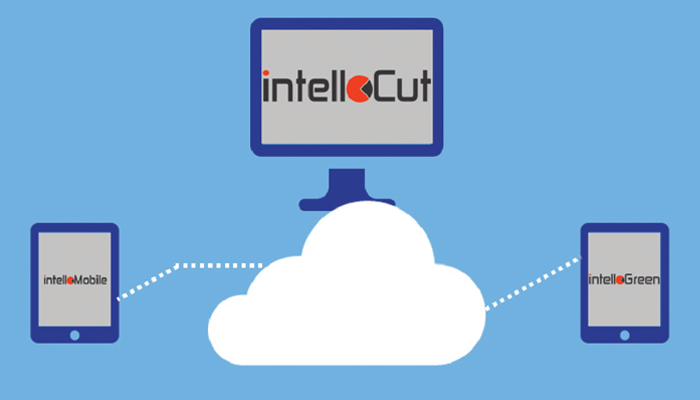
IntelloCut is a material planning and optimisation solution for the sewn products industry. The flagship solution of ThreadSol has been successfully deployed in 90+ factories worldwide, who plan 2.5 mn pieces every day. With the help of its advanced algorithms, IntelloCut gives the most optimised cutplan, roll plan and lay plan, in just one click. The cloud computing structure helps to access the solution from any point. It also offers a feedback system which works like GPS: Any variations on floor and the plan can be changed with a single refresh button. With over 150+ features, intelloCut is a product ahead of its time and truly defines the new age technology.
In a constant effort to improve, ThreadSol has introduced IntelloGreen: A tablet application which replaces on-floor printed layslips. The application is based on cloud computing and takes data from intelloCut, transforming business from traditional to environment friendly. The advanced reporting structure of IntelloCut provides an edge to the manufacturers to get complete control over factory’s practices through IntelloMobile: World’s first fabric utilisation reporting app. It provides 100 per cent real-time traceability of fabric, with all reports on mobile phone.
IntelloBuy
IntelloBuy is a material estimation solution for the sewn products industry. It is the second product by ThreadSol, taking the enterprise material management model of the company to the next level.
IntelloBuy gives accurate buying consumption for a particular stylewhich saves millions of dollars of material cost at the buying stage, every day, for manufacturers worldwide. intelloBuy accesses factory historical database and allows the user to add exact wastage from factory floor to generate the most accurate fabric requirement. This can save up to 10 per cent fabric cost, ultimately boosting profit.
IntelloTrace
IntelloTrace is the world’s first NFC based production management solution for the sewn product industry. This is the first tracking tool to offer the technology used by Google and Apple to the manufacturing floor.
Apart from the advanced technology, intelloTrace streamlines the factory processes and facilitates customisation as per a factory’s requirement. It administers comprehensive tracking for the entire factory and helps in better control and execution of every department. Any anomaly in the factory is notified to the users by simple mobile alerts for immediate actionable intelligence for the smooth functioning of their departments. The entire functioning of the organisation can be monitored using interactive visual reports. The reports can be viewed at all levels of production – from the bird’s eye view at the factory to the in depth view at the operator level.
Go Green – Innovation for the future from Ramsons
Ramsons is India’s largest manufacturer of commercial laundry, dry cleaning and garment finishing equipment. It has a proud Indian heritage, which gives it a single minded focus to provide the highest level of customer service. With some of India’s leading companies as its suppliers, strong engineering talent and stringent quality control systems, it manufactures high quality products that are exported globally.
New Generation Vertostar (Series 7.7)
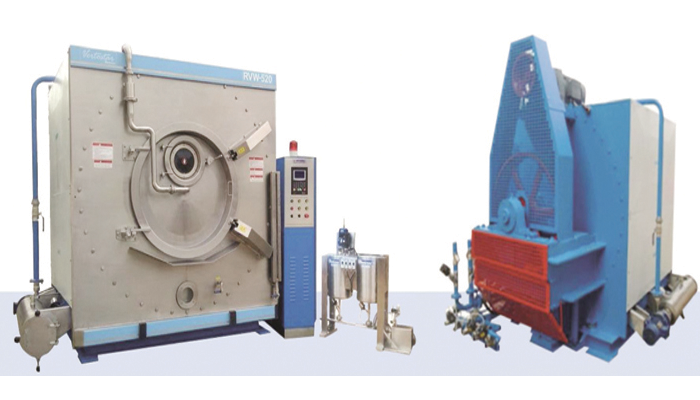
Saving Energy, Water and Space! Ramsons vertostar series 7.7 have been designed and built with a vision of operational efficiency and success of the laundry. These machines have been working smoothly all day satisfying intense requirements of the modern fashion industry. A well thought out robust design and use of best input materials ensure longevity and trouble free operation. Customization of the machine to suit specific customer requirements and excellent after sales technical support makes Ramsons a pioneer in the laundry industry. With continuous innovations, we offer the latest to minimize the water requirement and reduce the effluent for a cleaner world.
Special features for Vertostar machines
- Variable speed inverter drive with 6-40rpm for washing and 80-100rpm for pre extraction. The garments while unloading will not have much water; hence washing area will be dry and clean
- This machine has a microprocessor based programmer to control different cycles of the dyeing programme like timing, temperature, dosing etc, it can store up to 99 different programs each with 100 steps. Also the control panel has manual over ride wherein it can even work on manual mode. The control panel can also be provided with an AC for cooling as an option for places with high ambient temperatures
- The machine is provided with a circulation pump fitted through an online fitter unit. The dye bath is filtered and sprayed inside the drum at pressure through a special tri planar flat stream nozzle which reduces the liquor ratio to 1:2 To 1:3 and also improves the wash process
- The machine is provided with dual drain which can be opened depending on the process cycle. This feature will reduce the load on ETP by diverting the water from Rinse cycle to separate collection tanks which can be reused after simple filtration
- This machine has 2 nos of pneumatically operated valves for water inlet. And an additional inlet can be provided to use fresh water, hot water or even recycled water. An additional 3 water inlet can also be provided
- The geared motor is mounted on top of the machine and the Depth of the machine is reduced by 300mm
- This machine is provided with PH testing port and sampling port on the main door. The sample door is provided with a LED light to see the wash process
- This machine is provided with Hydraulic operated tilting for easy unloading. Also it can be provided with an optional stone separator. This can be easily mounted on the door opening and the stones are separately unloaded in to a trolley after stone wash saving time and labour
- The machine has all safety interlocks like motor overload, door limit switch to stop the drum rotation when sample port is opened, sensor to ensure the door is not opened when filled with water door level
Optional features for dyeing
- Controlled indirect heating and cooling system. The machine will have stainless steel (SS) heat exchanger coil for both heating and cooling with pneumatically operated control valves, the heating gradient can be programmed through the PLC up to 6 degree per minute. This system can also be programmed for controlled cooling of liquor bath
- For special purpose the tanks can be extended to 5 tanks with additional cost
- This machine has specially designed wedges to ensure minimum beating of the garment. This feature will allow the garments to oscillate in the water without any beating and abrasion for delicate garments
Go Green
Innovations for the future
Conventional technologies seek the utilisation of huge amounts of water and chemicals during the process of fabric finishing. The quantity of discharge produced whilst this procedure is also high and harmful. Inspite of the ill-effects, these procedures have remained untouched since decades due to the lack of a reliable alternative. The latest innovation of Ramsons – Go Green Technology is a greener and earth – friendlier alternative for the fabric finishing and is undoubtedly an innovation for the future.
Features:
- Water savings upto 95 per cent
- Chemical savings more than 60 per cent
- Zero discharge
- No Cost of E-Fluent Treatment
- This unit can be connected to existing washer
Processes
- Softening
- Resins for 3d effects
- Wrinkle free
- Water repellence finishes
Driving a new era of sewing technology with Brother
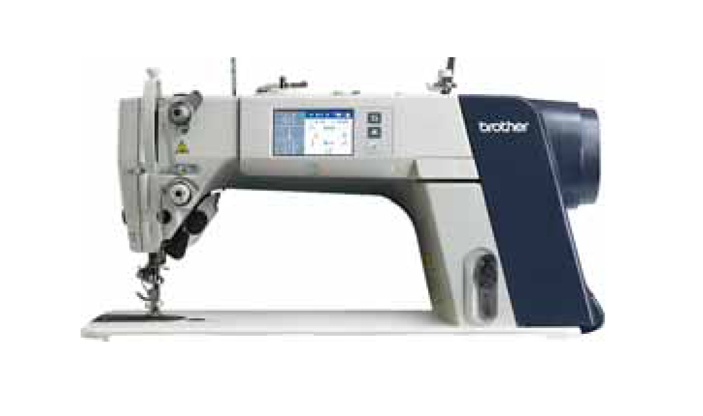
Since its inception in 1908, Brother has been at the forefront of products innovation, dedicated to delivering superior and innovative sewing technology to its customers. One of the important additions to the company’s portfolio is new line of S-7300A industrial sewing machines. This new industrial sewing machines boasts a new feeding mechanism and striking new housing that will set a new design standard in the industry. It is world’s first lock stitch sewing machine which adopts the Electronic feed Control directly connected with a stepping motor. Given are some of its highlights:
Reduction of disposition of thread ends (Short remaining thread and bird’s nest reduction)
With the new thread tension control and electronic feed control, the bird’s nest can be minimised. The new double action thread trimming mechanism cut the thread right under the needle hole, realising the short remaining thread at minimum 3mm. The disposition of thread ends after sewing can be reduced thanks to new system.
World’s first electronic feed control directly connected with stepping motor
Horizontal feeding system is world’s first computerised for single needle lock stitch sewing machine. The feed motion can be changed with one touch of a button to provide best sewing quality for various materials, furthermore, the sewing stitch length can be digitalised, stabling the stitches.
Design stitch for new value proposition
Thanks to the digitalised feeding system, you can change the stitch length on the same seam by programme control. Now design stitch is available for even single needle lock stitch machine easily.
LED light equipped as standard
Both-sides of the LED handy light are equipped as standard for better operation, preventing shadows on the garment. The brightness can be adjusted on the panel.
Clogging at cross – over seam reduction
Automatic material thickness sensor detects thickness while sewing, helping to reduce clogging at cross-over seam and needle breakage. S-7300A enables to correct stitch length automatically, when sensor has been detected cross-over seam, offering stable stitch length and high quality sewing for even unskilled-operator.
Clean sewing with minimum lubrication system
You can choose minimum lubrication system or semi dry type. Oil leakage from the needle bar area can be prevented, realising clean sewing and stain free garments.
Needle breakage prevention function is enhanced
The needle breakage prevention function which prevents the needle breakage when reverse stitching is carried out with the actuator switch furthermore, the electronic feed control, the needle breakage while sewing is also prevented.
The new hook enhances sewing capability for a wide range materials
The new hook which is improved the thread cast off enable to expand sewing range for medium materials. It also enhances the sewing capability for heavy materials.
Automatic Cutter Next and Matching System by Morgan Tecnica
Morgan is a group of companies, based in Adro (Brescia), Italy. Morgan Tecnica Spa and Morgan Dynamics are responsible for the design, creation and manufacturing of machinery/software/products used to automate the cutting rooms of many industries around the globe. It has automated processes in all areas of the cutting room from fabric loading, automatic/intuitive spreading, label printing and state of-the-art cutting machines, all being linked together with our single and multi-level tables.
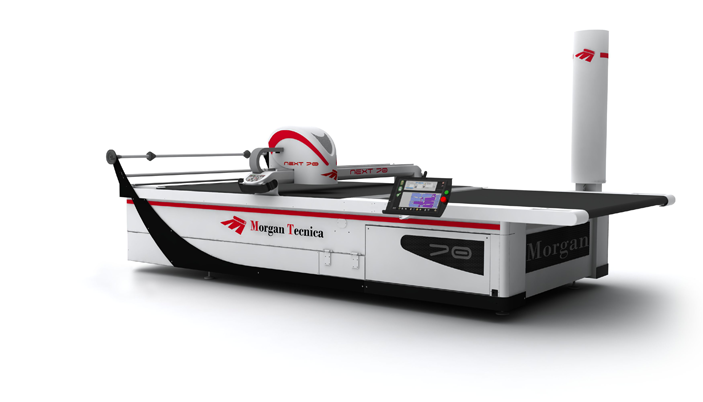
Next 70 (TAGLIO – Cutter)
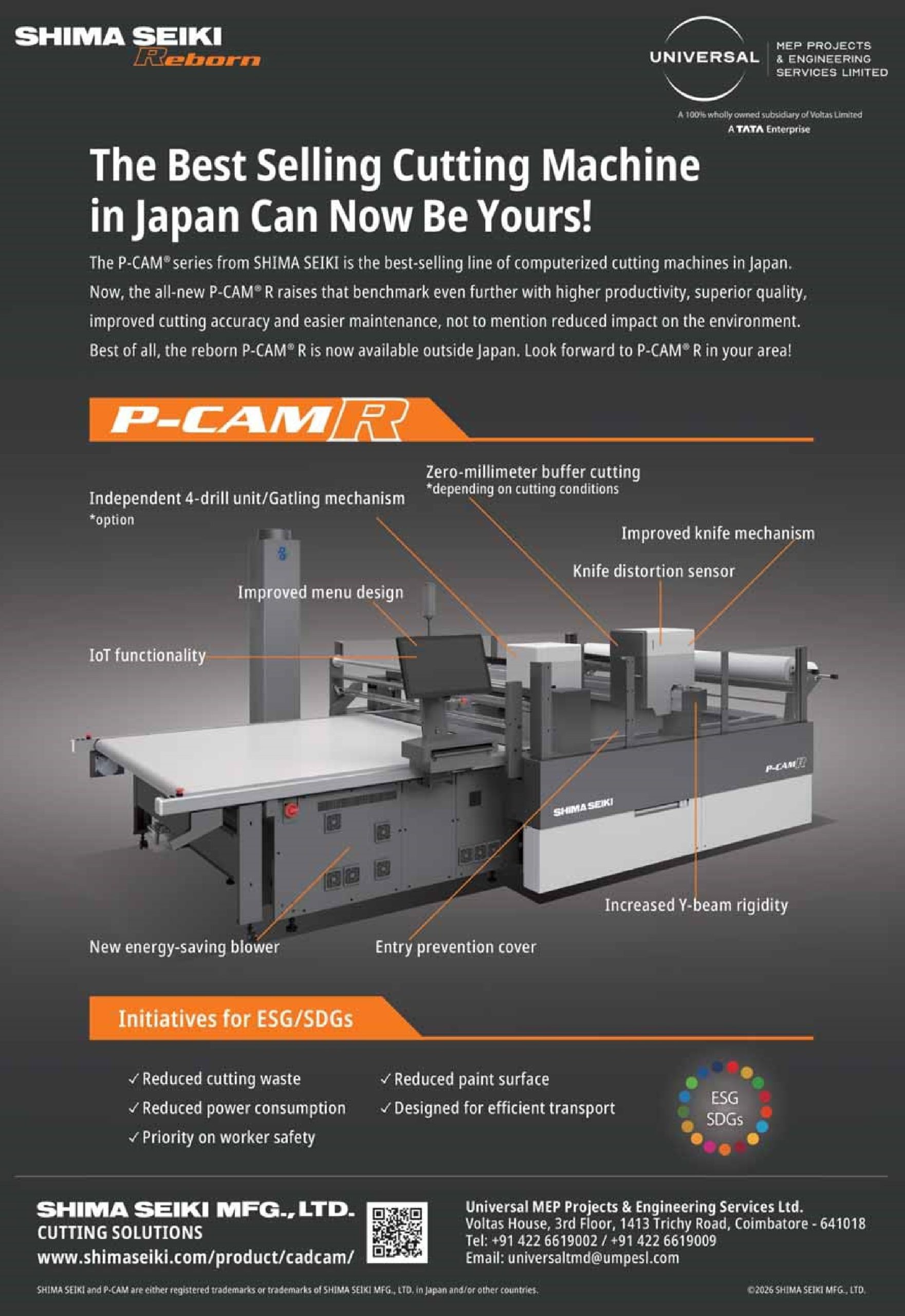
The ‘’next’’ generation of electronics is already ‘’present’’ in the new range of automatic cutters Morgan ‘’Next’’, now faster and more precise. Discover the incredible savings of the ‘’Zero Buffer’’ cut technology.
Add more flexibility to your job
Is the most flexible machine of the entire range. It has extremely low power consumption and it is fully digitally controlled, with an amazing ‘’made in Italy’’ design. The vacuum controlled by digital inverter allows to drastically reduce the power consumption as well as the best flexibility in cutting any thickness of lay, from single ply to 7 cm compressed, with any kind of materials, from the elastic to the very hard one.
Morgan Next 70 delivers the highest performances in terms of productivity, quality and reliability, together with one of the lowest maintenance costs in the market. Digital active control of the blade bending in real time allows best cutting precision even on high thickness lays and hardest material. Available in version standard 4,500 rpm or HM 6000 rpm specific for hard and difficult materials.
Software Apps
- Innovative graphics interface (icon touch), modern and user-friendly
- Zero Buffer Cutting
- Automatic detection of symmetric patterns and cutting direction management
- Common Lines Management
- Pattern Proximity Detection and dynamic speed control
- Perimeter harmonization by automatic fixing of digitalization errors
- Best start point automatic calculation for each pattern
- Best cutting window automatic calculation
- Smart cut sequence – to minimise empty movements and improve cutting quality
- Special automatic functions for the waist band (specific for denim)
- Active notch management – dynamic notch type changing
- Notch conversation (on fly, ‘’V’’ notches, castle notches)
- Markers batch list elaboration
- Markers joining
- Detailed statistics & graphic reports
- Compatible with Morgan Analytics integration
Hardware Characteristics
- Interactive multi – touch computer on board • Auto – diagnosis system
- Dynamic Vacuum system, managed by digital inverter • Automatic loading/unloading conveyor system • Power consumption optimization system
- Digital brushless motors • Sharpening belts device • Noiseless
• Washable and easy removable vacuum filter • Latest generation of Omron electronic devices • Blade bending active control • Long life bristles
Essentials Matching System by Morgan

Essentials Matching system consists of pin Table, Visual pingrid software, pingrid visual Accessories and fabric feeder (optional). The pin table for spreading stripe and plaid fabrics available in module of 4,6 and 8 mtr, structure in oven varnished metal, with 5×5 cm hole on the table top for needle positioning based on matching rules. Motorized needle height adjustment helps for easy and accurate pinning operation.
Visual accessories are a windows PC along with industrial short through projector, wireless keyboard and mouse Visual Pingrid Nest software is the most practical and effective system for viewing and editing markers in real time, directly on the spreading table.
Visual Nest – Save your time & cost
Designed to help the manual spreading of striped or checked fabrics on the needle table, using the projection of the grid of the theoretical repletion ratios, useful for operators to guide the alignment and holding of the fabric, Visual Nest proved itself suitable for multiple other useful applications, both in the manual spreading of patterned fabrics or prints, in the spreading of continuous, fabric to verify the location of defects, in the overlaps management, in the control of compliance with minimum width and length of the layer, during the spreading, etc…
Fabric Feeder is an optional device assist to feed the fabric for pinning operation for easy and fast pinning operation, possible to feed roll from and relaxed from fabrics with easy switch over, especially for knitted fabrics the fabric can be fed with less stretching. Runs on rails of the pinning table very smooth and easy to move by operator.
Technical Specifications and features
- Projection area for each projector of 3.5 by 2 m
- Possibility to control multiple projectors simultaneously
- Possibility to modify the repetition and to move each individual line, in case of irregular repetition
- Possibility to modify the repetition angle, to adapt to off grain fabric
- Possibility to move each individual piece of the marker by mouse, for proper matching
- Possibility to rotate each individual piece of the marker by mouse to follow off grain fabric
- Possibility to customize the colour combination to easily adapt to any type of fabric
- Compatible with ISO
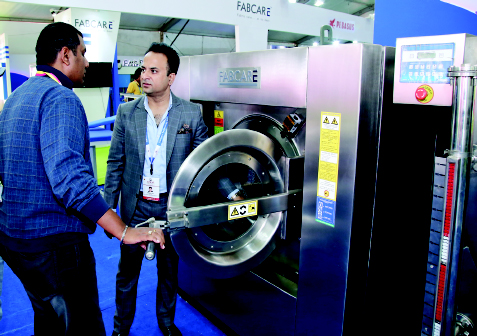
Offering complete set of technologies for garment & fabric section
Established in 1995, Fabcare Garments & Textile Machinery Private Limited is one of the leading manufacturers and suppliers of finest and most diverse range of garments & textile machinery in India. Making of this range is done as per the set industry norms and guidelines, utilising the finest raw materials and modern machines. This ensures the product’s performance, service line, strength and capacity. The offered range is made up of the finest textile machines, washer extractor and washing machine, sewing machines, cutting & spreading machines which are widely demanded. In addition to this, the offered range is priced at the most reasonable rate possible.
Parted into several highly operational units, the state-of-the-art infrastructural facility at Fabcare helps it in managing the firm’s operations in the best possible manner. The facility has been laced with all the necessary machinery and equipment, which helps it in attaining a number of the firm’s predefined goals and objectives. In addition to this, the facility undergoes regular up-gradation, for reasons of attaining smoother and effective management of the firm’s operations.
The company is headed by mentor, Jitendra Arya, who has managed to attain a huge client base. His ability to understand the market and ability to manage in a highly commendable manner has been its most valuable asset. Fabcare recently became second distributors of Brother and Pegasus for looking after their sales and after sales service in Northern India. Besides, Fabcare will be the exclusive stockiest for these two brands machines in India.
“This is for the first time Brother and Pegasus have joined hands with a machinery manufacturer as earlier they were only associated with traders in India. We took their distributorship in August last year and since then we have been getting excellent response from our customers. In fact we hope to double our sales target in next one year,” said Abhinav Arya, Director, Fabcare Garments & Textile Machinery Private Limited.
“As far as quality is concerned, technically we are the best in our segment so to justify the same we choose to join hands with the brands which are best in their respective segments. As everybody knows, Brother and Pegasus are the leaders and best known for their high quality products in apparel and textiles industry. Apart from selling we will be taking care of the after sales service too,” he said.
Alongside these brands, the company has recently joined hands with KM for their cutting and spreading machines. KM is the sister concern of Hashima, a leading brand know worldwide for its quality products. Fabcare will be looking after their sales and after sales service on pan India basis. Recently, it has also been appointed by INA Computerised Hanger System for looking after its sales and service in Northern India. So, with all these recent additions, now Fabcare is offering complete set of technologies for fabric section.
Apart from these new additions Fabcare is well-known for its laundry solutions. The company last year introduced the Eco dyeing Splash series machine for garment and textile processing. “As a technology manufacturer it’s our responsibility to save water and energy, and keeping this in mind we have recently introduced the Eco dyeing Splash series machine for garment and textile processing. With this technology you can save up to 70 per cent water every cycle when you are doing washing or dyeing and 60 per cent saving when you are doing enzymes washes. People are already appreciating our Splash technology series which saves water, chemical, heat energy and waste water, and want their older machines to be changed with this new technology,” says Abhinav.
The company is agent of Primus – a leading laundry equipment manufacturer from Europe also. It also has a special wet cleaning solution with which you can do dry cleaning in the same machine. It is multipurpose equipment, which can save a lot of money, and the technology is far better when compared to hydro carbon and perc. It has opted for Primus so that every garment exporter who wants to do washing, cleaning and dry cleaning they can utilise the same equipment and save their factory space. They don’t need to invest 20-30 lakh rupees on one dry cleaning machine. When it comes to simple washing most of the garment exporters are doing only softening for that it introduced one Resinator which is dry to dry process where you can save 90 per cent water and chemical every cycle.