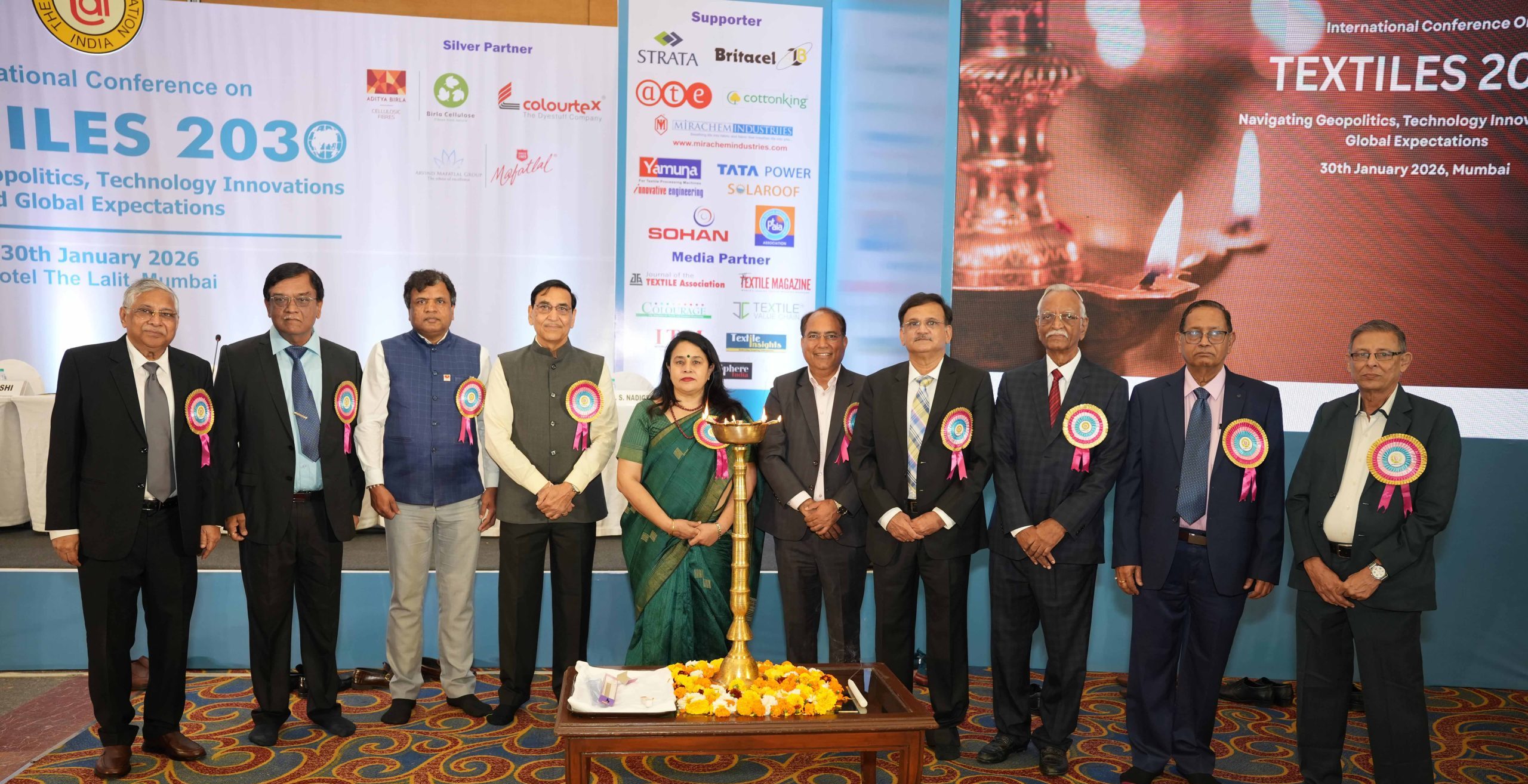
Standing (L to R): Mr. Rajiv Ranjan, President, TAI, Mumbai Unit, Mr. R. R. Patil, Vice President, TAI, Mumbai Unit, Mr. Murugan Thenkondar, President & Head – Marketing and Business, Development (Fibre Marketing), Cellulosic Business, Grasim Industries Ltd., Mr. R. K. Vij, President, TAI, Ms. Roop Rashi, CEO, Khadi and Village Industries Commission, Govt. of India, Mr. Prashant Agarwal, Co. Founder & Jt. Managing Director, Wazir Advisors Pvt. Ltd., Dr. G. V. Aras, Conference Chairman & Trustee, TAI, Mumbai Unit, Mr. V. C. Gupte, Conference Convenor & Chairman, TAI, Mumbai Unit, Dr. G. S. Nadiger, Vice Chairman, TAI, Mumbai Unit, Mr. Haresh B. Parekh, Hon. Secretary, TAI, Mumbai Unit.
The Textile Association (India), Mumbai Unit organized an International Conference on “TEXTILES 2030 – Navigating Geopolitics, Technology Innovations and Global Expectations” on Friday, 30th January 2026 at Hotel the Lalit, Mumbai. The Conference received overwhelming response with 350 delegates in attendance. The theme of Conference, topics, presentations, and speakers were highly appreciated by one and all. Some of the highlights of the conference are described as under.
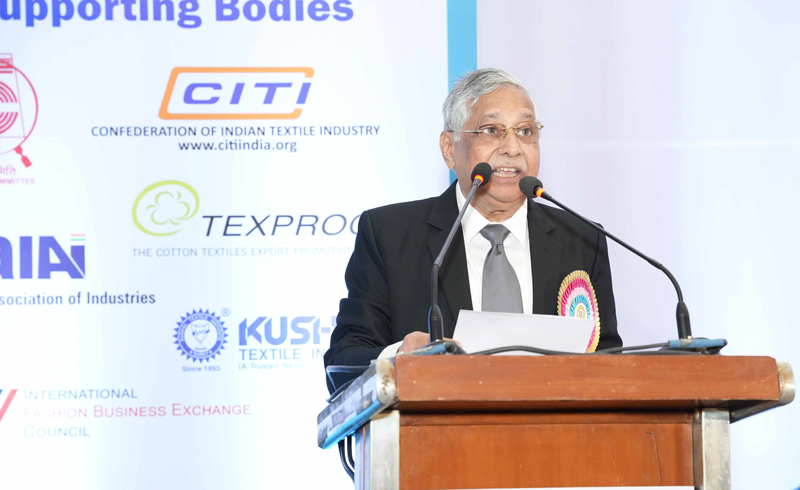
Welcome Address by Mr. V. C. Gupte, Conference Convenor & Chairman, TAI, Mumbai Unit.
Mr. V. C. Gupte, Chairman, Textile Association (India), Mumbai Unit and Convener of the Conference, extended a warm welcome to the Chief Guest, Ms. Roop Rashi (IA&AS), Chief Executive Officer, Khadi and Village Industries Commission (KVIC), Government of India; the Guest of Honour; the Keynote Speaker; awardees; speakers; sponsors; members of the press and media; and all delegates. In his address, Mr. Gupte highlighted the efforts of the TAI Mumbai Unit in consistently organizing conferences on future-oriented themes of national and global relevance, culminating in the 2026 international conference themed “TEXTILES 2030 – Navigating Geopolitics, Technology Innovations and Global Expectations.” He emphasized that the global textile and apparel industry is at a critical juncture, influenced by geopolitical shifts, rapidly evolving technologies, sustainability imperatives, and changing international trade and regulatory frameworks. He mentioned about the FTAs signed by the Government of India including the most recent FTA signed with European Union which should benefit the T & A exporters and bring back volumes & margins. He suggested to move towards value-added products where competition is less. He stressed on ESG regulations which have become quite stringent, so the awareness should be created amongst the stakeholders. The Conference included a dedicated Panel Discussion by All-Women Panel on the theme of ‘Women Leadership driving a Change in T & A Sector’ which was unique and for the first time in any Conference.
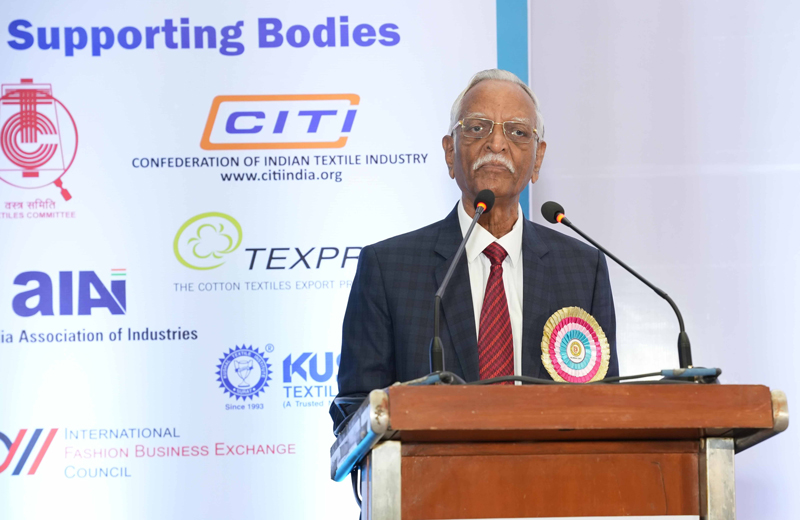
Presidential Address by Mr. Rajiv Ranjan, President, TAI, Mumbai Unit.
Mr. Rajiv Ranjan, President, Textile Association (India), Mumbai Unit, in his Presidential Address, highlighted the rapidly changing global landscape facing the textile and apparel industry. He noted that geopolitics, trade realignments, sustainability expectations, and technological disruption are now as influential as cost and quality in global trade. Referring to recent U.S. tariff actions, he emphasized that trade today is increasingly shaped by alignment and perception. He welcomed the signing of the India–EU Free Trade Agreement as a significant opportunity to improve market access, reduce duty disadvantages, and strengthen India’s position as a reliable sourcing partner for Europe, while stressing that preparedness will be key to benefiting from it. The address underlined that while domestic demand remains strong, exports face pressures from global slowdown, intense competition, and rising compliance requirements. To remain competitive, Indian textiles must combine cost efficiency with sustainability, digital enablement, and innovation. Calling Textiles 2030 a mindset rather than a milestone, he urged the industry to embrace automation, AI, ESG, circularity, design, and branding, and stressed the need for closer collaboration between industry, academia, and government. He concluded by reaffirming India’s resilience and commitment not just to adapt to the future, but to design it.
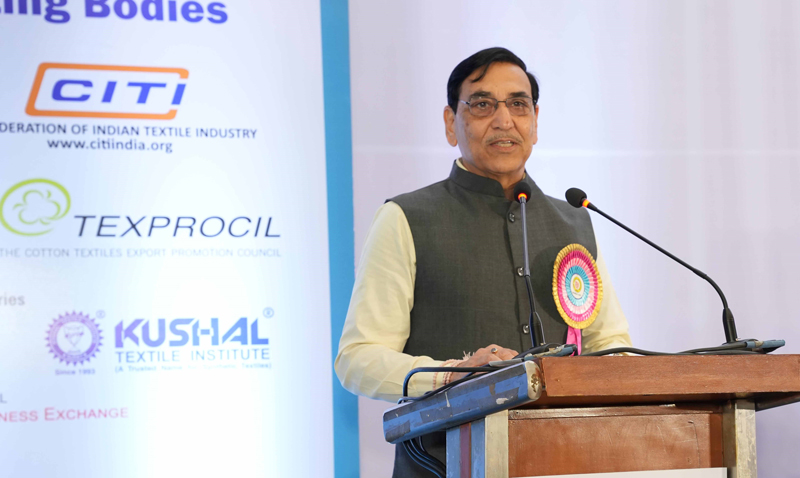
Address by Mr. R. K. Vij, President, TAI
Mr. R. K. Vij, President, Textile Association (India), in his address, emphasized the importance of a forward-looking and globally aligned approach as the textile and apparel industry moves towards the TEXTILES 2030 vision. He highlighted the need for the industry to remain resilient and responsive to changing geopolitical dynamics, evolving global trade environments, and rising international expectations. Mr. Vij underlined the role of strategic planning, policy alignment, and collective industry efforts in strengthening India’s position in the global textile value chain. He appreciated the initiative of the TAI Mumbai Unit in organizing the international conference and stated that such platforms play a vital role in fostering dialogue, knowledge exchange, and long-term vision for the sustainable growth of the industry.
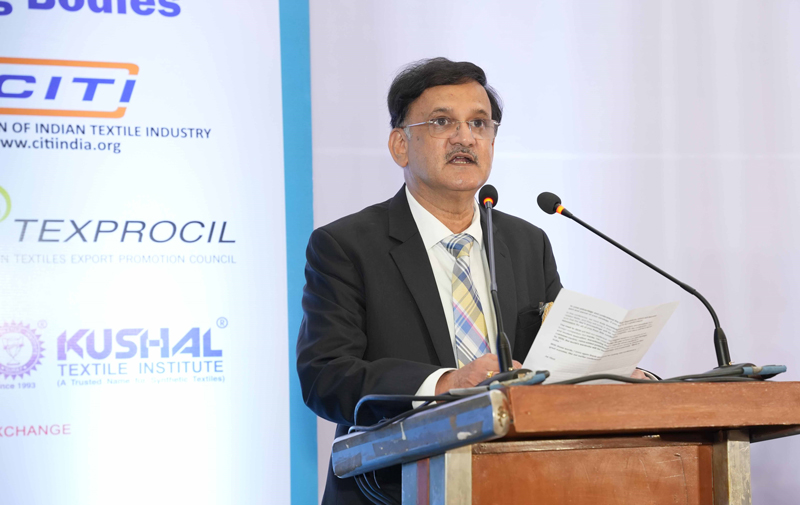
Address by Conference Chairman, Dr. G. V. Aras
Mr. G. V. Aras, Conference Chairman and Trustee, Textile Association (India), Mumbai Unit, briefed the delegates on the structure of the conference, including the selected topics and distinguished speakers. He stated that the programme was carefully curated to address the conference theme “TEXTILES 2030 – Navigating Geopolitics, Technology Innovations and Global Expectations” from the perspectives of the organized industry, MSMEs, and international stakeholders. He emphasized that the conference aimed to provide a comprehensive outlook on the future direction of the textile and apparel sector, keeping in view evolving global market dynamics, policy environments, and industry expectations. He further informed that the conference would feature knowledgeable and expert speakers. He informed that there would be a ‘All-Women panel discussion speaking on the Women Leadership driving a change in the T&A Sector.
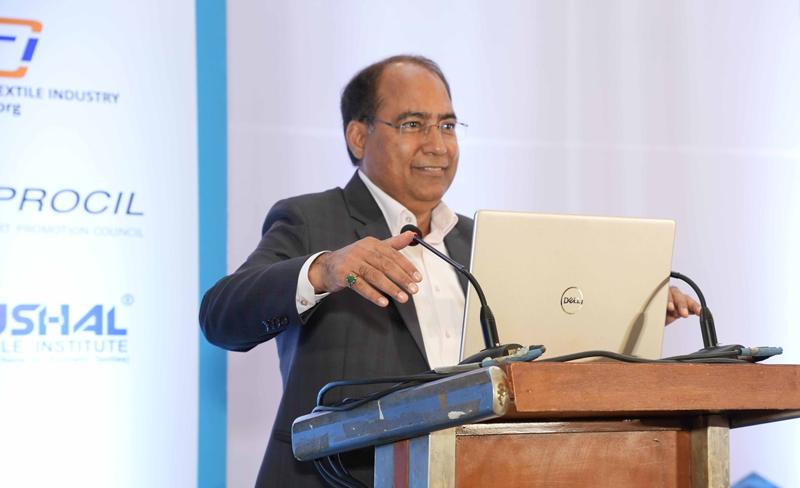
Key Note Speaker Mr. Prashant Agarwal, Co. Founder & Jt. Managing Director, Wazir Advisors Pvt. Ltd. addressing the gathering.
Mr. Prashant Agarwal, Co-Founder and Joint Managing Director, Wazir Advisors Pvt. Ltd., in his Keynote Address, provided a comprehensive overview of the TEXTILES 2030 landscape, highlighting how geopolitical shifts, evolving global trade dynamics, regulatory frameworks, and changing consumer and market expectations are shaping the future of the textile and apparel industry. He emphasized the need for Indian textile enterprises to align their long-term strategies with global developments, emerging market opportunities, and sustainability-driven expectations to remain competitive in the decade ahead. He noted that with its strong manufacturing base and growing global relevance, the Indian textile and apparel industry is well positioned to play a pivotal role in the international value chain leading up to 2030.
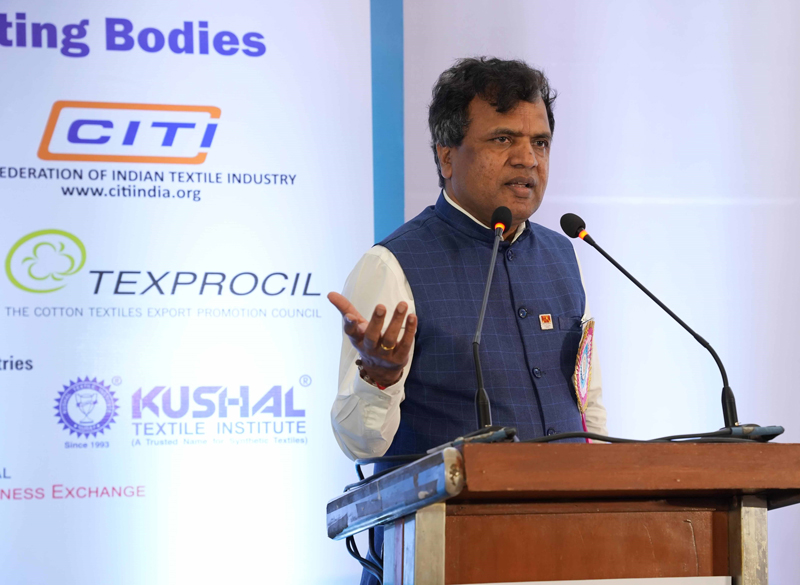
Guest of Honour, Mr. Murugan Thenkondar, President & Head – Marketing and Business, Development (Fibre Marketing), Cellulosic Business, Grasim Industries Ltd. addressing the gathering.
Mr. Murugan Thenkondar, President and Global Head – Marketing and Business Development, Birla Cellulose, Grasim Industries Ltd., the Guest of Honour, addressed the gathering and appreciated the relevance and timeliness of the conference theme “TEXTILES 2030 – Navigating Geopolitics, Technology Innovations and Global Expectations.” He commended the TAI Mumbai Unit for organizing a forward-looking international conference that brought together diverse perspectives from across the textile value chain to deliberate on the future direction of the industry.
The Textile Association (India), Mumbai Unit continued its long-standing tradition of recognizing distinguished personalities for their outstanding contribution to the Indian textile industry. At the present International Conference, the Lifetime Achievement Award was conferred upon Mr. Amrishbhai Patel, Chairman, Deesan Group of Companies; President, SVKM; and Chancellor, NMIMS, in recognition of his exemplary leadership and enduring contribution to industry, education, and society. In his remarks, Mr. Patel expressed his gratitude to the TAI Mumbai Unit for the honour and acknowledged the role of the textile sector in nation-building and long-term socio-economic development.
The Industrial Excellence Award was jointly presented to Mr. Edward Menezes, Executive Chairman, and Mr. Sunil Chari, Managing Director, Rossari Biotech Ltd., in recognition of their significant contribution to innovation, growth, and leadership in the textile chemicals sector. The awardees thanked the TAI Mumbai Unit for the recognition and reaffirmed their commitment to contributing to the future growth of the Indian textile industry in a globally evolving environment.
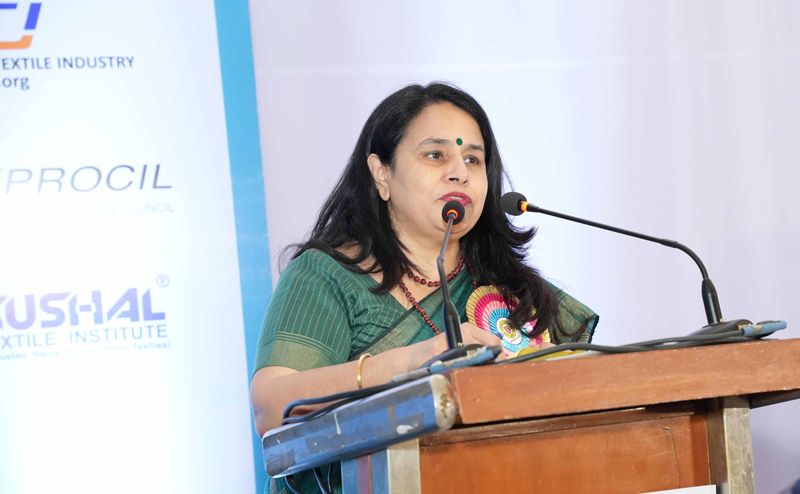
Chief Guest Ms. Roop Rashi, CEO, Khadi and Village Industries Commission, Govt. of India addressing the gathering.
Ms. Roop Rashi (IA&AS), Chief Executive Officer, Khadi and Village Industries Commission (KVIC), Government of India, and Chief Guest of the event, addressed the delegates and highlighted the significance of the conference theme TEXTILES 2030 in providing a holistic and forward-looking perspective for the development of the textile and apparel sector. She emphasized the need for the industry to align with evolving global expectations, policy frameworks, and market dynamics while strengthening India’s position in the international textile value chain. Ms. Roop Rashi appreciated The Textile Association (India), Mumbai Unit for selecting a timely and globally relevant theme and for organizing the international conference as a meaningful platform for dialogue, knowledge sharing, and strategic thinking for the future of the textile industry.
Informative technical sessions
There were three Technical Sessions – each Session had 3 papers and a Industry First All Women’s Panel Discussion.
Technical Session I
Ms. Vaishali Kamble, Assistant General Manager -Future Fibre, Birla Cellulose, Grasim Industries Ltd., delivered the opening technical presentation of the conference on behalf of Mr. Shaymlal Patnaik, Jt. President, Head – Specialty Products. In her presentation, she spoke on the innovation in the cellulose fibres which would provide advantage over present fibre, but also also meet the ever changing regulations and compliances. The presentation provided valuable insights into how the industry can align with global requirements leading up to 2030.
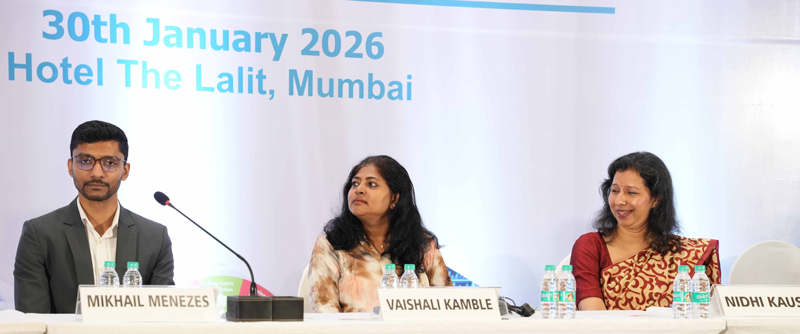
Technical Session I – Speakers (Sitting L to R): Mr. Mikhail Menezes, Director – Technical, Rossari Biotech Limited, Ms. Vaishali Kamble, Assistant General Manager -Future Fibre, Birla Cellulose, Grasim Industries Ltd., Ms. Nidhi Kaushik, Sr. Vice President (Treasury), Kotak Mahindra Bank
Mr. Mikhail Menezes, Director – Technical, Rossari Biotech Ltd., delivered the second technical presentation of the conference. In his address, he dwelled on innovation in Surfactants which are treated as work horse of the chemical industry. He introduced ‘Green Surfactant’ which would meet sustainability and regulations. He talked on biosurfactants which are derived from vegetable oils like palm oil, coconuts etc. These are highly biodegradable with lower toxicity and there is increasing consumer demand for green lables and stricter environmental regulations. He also laid stress on their functional advantage in textile processing. The presentation offered practical insights into aligning chemical solutions with future-ready textile manufacturing practices and was well appreciated by the delegates.
Ms. Nidhi Kaushik, Senior Vice President (Treasury), Kotak Mahindra Bank, delivered the third technical presentation of the conference. She provided an overview of the global financial and trade environment in the context of the TEXTILES 2030 vision, highlighting the impact of international market movements, currency trends, and trade dynamics on the textile and apparel sector. Her presentation offered valuable perspectives on financial planning, risk awareness, and preparedness for textile enterprises operating in an increasingly interconnected global marketplace. The session generated keen interest among the delegates and concluded with an interactive question-and-answer segment.
Technical Session II
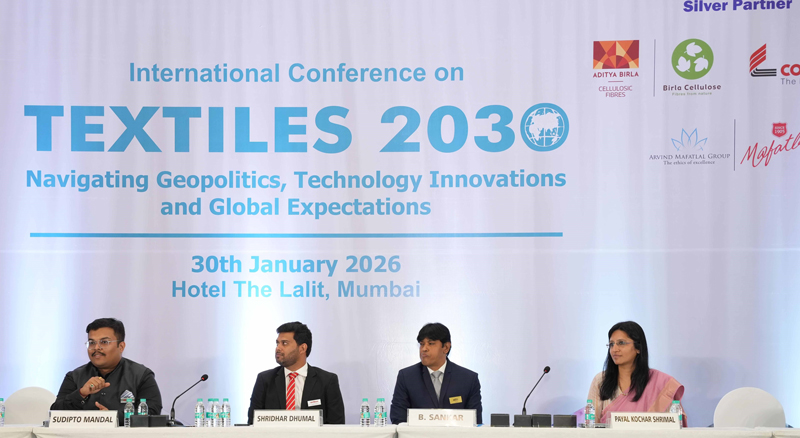
Technical Session II – Speakers (Sitting L to R): Mr. Sudipto Mandal, Regional Sales Director, Oerlikon Barmag, Mr. Shridhar Dhumal, Regional Sales Director, Oerlikon Barmag, Mr. B. Sankar, General Manager (Technical and Development), Perfect Engineering Corporation, Ms. Payal Kochar Shrimal, Channel Sales Manager, Tata Power Renewable Energy Ltd.
Mr. Sudipto Mandal and Mr. Shridhar Dhumal, Regional Sales Directors, Oerlikon Textile India Pvt. Ltd. (now Oerlikon Barmag), jointly delivered a technical presentation on Recycling Technologies. He provided the details of waste of different types generated in India and solutions provided by Oerlikon in PET bottles waste. He also talked on R & D activities followed in Oerlikon in chemical recycling.
His colleague, Mr. Shridhar Dhumal presented paper on non-woven technologies offered by Oerlikon. He specially covered spunbond and Meltblown applications and their solutions provided by Oerlikon like in geotextiles. The presentation offered insights into how textile enterprises can prepare for future industry requirements and both the papers were well received by the delegates.
Mr. B. Sankar, General Manager (Technical and Development), Perfect Engineering Corporation, delivered a technical presentation focusing on Recycling of textile waste. Perfect Engineering is providing recycling plant for the textile waste. He shared in detail information about the recycling plant and its operation. The delegates appreciated the working of recycling of textile waste. The presentation provided practical perspectives for the industry.
Ms. Payal Kochar Shrimal, Channel Sales Manager, Tata Power Renewable Energy Limited, delivered a technical presentation highlighting the role of sustainable energy integration in shaping the future of the textile value chain in line with the TEXTILES 2030 vision. She discussed the importance of aligning energy strategies with evolving global expectations, environmental considerations, and long-term operational resilience for textile enterprises. The presentation offered valuable insights into how the industry can prepare for future energy-related challenges and opportunities.
Technical Session III

Technical Session II – Speakers (Standing L to R): Mr. Rahul Bhajekar, Managing Director, Global Standard gGmbH, Germany, Dr. Leonie Vaas, General Manager – Sustainability, Hirdaramani Apparel, Sri Lanka, Mr. Navodit Babel, Co-Founder and CTO, Green Story Europe B.V., Netherlands
Mr. Rahul Bhajekar, Managing Director, Global Standards GmbH, delivered a technical presentation addressing the evolving regulatory and compliance landscape of the textile and apparel industry. He introduced ESG Regulations to the audience. He highlighted 5 regularity pillars impacting textiles and apparel industry. He talked about the regulation more specific to the European Union. He specified Europe’s headline regulations for textiles and apparel, like ESPR, Waste/Circularity, CSRD, CSDDO and Antigreen washing. He explained all these regulations. He also briefed on very recent new levy on fast fashion by Germany. He presented on Ecomodulation specific about France, Spain and Italy. He also talked about regulations in US and Asia-Pacific. At the end, he also what Indian Textile and Apparel need to follow minimum viable compliance stack. His presentation provided clarity on ESG regulations and It was very highly appreciated by the delegates.
Mr. Navodit Babel, Co-Founder and Chief Technology Officer, Green Story Europe B.V., Netherlands, delivered a technical presentation focusing on the transition of the textile and apparel industry towards greater transparency and accountability. He showed three main points for regulatory timelines, for example Green Claims Directive by 2023, ESPR adoption by 2024 and Digital Product Passport by 2027. He explained the three regulations in detail. He also presented the consequences of non-compliance in terms of Heavy Penalty, Market Access and Brand Trust. He presented strategic roadmap for brands. The presentation highlighted the importance of credible data, traceability, and clear communication of sustainability efforts to international stakeholders. The presentation was very well appreciated.
Dr. Leonie Vaas, General Manager – Sustainability, Hirdaramani Apparel, Sri Lanka, delivered a technical presentation highlighting how her organization has implemented ESG goals across its manufacturing campuses in six countries as part of its long-term vision. She shared practical insights into the company’s approach towards embedding environmental, social, and governance principles across operations, supply chains, and workplace practices. Drawing from real-world implementation experiences, her presentation illustrated how structured ESG strategies can drive responsible growth and resilience across geographically diverse operations. She presented at the end of the presentation highlighting that ESG Readiness is Not A Cost, but it is Startegic Investment.
The theme of the Panel Discussion was “Women Leadership Driving a Change in the Textile & Apparel Sector”, bringing together a distinguished group of women leaders from industry, technology, sustainability, heritage, and global business. The session drew an enthusiastic response from delegates and underscored the growing role of women leadership in shaping the future of the textile and apparel industry.
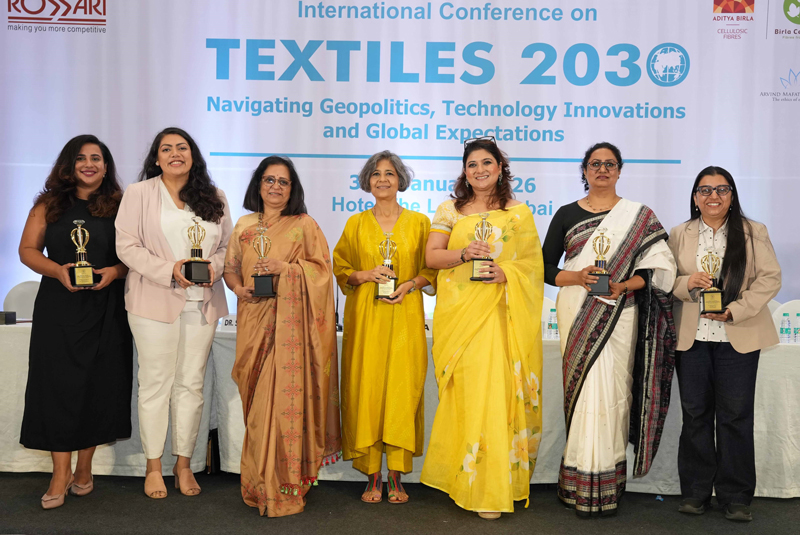
Panel Discussion Session (Standing L to R): Ms. Anoushka Veljee, Chief Revenue Officer, Frontier.cool Inc., California, USA, Ms. Shefali Gopalka, Partner, National Dyechem Industries, Ms. Smita Yeole, Managing Director, Oriental Weaving & Processing Mills Pvt. Ltd., Ms. Katyayani Agarwal, Freelance Consultant, Museum Curator & Cultural Heritage Specialist, Ms. Neha Gupta, Founder, International Fashion Business Exchange Council (IFBEC), Dr. Seema Srivastava, Executive Director, India ITME Society, Mrs. Smita Joshi, Vice President – Home Textiles and Exports, Sutlej Textiles & Industries Ltd.
The Panel Discussion was moderated by Ms. Neha Gupta, Founder, International Fashion Business Exchange Council.
The panel discussion served as an insightful platform for industry stakeholders to understand the perspectives, experiences, and leadership journeys of women professionals who are actively driving transformation across the textile and apparel value chain. The session highlighted the increasing influence of women in decision-making roles and their contribution to innovation, sustainability, and inclusive growth in the sector.
The panel included eminent women leaders from diverse segments of the industry:
1. Ms. Seema Srivastava, Executive Director, India ITME Society
2. Ms. Smita Yeole, Managing Director, Oriental Weaving & Processing Mills Pvt. Ltd.
3. Ms. Shefali Gopalka, Partner, National Dyechem Industries
4. Ms. Katyayani Agarwal, Freelance Consultant, Museum Curator, Cultural Heritage Specialist
5. Ms. Anoushka Veljee, Chief Revenue Officer, Frontier.Cool Inc., California, USA
6. Mrs. Smita Joshi, Vice President – Home Textiles and Exports, Sutlej Textiles & Industries Ltd.
Ms. Neha Gupta skilfully moderated the discussion, guiding the panel through a wide range of topics covering leadership journeys, challenges faced by women in the textile and apparel industry, opportunities for growth, and the evolving role of women in shaping global business practices.
The panel discussion covered several key areas, offering valuable insights to the delegates, including:
1. Women Leadership and Industry Transformation
The panelists shared how women leaders are contributing to the transformation of the textile and apparel sector through:
• Strategic leadership and decision-making
• Driving innovation and operational excellence
• Strengthening sustainability and ethical business practices
2. Challenges and Opportunities
The discussion addressed challenges faced by women professionals, including:
• Navigating leadership roles in traditionally male-dominated segments
• Balancing professional growth with organizational and social expectations
• Creating inclusive workplaces that support talent development
At the same time, panelists highlighted emerging opportunities for women leaders as the industry becomes more global, diverse, and innovation-driven.
3. Building Inclusive and Future-Ready Organizations
The panel emphasized the importance of:
• Encouraging diversity and inclusion at leadership levels
• Mentorship and capacity-building for young professionals
• Creating organizational cultures that support collaboration and long-term growth
4. The Way Forward
A recurring theme of the discussion was the need for collective efforts by industry bodies, organizations, and leadership teams to:
• Enable greater participation of women in leadership roles
• Foster inclusive growth across the textile and apparel value chain
• Prepare the industry for future global expectations under the TEXTILES 2030 vision
The session concluded with an interactive question-and-answer segment, where delegates actively engaged with the panellists on leadership development, career pathways, and the evolving role of women in the textile and apparel industry. The panellists provided thoughtful and inspiring responses, further enriching the discussion.
The event was widely appreciated by the delegates, who represented a broad cross-section of the textile and apparel ecosystem, including manufacturers, exporters, designers, technology providers, academicians, and policy stakeholders. Participants commended the conference and panel discussion for offering thoughtful, balanced, and forward-looking perspectives on the challenges and opportunities shaping the textile and apparel industry.
In concluding the session, the moderator summarized the key takeaways, emphasizing the importance of:
• Adopting a strategic and globally aligned outlook to remain competitive in international markets
• Encouraging innovation and adaptability to address evolving industry and market requirements
• Integrating sustainability and responsible practices into long-term business strategies
• Preparing organizations and professionals for changing global expectations and future industry dynamics
The conference concluded with a strong collective message that while the textile and apparel industry faces significant global challenges in the coming decade, it also holds substantial opportunities for growth, resilience, and leadership on the world stage. Delegates highlighted the need for collaborative efforts, informed decision-making, and long-term vision to successfully navigate the road to TEXTILES 2030.
There was active interaction between speakers and delegates during the question-and-answer sessions as well as informal discussions during tea and lunch breaks, enabling meaningful exchange of ideas and effective dissemination of insights aligned with the conference theme.
Mr. Haresh B. Parekh, Hon. Secretary, Textile Association (India), Mumbai Unit, proposed the Vote of Thanks, expressing gratitude to the speakers, panelists, sponsors, delegates, and organizing committee members for contributing to the success of the International Conference, which was attended by around 300 participants.

Mr. Sunil Chari, Managing Director, Rossari Biotech Ltd. receiving The Industrial Excellence Award by the hands of Chief Guest Ms. Roop Rashi.