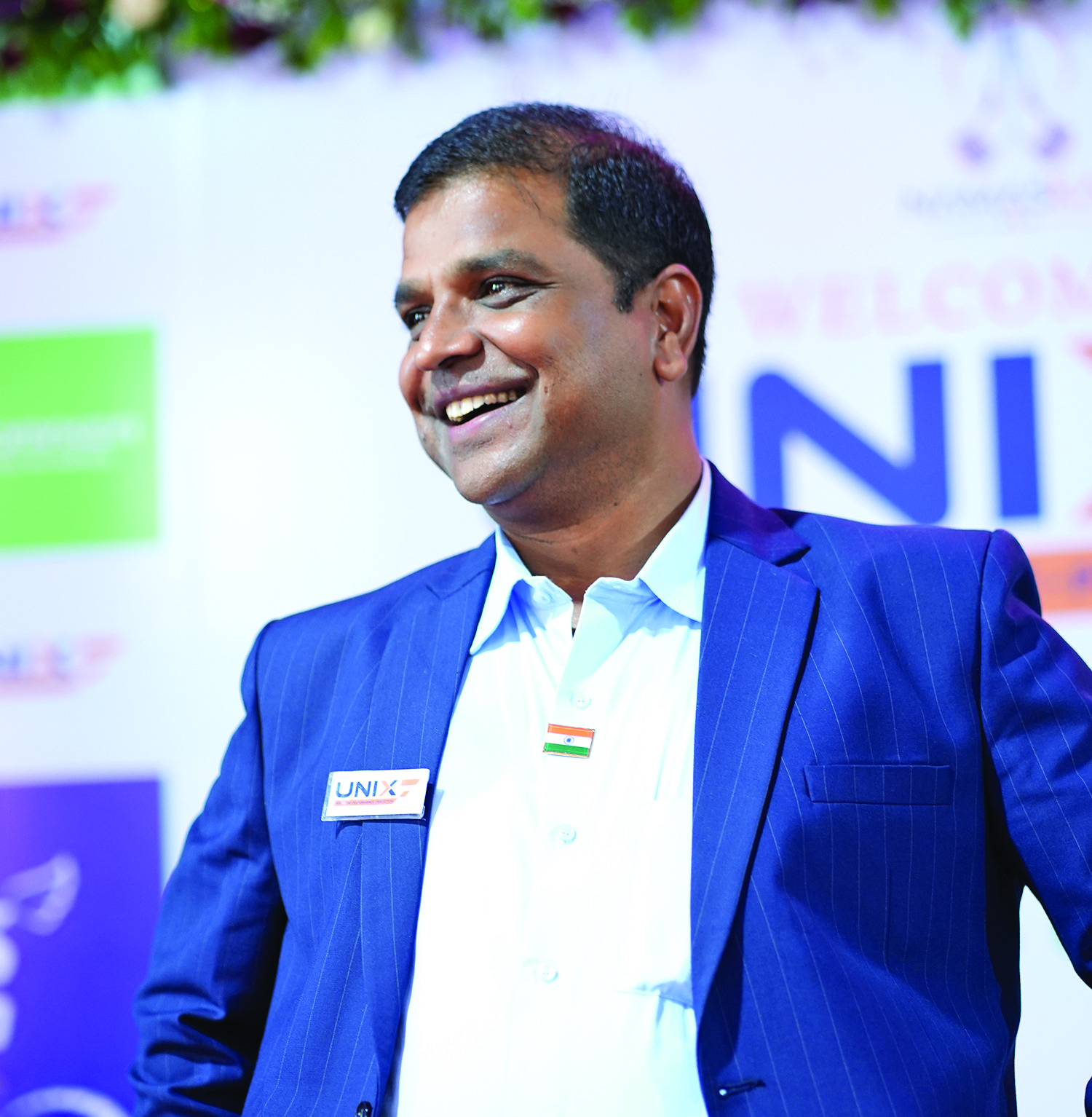
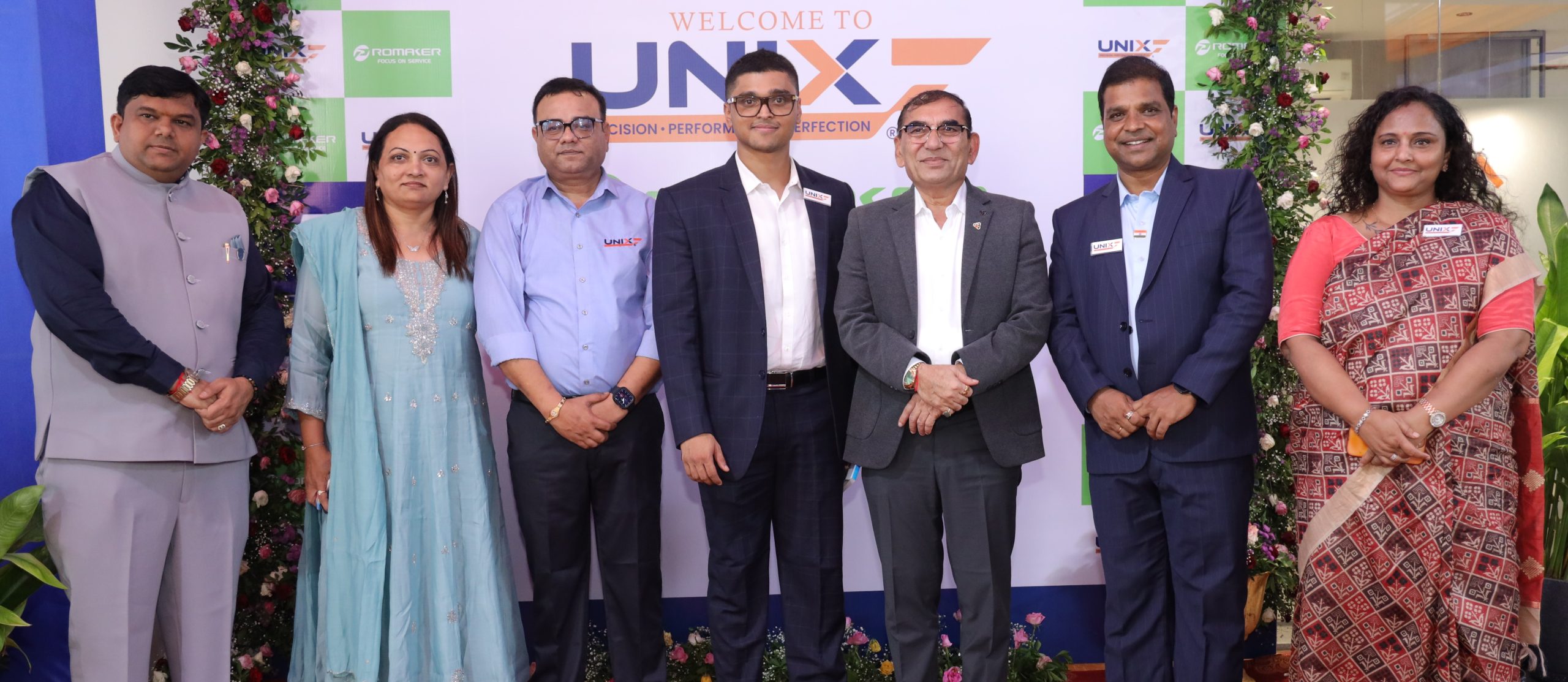
 Arvind Kumar, Editor, Apparel Views, in conversation with Sanjay Jhha, Director, UNIX Stitchmachines Pvt. Ltd. during their new branch office opening in Surat.
You already had an established office in Surat. What prompted UNIX to open this new facility in Katargam?
There are more than 200,000 embroidery machines running in Surat. To provide better service to our customers, including pre- and post-sales facilities, we identified Katargam – Varachha as an important location. Around 150,000 embroidery machines are installed in this area.
For the past few years, our customers have been asking us to open a sales and service centre here. To address this requirement, we have built a fully equipped facility spread across 1,800 sq. metres. Our sales and service teams will also be available here. We will also have spare parts support at this location. For our customers in Katargam and the surrounding areas, there will be no need to go anywhere else. All the facilities will be available under one roof.
Can you tell us more about the latest machine you have displayed here?
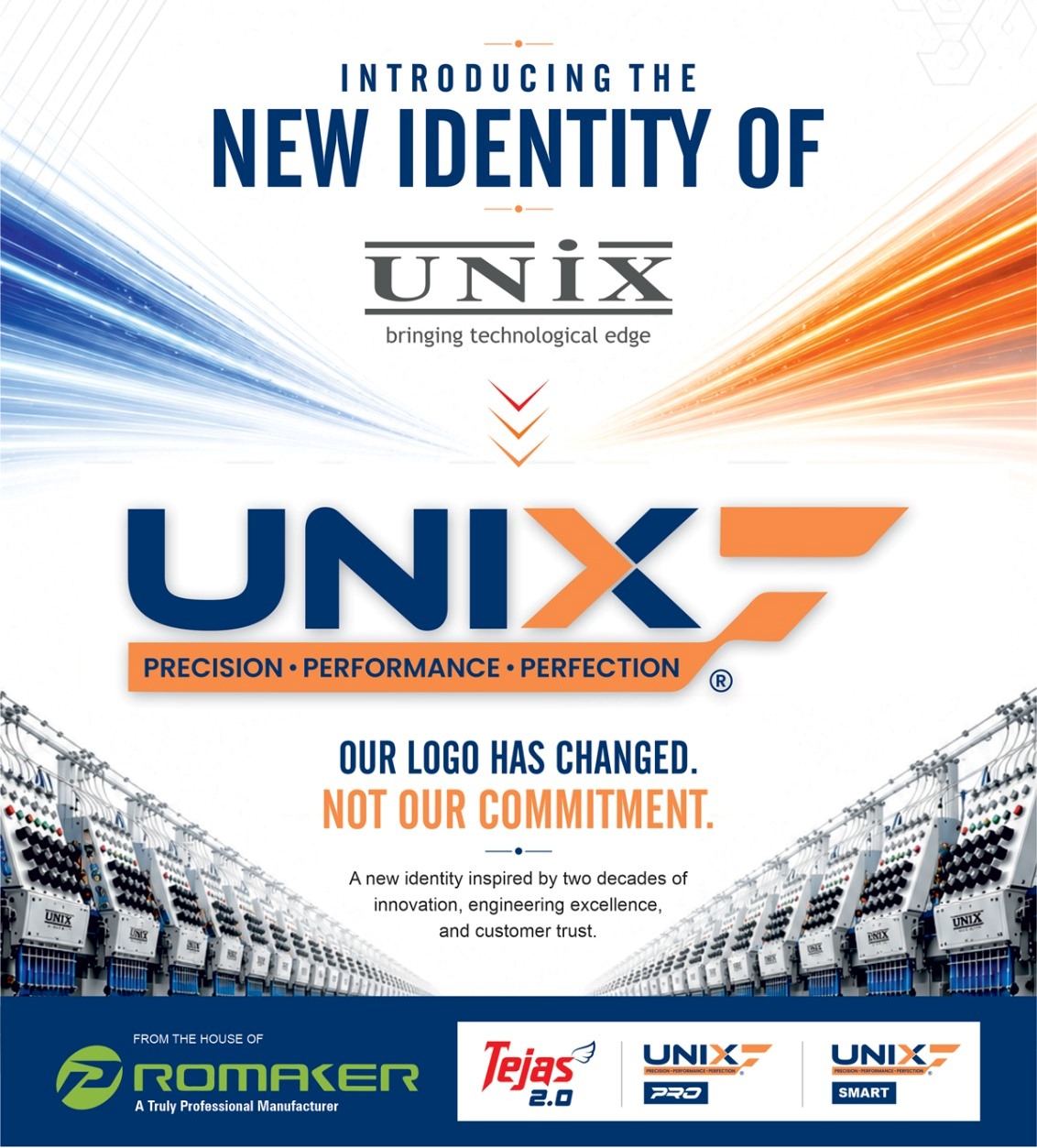
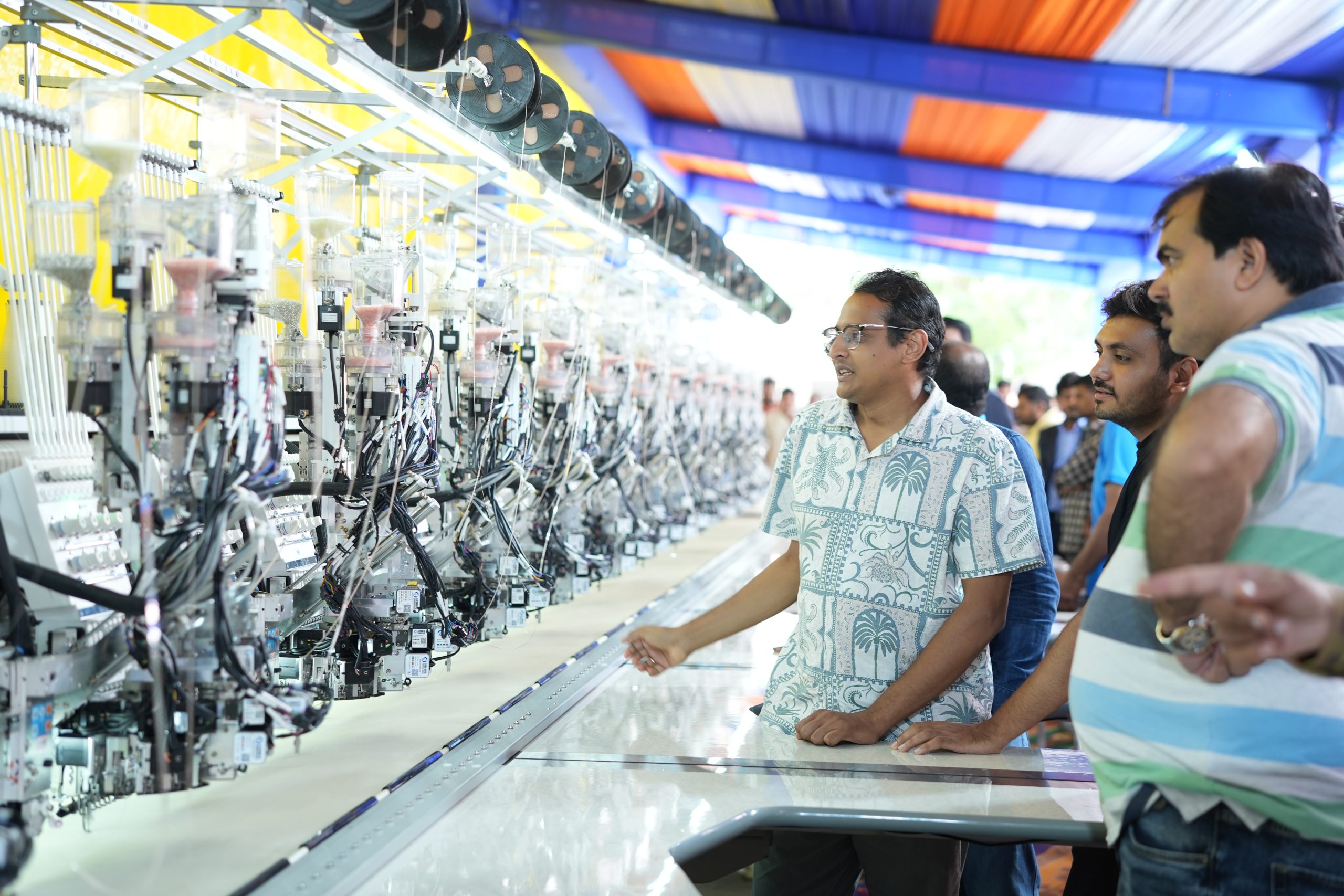
In today’s era, when we have moved from slow-speed machines and lower-RPM devices with basic configurations, UNIX has introduced the Tejas 2.0, a machine operating at 1,800 RPM.
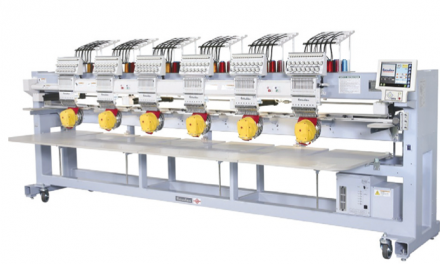
This machine is built for manufacturers who demand higher productivity without compromising precision. The UNIX Promaker Tejas 2.0 delivers exceptional embroidery performance at up to 1,800 RPM. Powered by intelligent automation and precision engineering, it ensures consistent quality, maximum efficiency and dependable performance. Tejas 2.0 adapts effortlessly to a wide range of embroidery applications, empowering manufacturers to achieve higher output, superior embroidery quality and greater production efficiency.
In Tejas 2.0, we have attachments for different applications. The beads device runs at 1,500 RPM, the cording device at 1,500 RPM, the taping machine at 1,200 RPM and the Aari machine at 1,200 RPM.
In Mini Schiffli, which is a substitute for the big Schiffli machines and is ideal for lace, GPO lace, multicolour lace and all-over embroidery, we have launched machines with configurations of up to 206 heads.
On this occasion, I would like to know a little about the journey of UNIX over the years.
 UNIX started in 2005, and we began working in the Udhna region of Surat. When we started, we had only one office in the market area of Surat.
Today, in 2026, we are present in several locations and are determined to provide 24×7 service to all our customers. Our customer base, service team, sales team and infrastructure have also expanded.
We now have offices in Delhi, Jaipur and Ahmedabad, along with two offices in Surat—one in Katargam and one in Udhna. Our customer base is around 800 to 900, and we have installed around 12,000 machines so far.
The success and multifold growth that you have mentioned are quite significant. What, according to you, has been the biggest reason behind this success?
The biggest reason for this is our customers. The support of our customers, their trust, their attachment towards us and our relationship with them – that is our biggest success story.
The second important factor is our suppliers. We have been associated with Promaker for the last seven years. As you know, Promaker is one of the largest manufacturing factories in China, spread across 3,00,000 square metres, with a fully automated plant.
The third biggest strength behind our success is our team – our service team, our sales team and all the people who are directly and indirectly connected with UNIX and support us.
What major difference did you find after joining hands with Promaker? How has Promaker contributed to your success?
 The companies I was associated with earlier used to assemble the machines. The parts, accessories and major wear-and-tear components were not manufactured by them. They were sourced from outside, assembled and then supplied to us. Because of this, there was a lot of variation in the quality of the machines.
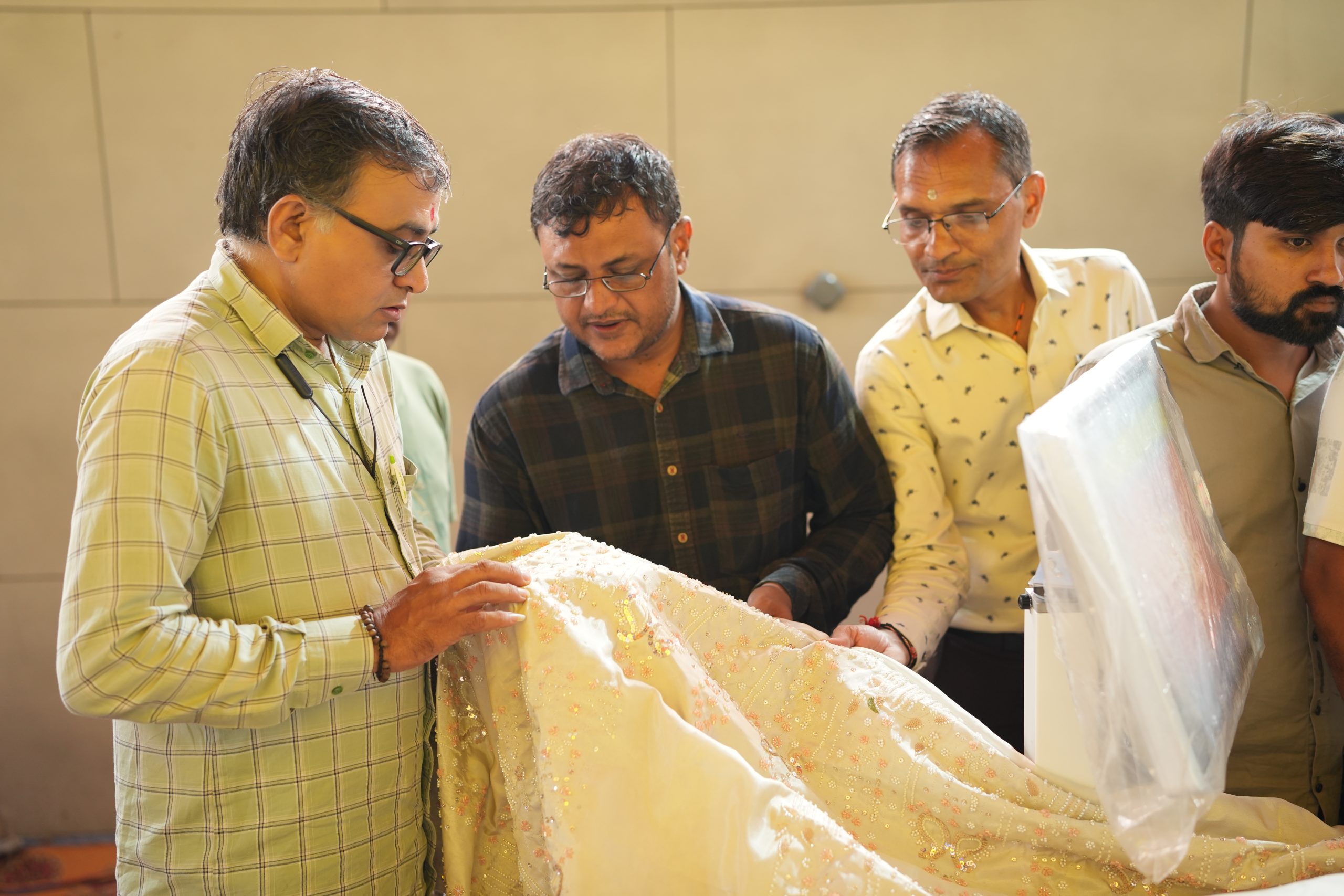
Since we started working with Promaker, we have found that all the wear-and-tear parts and major components are manufactured in-house. They have a modern, automated plant, and their R&D is very strong. They research, develop and test each component. They first run it in their local industry and, once it becomes successful, introduce it to other markets.
This has made our machines more stable, reducing breakdowns and saving service time. That is why, since we started selling Promaker machines, we have gained repeat customers. This is a major change, and Promaker has played a very important role in our success.
Looking at the overall industry, what do you see as the future trend over the next three years? And where do you see UNIX in the coming years?
If we talk about value addition, we used to say that embroidery was part of the fashion industry. But today, embroidery has become a necessity. Just like the weaving industry, embroidery has also become a necessity. Today, you can see embroidery in everything from socks to hair clips. So, you can imagine that the growth potential is quite high.
Secondly, the work that was earlier done for value addition by hand is now increasingly being done by machines. Earlier, processes involving beads, nalki, zardozi and dabka were done manually. Now, these processes are being automated. In terms of quality, specifications, efficiency, finishing and creativity, there are very few limitations. So, we can say that over the next three years, the growth of the embroidery machinery industry is going to be significant.
As far as UNIX is concerned, we have been doing around 1,200 to 1,300 machines per year. Over the next three years, we expect to sell 2,500 machines per year. We currently have six offices, and we plan to strengthen our presence in other important markets such as Kolkata, Chennai, Tirupur, Mumbai, Jaipur, Amritsar, Ludhiana and Varanasi. This is our vision for the next three years.
What technological edge does Promaker have compared with other companies and technologies available today?
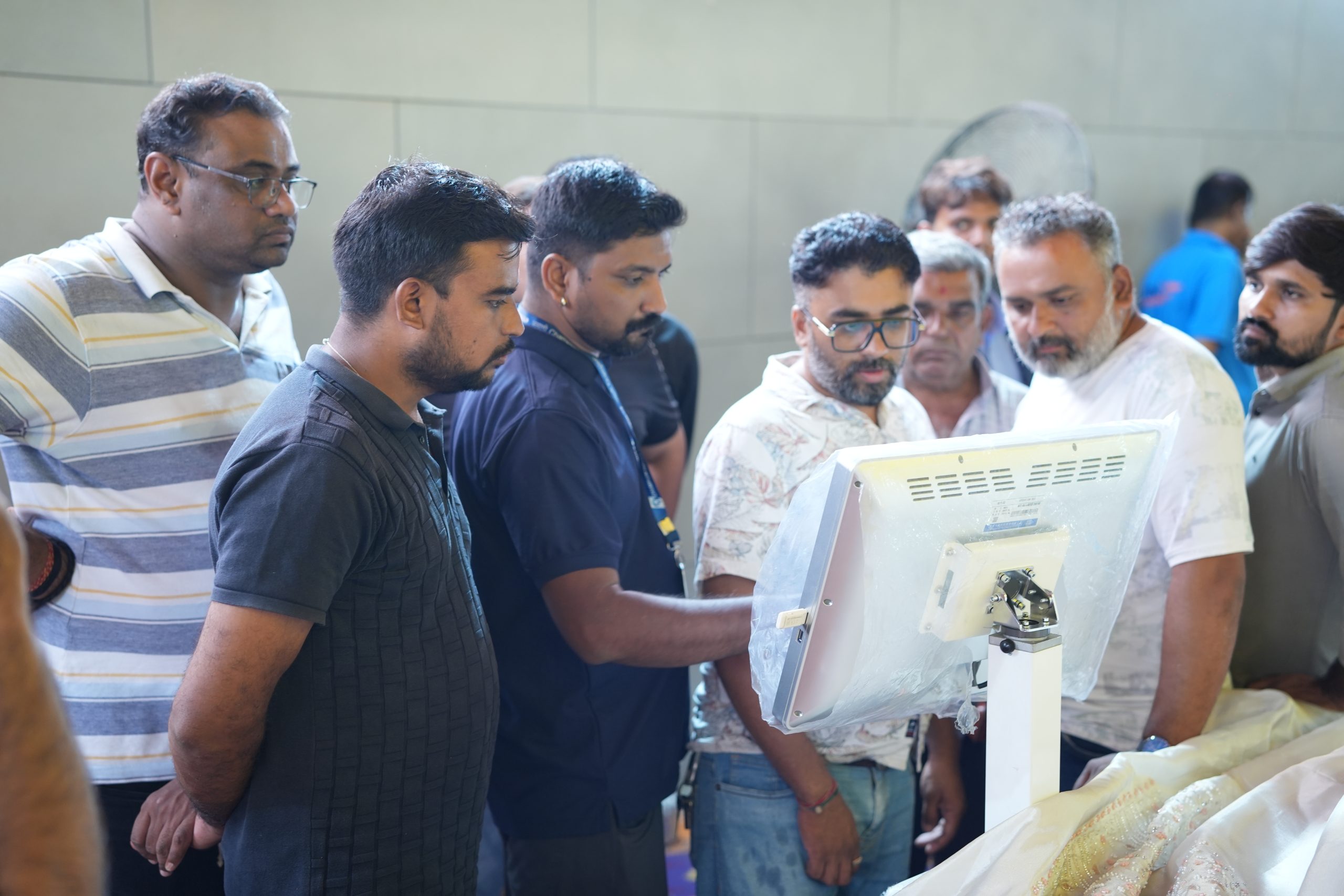 As I said, our success story is in the hands of our customers. Our customers are satisfied with us, and the feedback we receive from them is very positive. Whatever feedback we receive from customers, we pass on to Promaker. Promaker works on that feedback very effectively and conducts research accordingly.
As I mentioned, Promaker has a fully automated manufacturing plant. When they research and manufacture in such an environment, the chances of human error are minimised. They also work according to the requirements of Indian customers.
If a customer requires hand-work effects, Pashmina work, Kasida work or other traditional techniques, Promaker studies these requirements and works towards implementing them through technology.
If we talk about Schiffli, two years ago, Schiffli was at a level where only conventional Schiffli machines were available, which could cost around ?4 crore to ?4.5 crore, with limitations in terms of configurations and sequin applications.
Promaker has developed Mini Schiffli machines in 206, 258 and 400 heads configurations, operating at 1,200 RPM. If we compare this with a conventional Schiffli machine, instead of investing around Rs.4 crore, the investment can be around ?1 crore.
If we look at technology and the current market, what are the major embroidery machinery trends today?
If you look at the current trend, one of the major requirements is the beads machine, with combinations such as four-bead, five-bead and six-bead configurations, along with two-sequence or three-sequence combinations.
Secondly, there is a requirement for taping machines. Taping is used for ribbonrelated work. Aari machines are also in demand, along with Mini Schiffli.
These are some of the important technologies currently driving the market, and Promaker has a strong position in these areas. This is also one of the reasons why UNIX is growing so fast and why we are confident of reaching our target of 2,500 machines this year.
Surat is already a major textile hub. What changes do you expect in the textile industry in the coming years?
Surat has the potential to develop the entire value chain under one roof-from fibre to fabric, fabric to fashion, fashion to garments and finally to the market.
At present, Surat is strong in fibre-to-fabric and fabric-to-fashion. Fashion-togarments is the next major opportunity, and Surat is well prepared for it. Many companies in Surat are already expanding into garment manufacturing, and there is a very large scope for growth.
Today, international buyers such as H&M and Zara want integrated manufacturing capabilities. They want fabric, printing, embroidery and garmenting in the same plant. Surat is one of the few places where all these activities can come together.
I believe that in the next few years, Surat will increasingly be recognised as a garment manufacturing hub for India.